
12 August 20268:48223 views on YouTubeWatch on YouTube
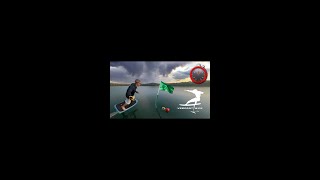
Following an eFoil with a drone is harder than it looks, because the rider is not moving at a constant speed. You are fast on the straights and slow through the gates, and any camera that flies a fixed route is going to be in the wrong place for half of it. This episode sets up a GS style slalom course on a home lake and asks whether the Anti-Gravity A1 and its Sky Path waypoint mode can keep up.
The limitation is named before the test starts
The problem is identified straight away: Sky Path does not let you set a speed per waypoint. You get one global speed for the entire route. That is exactly the wrong tool for a race course, where you want the drone slow through a tight turn and quick down the run to the next gate. The whole test becomes a question of whether you can work around a missing feature rather than whether the drone flies well.
Programming the route from the water
The route is built waypoint by waypoint while riding, which is worth noting on its own: you place each point where you know your body is going to be, not where the buoy is. Two points frame the start line so the drone crosses it as you launch. From there the points track the course buoys, held at a consistent height of around eight and a half feet off the water, roughly just above head height. On the fast sections the drone is deliberately placed on the inside of the turn to keep its speed up. One point is set to pass straight between two buoys on the way back, with the honest admission on camera that this is either a great idea or a terrible one, since the drone may see a person in its path and refuse to fly there.
Setting one speed for the whole run
With the route saved, the drone reports how long it will take to fly. The default estimate came in well over a minute, which is far too slow, because the course takes about a minute to ride. The global speed gets pushed up to around twenty miles an hour, which brings the route time down to roughly what a run actually takes, and that number becomes the compromise: fast enough for the straights, and whatever it is through the gates is whatever it is. The run itself is then flown and cut to music.
What it tells you about buying one
The verdict in the description is that the drone has limitations but the results are still good for eFoil content. Two software features are called out as things a DJI can do and this cannot: independent speed at each waypoint, and locking an exact altitude for a point rather than flying it manually. Neither is a hardware problem, which is the frustrating part. There is also a nice aside about the lake itself, a submerged tree that looks like it is at the surface but sits around seven feet down, close enough to see and far enough that only a badly ridden line would ever reach it.
Chapters
Subscribe on YouTube Every episode