
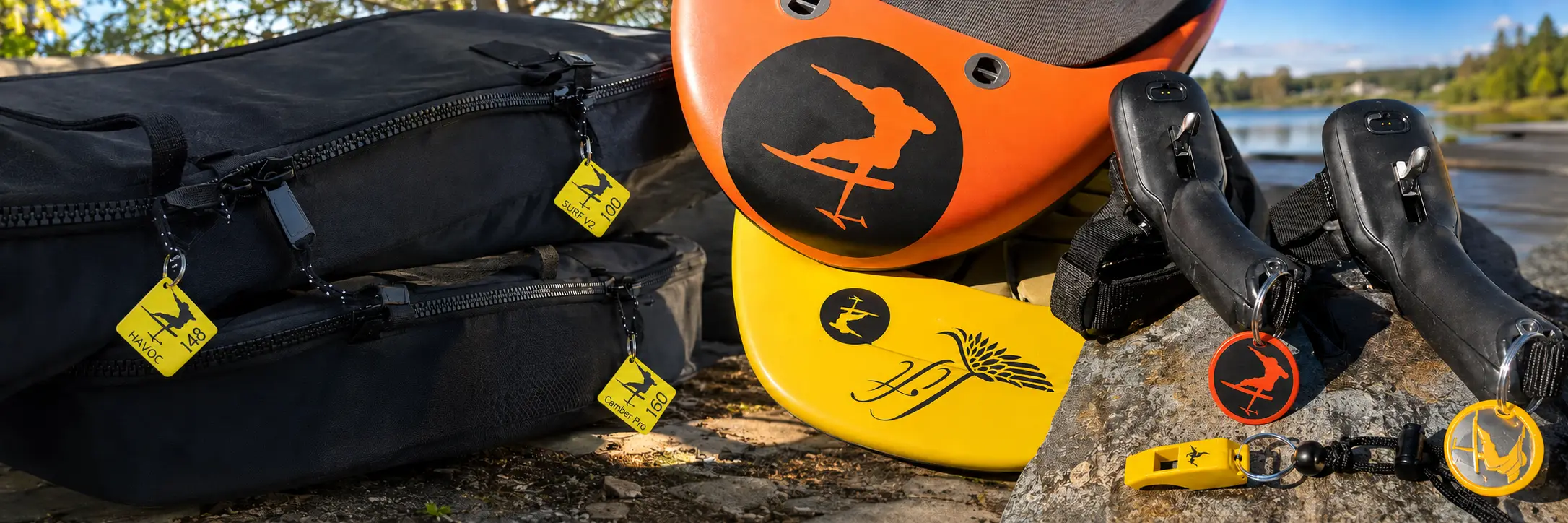

The wrong wing, the wrong remote, and sixty identical batteries. Three problems, one fix — and a free set of printable eFoil gear tags for every Lift Foils and Fliteboard front wing.
I knew about an hour into the drive. Not consciously — just that low hum you get when something is off and you have not worked out what yet. I got to the race course, pulled the bag out of the car, unzipped it on the grass, and there it was: my freestyle rig. Beautiful wing. Completely wrong wing. My racing set was sitting on a shelf at home, an hour behind me, in a bag that looks exactly like the one in my hands.
Nothing had broken. Nothing had been stolen. I just could not tell two black bags apart in a dim garage at 5 a.m., and it cost me a morning I had been looking forward to for a month.
That is the part nobody warns you about. The expensive gear failures in this sport are hardly ever mechanical. Your foil does not quit on you. Your ability to identify your foil quits on you — always at the boat ramp, the trailhead, the parking lot, sixty miles from the shelf where the right one is sitting.
So I started labeling everything. Not in a label-maker, color-coded-bins, Sunday-afternoon-organizing way. In a “make the answer visible from three feet away, in bad light, to somebody who is not me” way. Here is the whole system. At the bottom you can download the part of it I made for you.
1. The bag is lying to you
A faded Sharpie scrawl on dark blue Cordura is not a label. It is a rumor. You wrote it eighteen months ago in handwriting that was optimistic even then, on fabric that eats ink, and now you are squinting at it in a garage with one bulb. Half the time you end up unzipping the bag anyway — which means the label did nothing at all.
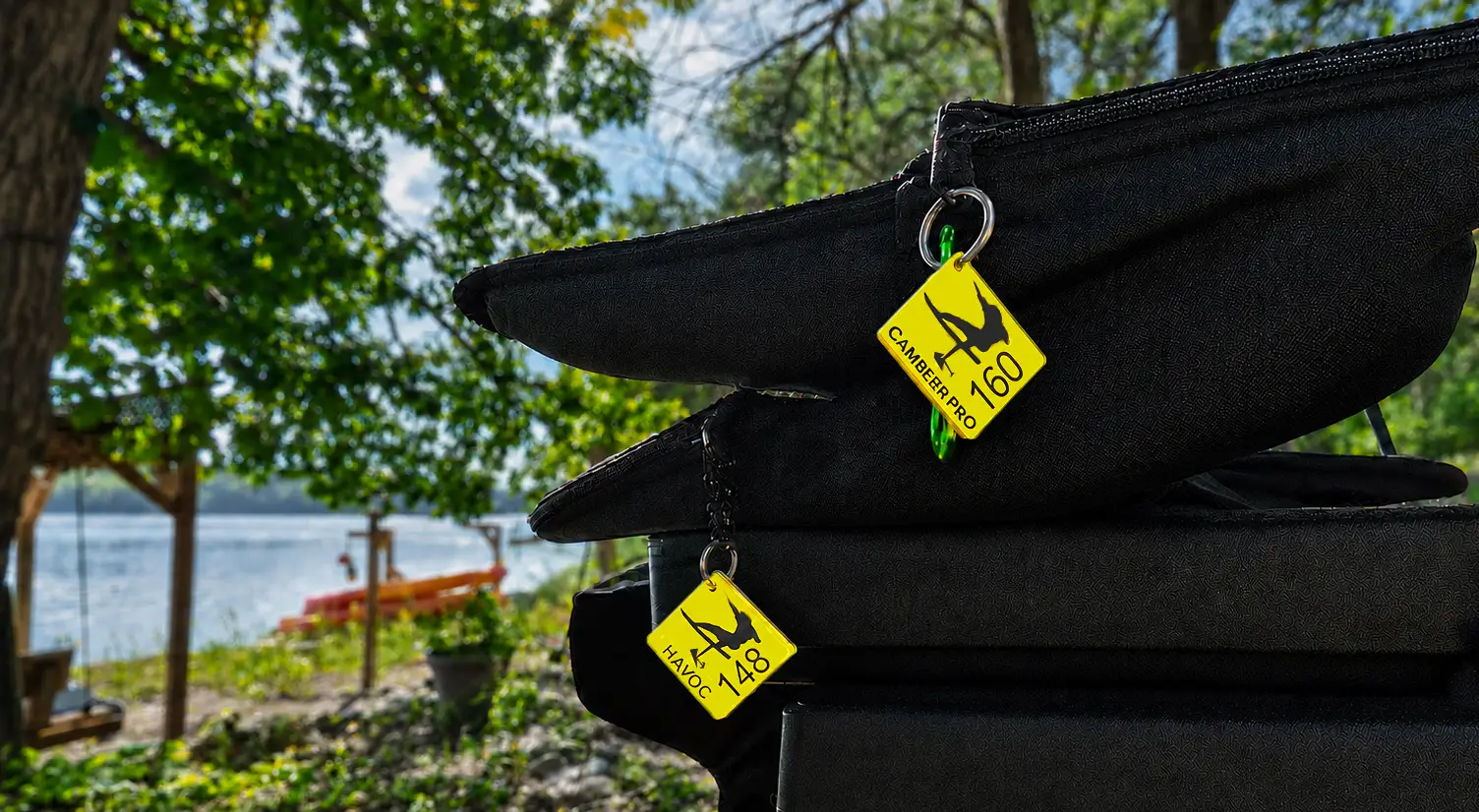
What actually works is a tag you can read without thinking: high contrast, big type, hanging off the zipper pull where your hand already is.
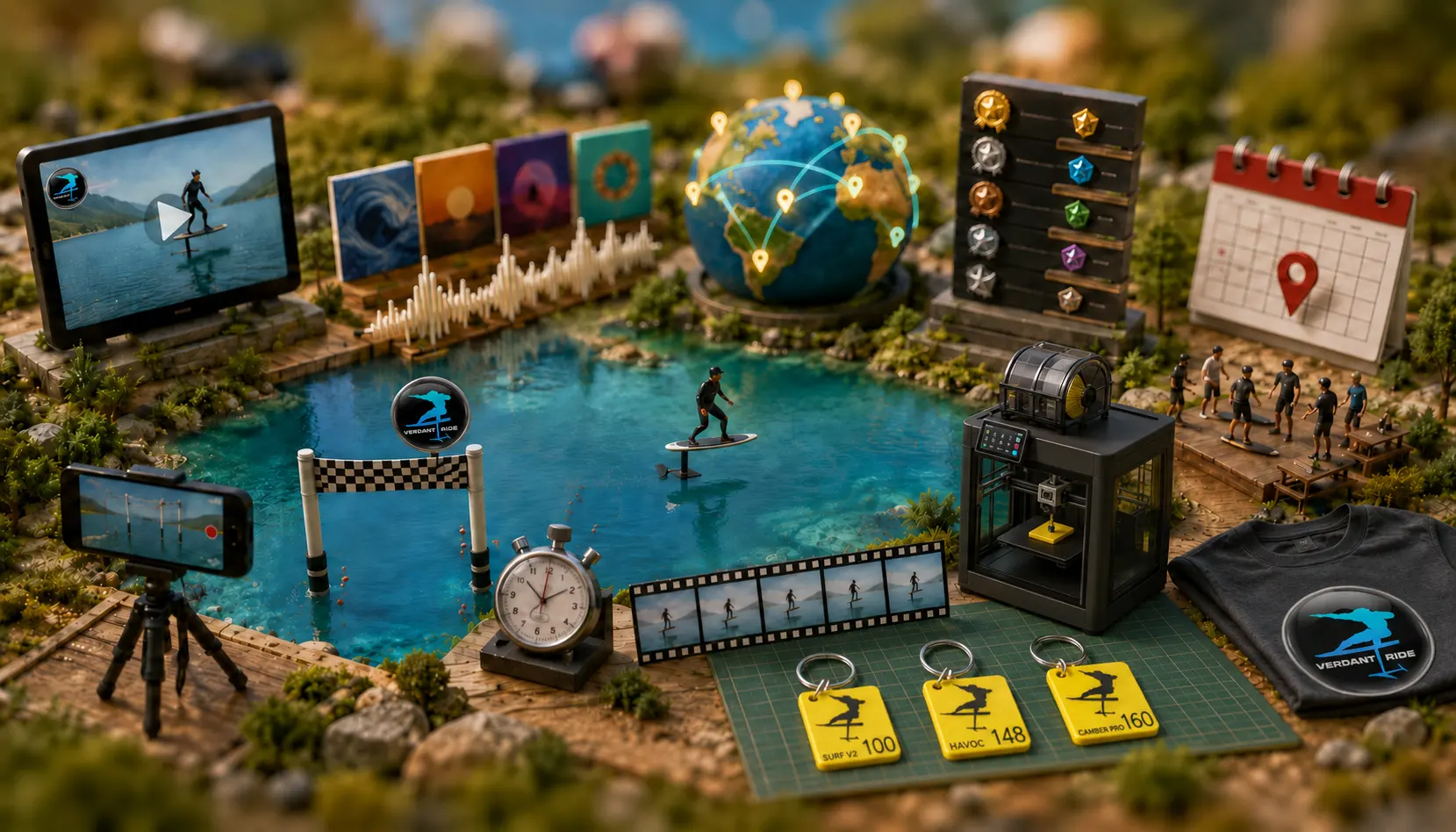
So I printed my own eFoil gear tags. Two-color, two-sided, 35 mm square, with the wing name and the size number big enough to read at arm’s length. They clip to the zipper of each wing bag and tell you what is inside before you pick the bag up, let alone drive it anywhere. They take a few minutes on any 3D printer and — this matters more than it should — they look good hanging there.
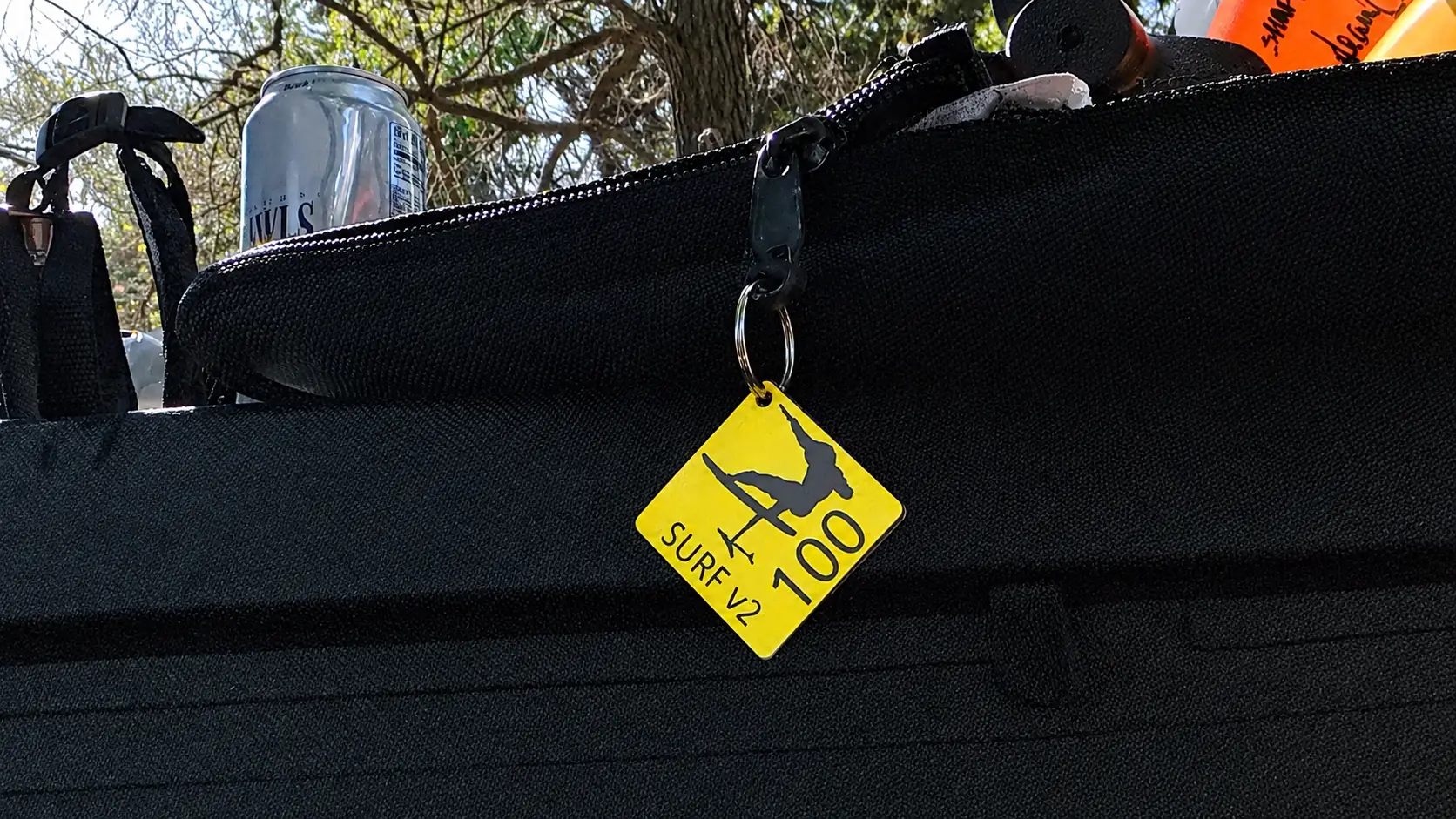
Then I got carried away, which is the honest word for it. I built a set for every Lift Foils front wing I could verify: current production and discontinued, 49 of them. And because Lift will inevitably release something next spring that is not on my list, I built the generator too. Add one line to a spreadsheet, run it, and you have the tag. No CAD, no dragging shapes around in TinkerCAD at midnight.
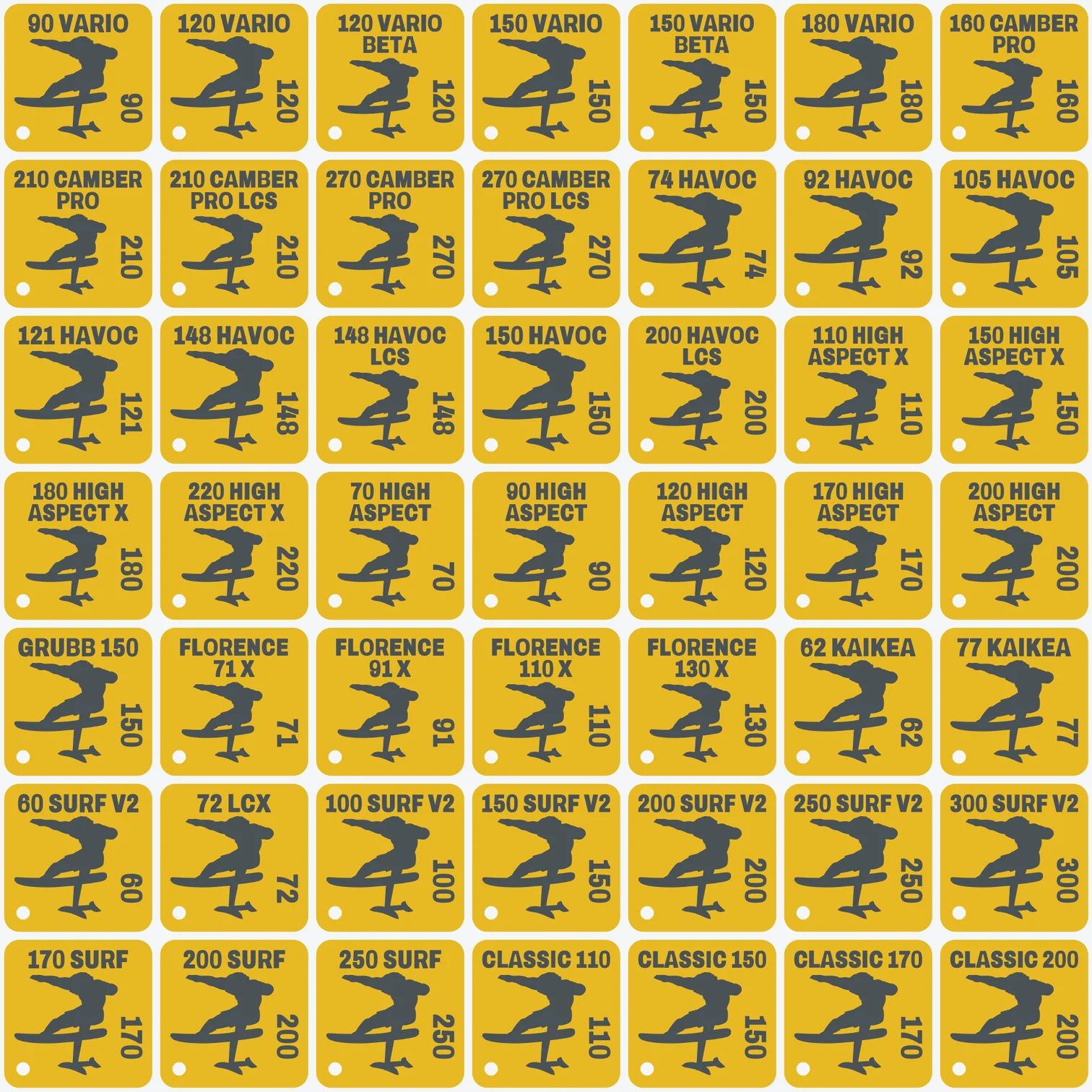
The whole set is free. Link at the bottom.
2. A pog for every remote — and a whistle, because friends
Here is the second failure mode, and it is more annoying than the first because it happens in front of an audience.
You are at the launch. A friend is on your spare board. You grab a controller off the pile, toss it over, and then watch him stand on the dock pressing buttons at a board that has never heard of that remote. Now you are wading out to swap it, or worse, talking him through a pairing procedure while everybody waits.
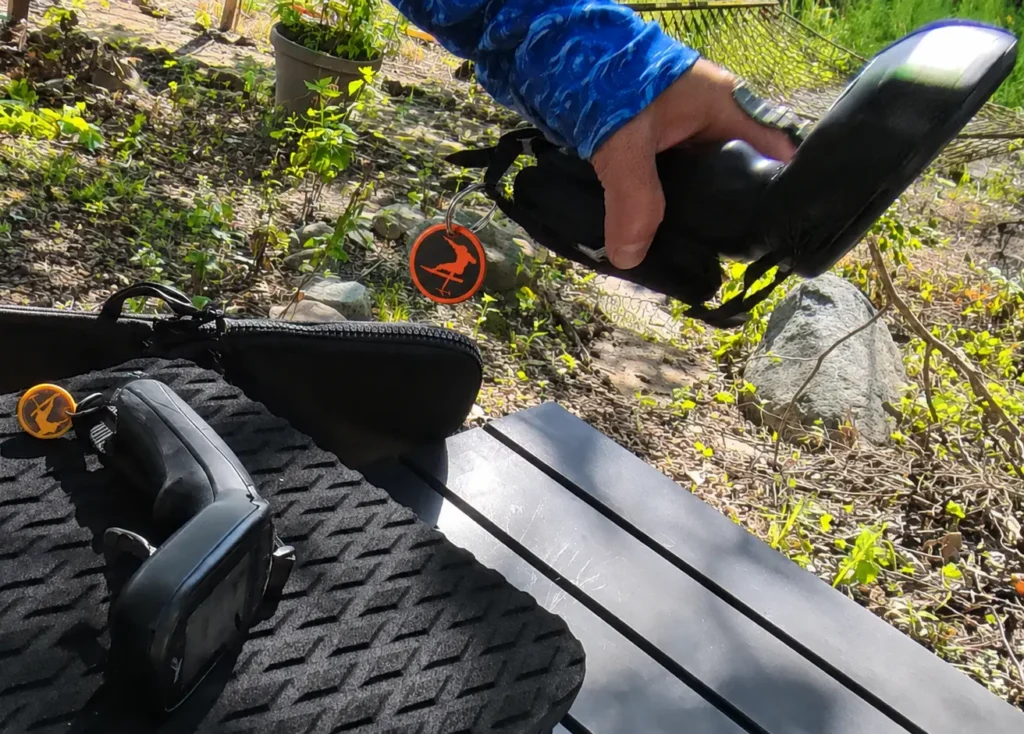
Same disease, different symptom: two identical black objects, no way to tell them apart at a glance.
The fix is embarrassingly simple. I print a keychain pog with my logo in the color combination of the board it belongs to, and it lives on the hand strap of that controller. Blue board, blue pog. Now I know which remote goes with which board without thinking — and more importantly, so does everybody else. As a result, the number of times I have to be the guy who knows things has dropped dramatically. My friends have been upgraded from helpless toddlers to self-sufficient adults, and it took three grams of filament.
The whistle upgrade
While I was there I added something with real utility: a color-coded whistle on each controller, matching its board. These things are stupidly loud — you can hear one from just about anywhere on the lake.
That is for the rider who ignores their battery percentage right up until the moment physics ignores them back. Instead of paddling and hoping, they can get my attention from half a mile out.
Not that I can do much about it. I sold the wake boat. So what that whistle actually summons is a middle-aged man in a kayak, paddling out at four miles an hour to keep them company and laugh at them the entire time they swim the board in. Which, if you think about it, is a far stronger incentive to watch your battery than a rescue would be.
3. Sixty riders, one enormous pile of black rectangles
Finally there is the foilfest problem, which is the one that turned this from a preference into a rule.
You show up somewhere good. Sixty riders, all of whom bought roughly the same equipment from roughly the same three companies. Sixty black boards, sixty black batteries. And sixty chargers on one folding table, all humming away, all identical. Come teardown, everybody is standing around a pile of matte-black rectangles going “…is this one mine?”
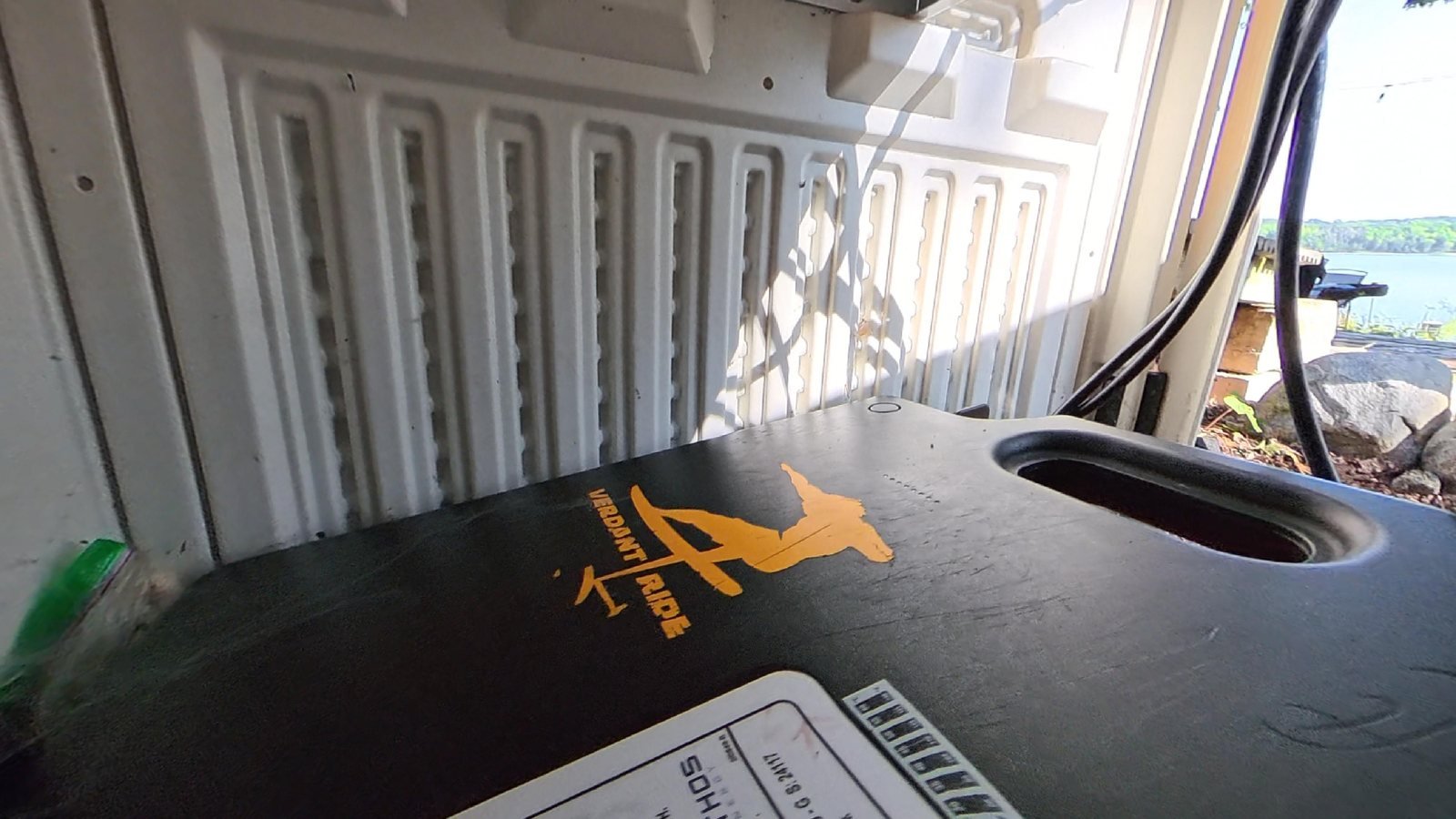
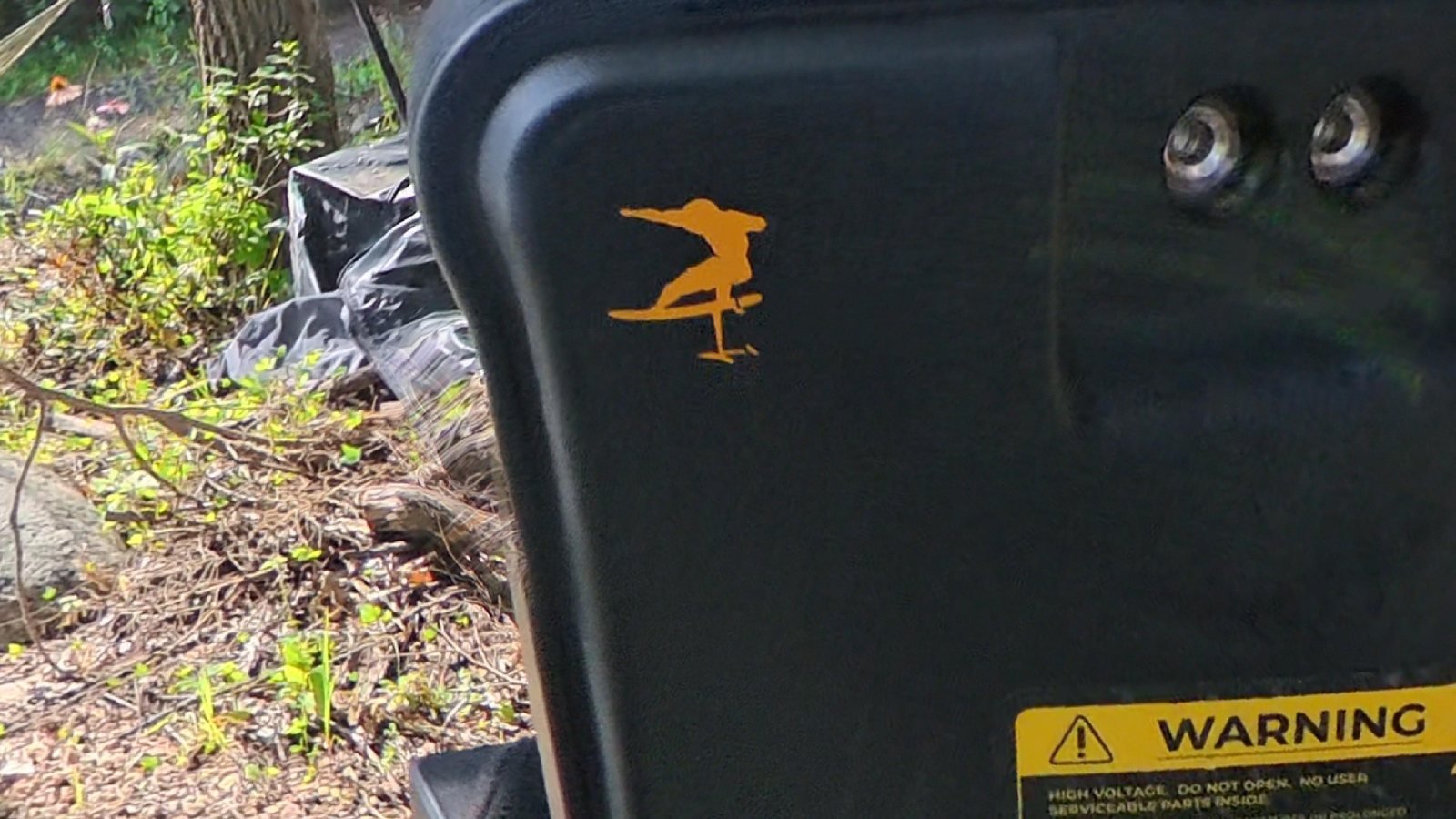
So before anything of mine goes anywhere, it gets a die-cut vinyl sticker of my logo. Not one sticker in one place — the batteries, the chargers, the controllers, the board, the bags, the mast. Everything.
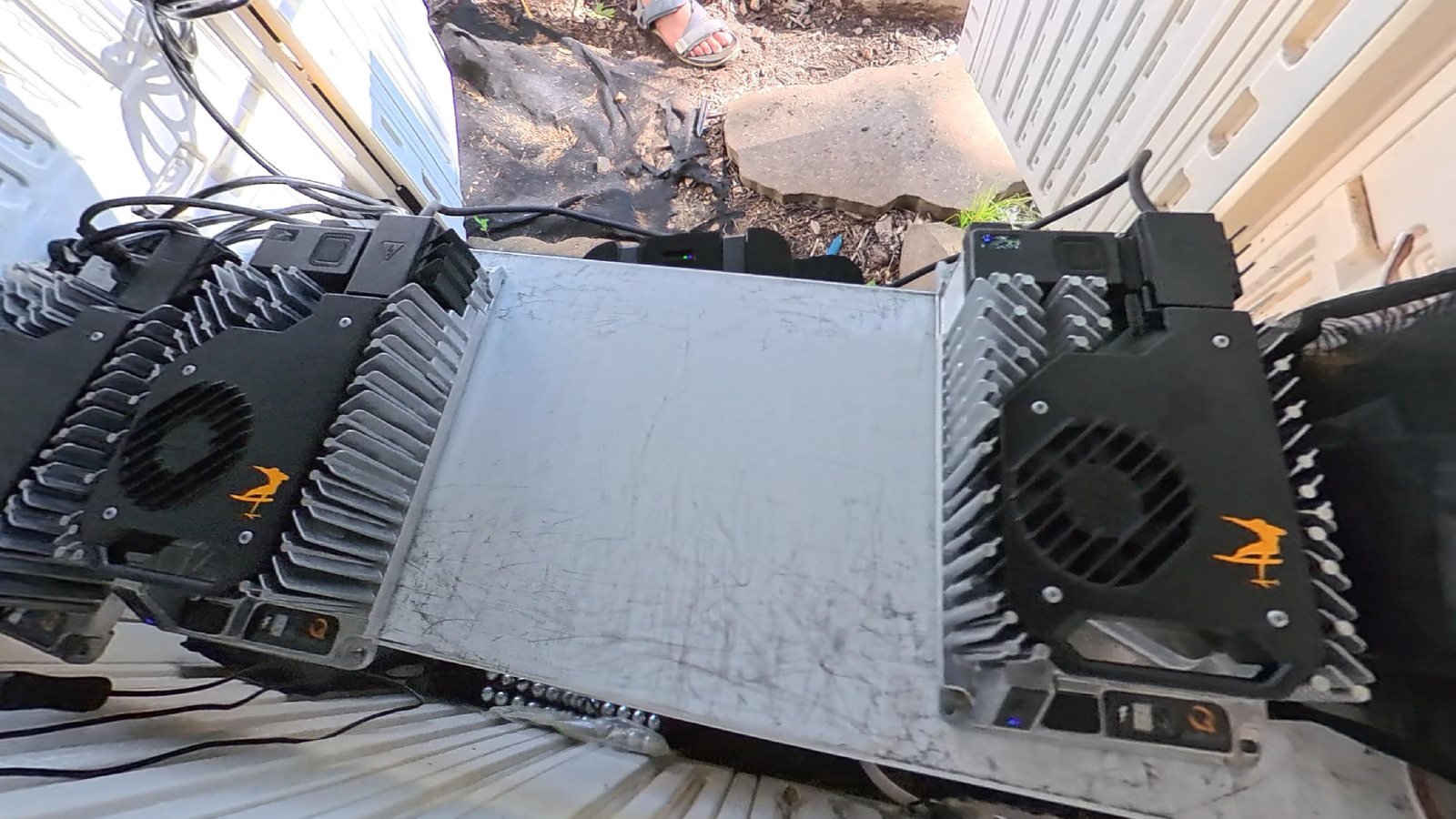
In practice it costs about eleven cents and four seconds per item, and it means that when the sun goes down and forty people are packing at once, I am the only one in the field who is completely certain which gear is mine. No arguing, no swapping back the next morning, no discovering in October that somebody else’s charger has been living in my van since July.
The real point
Look at those three stories and it is the same story every time. The gear was fine. The information about the gear was missing.
Every unlabeled thing you own is a decision you have quietly deferred to your future self — and your future self is a much worse version of you. He is wet. He is in a hurry. It is dark. He is holding a flashlight in his teeth and three other things in his hands, and he is going to make that call badly.
Writing a label costs nothing, because at that moment you already know the answer.
Not writing the label can cost you a whole morning.
That gap — between the two-second cost and the one-hour payoff — is about the best trade available to anybody who owns more than one of anything.
There is a second thing going on too, and it is the part I have come to like most. A tag on a zipper is for you. A pog on a controller is for everybody else — it hands your friends the ability to sort themselves out without needing you. A logo on a battery at a crowded event is not organization at all, it is basic courtesy: it turns “whose is this?” from a group conversation into a two-second glance.
Good labels are quiet infrastructure. Nobody notices them working. You only ever notice the ones that are not there — usually about an hour into the drive.
Common questions
What do I need to print the eFoil gear tags?
Any FDM printer, a 0.4 mm nozzle and two filaments. No supports, no brim, nothing exotic. Roughly 20–30 minutes a tag on a Bambu X1C, and the download includes multi-plate project files if you want to run all 49 in one go.
Can I print them in a single color?
Yes. In fact the front artwork is a 0.6 mm engrave, so in one color it reads as a recessed design rather than disappearing. Two filaments just make it pop from further away.
My wing is not in the set. Now what?
Grab the generator that ships with the download. It is a Python script driven by a CSV — add one line with the wing name and size, run it, and you have all three builds for that wing. Incidentally, that is also how new Lift releases get added.
Which build should I choose?
Glued halves if you have no preference: fewest filament changes and the fastest print. Snap-together if you would rather not own a glue gun. One-piece if you want the toughest tag and do not mind the extra color changes. All three are in the download, with an illustrated guide.
Take the tags. They are free.
The eFoil gear tags cover every Lift Foils and Fliteboard front wing — 72 of them, current and discontinued. Three ways to build them depending on how much assembly you feel like doing, an illustrated guide, and Bambu X1C plates already laid out if you just want to print the whole lot in one go. There is a generator in there too, for whatever Lift launches next.
In short: it is free, and it is a gift to the Verdant Ride community. Go get it — and go label something.



Leave a Reply
You must be logged in to post a comment.