
28 June 202315:081,939 views on YouTubeWatch on YouTube
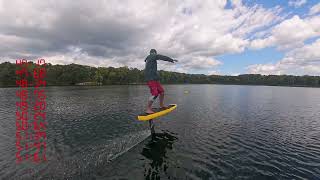
Racing looks simple from the outside. You have ridden thousands of hours, so how hard can it be to go round some buoys quickly? This episode is the answer, recorded at a Lift Summer Flyby Tour stop coordinated by Minnesota Wake, on a Lift4 Pro with the fastest wings and a good deal of unearned confidence.
How the course was laid out
The run starts between two yellow buoys, then goes left around the first and right around the second, which is where you build real speed before heading out to the far left buoy. A quick whip around that one and you point back at the far right buoy, and that turn is the hardest thing on the course. You have to scrub enough speed to make it while staying on foil, because dropping off the foil there puts your wings straight into a bed of weeds sitting only inches below the surface. Then it is back out to the far left buoy a second time before a wide open straight to the finish, which is the one part where you get to run flat out.
The case against a dead stop start
Racers were started from a standstill, and that is a design choice worth arguing about. Getting an eFoil from nothing up to planing speed takes a long, undramatic runway, so a big chunk of every run is spent crawling rather than racing, and the first buoy arrives well before anything interesting happens. The alternative is obvious: let riders build momentum and start the clock as they cross the gate. That would produce a faster, tighter and far more watchable race, which matters given that the audience at these events is largely made up of people deciding whether to buy a board.
Weeds, and the fix nobody made
The weeds were the story of the day. Wrapped around a prop, they turn a precise, fast machine into something slow and unsteerable, and plenty of riders lost runs to them. The advice offered on the day was to go around them, which is not practical when the obstacle is invisible and you are travelling quickly. Half an hour with a rake before the event would have cleared the course and given everyone the race they came for. There were timing problems too, including a first run that had to be repeated because the clock never started, which was only discovered after crossing the line with what was the fastest time of the event.
Worth doing anyway
For all the complaints, the day was fun, and getting together with other riders always is. The hope expressed at the end is straightforward: that events like this keep happening, get better organised, and turn up a little closer to home as the sport grows.
Subscribe on YouTube Every episode