
16 July 202219:30815 views on YouTubeWatch on YouTube
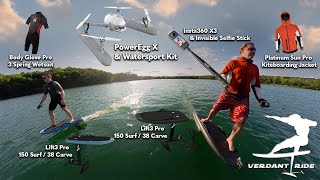
The reason to care about a floating drone is simple arithmetic. Filming yourself over water with a normal aircraft means that every mistake, every low battery, every lost signal ends the same way: a slow descent into the lake and a very expensive object on the bottom. Several Mavics went in before this one was bought. The PowerVision PowerEgg X with the Wizard Kit is the attempt to stop paying that tax.
It lands on the water and takes off again
The floats are the whole product. Set it down on the surface and it sits there, dry in all the places that matter: camera, gimbal, battery. Then it lifts off the water again just as easily. During the obstacle avoidance test it detected water underneath and put itself down on it. For anyone filming surfing, eFoiling, kiteboarding, waterskiing or wakeboarding, that single behaviour changes the risk profile of every flight you make.
Why the waterproof shell comes off
The Wizard Kit includes a clear protective egg that seals the aircraft, and the conclusion here is to leave it in the box. With the shell fitted you lose the tracking and obstacle avoidance features entirely, the drone slows down, and flight time drops sharply from close to thirty minutes. Worse for the actual job: the plastic sits between the lens and the subject and the footage comes out hazy, silica gel or no silica gel. If your goal is speed and clean optics over water, the shell works against both. A rainy or rough day might justify it. Normal conditions do not, because the floats already do the protecting.
Flight modes, sensors and one pine tree
There are three modes. Easy is very slow, normal is quicker, and professional is fast enough to want your full attention, because the sensors are not helping you in that mode. That was learned the way these things usually are, with a tree and a repair involving putty epoxy. In the gentler modes the avoidance system genuinely works: flown deliberately at a pine tree it refused to hit it and held off instead. There is also onboard storage, which quietly saves the session on the day you leave the card at home, though pulling the files off wirelessly is slower than a card reader.
The tracking test, and the warning attached to it
This is the part of the episode that matters most. With no pilot on hand, the drone was set to track its own operator, then the operator got on the water. The selected mode is supposed to hold altitude and hold the shooting angle. It did neither. It kept its lock perfectly and used that lock to close the gap, matching every increase in speed and tightening in further on a full turn, until it was passing within a few feet on its dives. The run ended with the drone spotting the dock posts and landing itself, which it also should not have done with battery still in it. The description carries an explicit update: the tracking will hit you at full speed once it has started hunting, and the aircraft is no longer flown with any automated or tracking features enabled. Fly it manually, or fly it with a second person holding the controller.
Subscribe on YouTube Every episode