
23 July 20259:18698 views on YouTubeWatch on YouTube
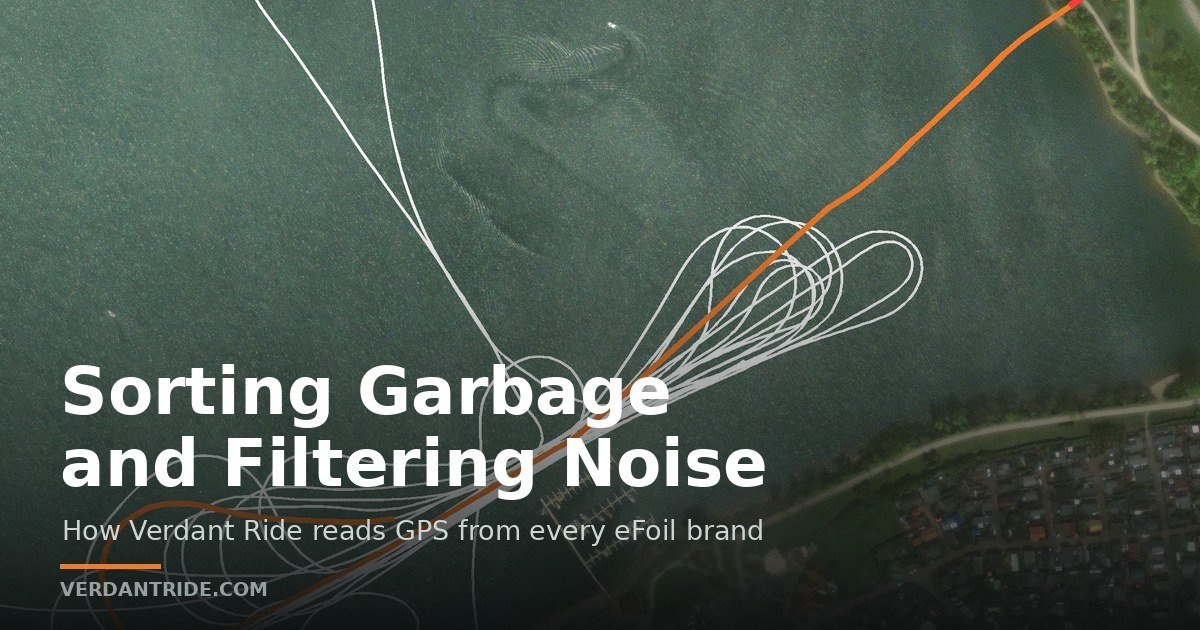
Riding footage has a missing dimension. You can see a carve, but you cannot see how fast it was, so every clip of every rider looks roughly the same as every other. This episode is a course session used as a live test of the fix: a speed readout burned over the video, generated from the GPX track your phone or watch was already recording.
How the overlay actually gets made
The workflow is deliberately low tech. Run whatever app you already use to track speed and distance, start it, and get the moment you start it on video. That gives you a visual sync point, because as soon as the app ticks over to its first second you can line it up exactly against your timeline. Do the same when you shut it down at the end of the session. Then feed the GPX through the script and drop the result over your footage. There is a version tuned for Adobe products and a simplified one that renders just a clock, which works in literally any editor: overlay it, stretch it to match, and it reads accurately. If you do not use editing software at all, you can hand the GPX to the Verdant Ride GPT and get back a small speed movie to place over your video. The tool is free.
Staggered versus midline stance through a course
The riding half of the episode is a genuine experiment rather than a demonstration. The course runs out of the gate, around a marker, through a tight turn where speed drops, then out to a far corner. The first runs use a staggered stance, which is the familiar and safe option. The second set uses a midline stance, never previously raced, on the advice of another rider. The verdict lands clearly on the midline side: it feels more balanced, lighter through the board, and gets described as the way to race. If you have been racing staggered because that is how you learned to ride, this is a cheap thing to test on your own course.
Two honest notes from the session
The first is about your knees. Racing a course means spending half of it crouched, and a forgotten knee brace shows up in the last run of the day as lost ability rather than as pain. If you have a brace, the day you actually need it is the day you are timing laps. The second is a theory worth someone testing: the suspicion that riding with a camera in hand makes you about half as good as riding without one, which cannot be proven from your own footage because your own footage is the problem. That one needs a drone and a second person.
New to eFoiling? Start with what an eFoil is, how it works and what it costs.
Subscribe on YouTube Every episode