




Solid State – (Hypnotic Binaural)
📖 Song Story
The Anatomy of the “Earworm”
The song functions like a high-performance engine, utilizing specific mathematical properties to bypass your “skip” reflex.
-
The Golden Ratio of Repetition: The human brain is hardwired to seek patterns. Catchy songs often utilize a balance of symmetry and asymmetry. The main synth hook in the intro provides a symmetrical rhythmic anchor that the brain can “solve” almost instantly.
-
Logarithmic Frequency Gradients: The “Solid State Redshift” chorus creates a sensation of “opening up” because it shifts the frequency density. While the verses are packed with mid-range, staccato information (clutter), the chorus uses wider panning and longer reverb tails, creating a mathematical sense of “space” that acts as a cognitive reward.
-
Syncopation and Predictive Coding: Your brain is constantly trying to predict the next beat. The song uses syncopated vocal delivery—placing accents on the “off-beats”—which forces the brain to work slightly harder to track the rhythm. This extra engagement is exactly what creates the “itch” that only listening to the song again can scratch.
The Story of the Redshift: A Structural Journey
Imagine the song not as a file, but as a physical vehicle moving through a digital landscape.
Phase I: The Compression (The Verse)
The story begins in a state of high compression. The lyrics describe a “G-Force lock course” and “numbers keep climbing.” Mathematically, this section is dense. The percussion is tight, and the vocal lines are delivered in rapid-fire bursts. This represents potential energy—the feeling of being wound up tight, waiting for a release.
Phase II: The Redshift (The Transition)
As we hit the chorus, the “vehicle” breaks the sound barrier. In physics, a “redshift” occurs when light or sound waves stretch out as an object moves away. The song mimics this by stretching the melodic lines. The transition from the gritty, industrial verse to the melodic “Solid state redshift raytrace” hook is the moment the tension breaks.
Phase III: The Flow State (The Bridge/Outro)
The final act of the song moves into a “Flow State.” By stripping back the instrumentation to the “Signal solid / No noise” refrain, the track removes the cognitive load. It leaves the listener in a rhythmic vacuum, making the return of the full beat feel like a homecoming.
Why It Stays in Your Head
The “addictive” quality comes down to a phenomenon called Melodic Expectancy.
-
The Hook: Sets a mathematical “question.”
-
The Verse: Delays the “answer” through complex rhythms.
-
The Chorus: Provides the “answer” in a simple, resonant frequency.
This cycle of Tension Delay Release is the fundamental equation for a “catchy” song. Each time the chorus hits, your brain receives a micro-dose of dopamine for successfully predicting the resolution, making you want to loop the experience indefinitely.
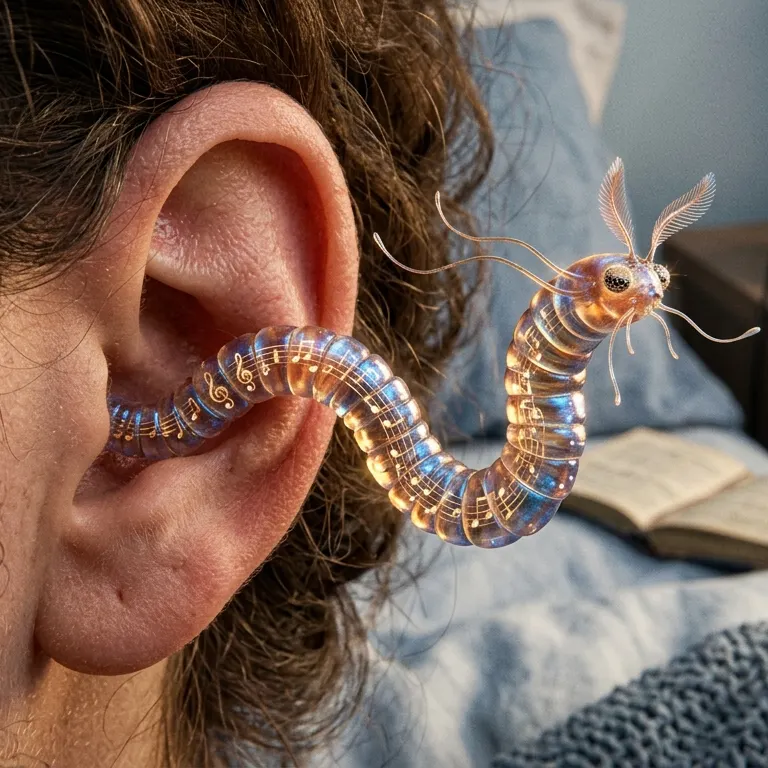
This track was deliberately constructed as a layered hypnotic system, not just a song.
At its core, the rhythm is driven at 186 BPM, aligning with the cadence of repetitive, trance-like motion found in ritualistic rocking and meditative states. The pacing is fast, but the vocal delivery remains controlled and detached, creating a tension between physical intensity and emotional stillness.
The chorus is mathematically structured using tightly grouped phonetic chains. Each line locks into consistent vowel and consonant patterns, forming a percussive loop that behaves more like a rhythmic instrument than traditional lyrics. These patterns repeat three times across the track, reinforcing familiarity while subtly destabilizing recall.
On first listen, the structure feels immediate and memorable. The brain latches onto the repetition and flow, and the hook embeds quickly. But the density and symmetry of the phrasing make it difficult to reconstruct from memory later. You remember the feeling, the cadence, the momentum, but not the exact sequence.
The result is a track that sits in a strange space between control and drift. It feels precise while you are inside it, but elusive once it ends.
Lyrics
[Verse 1]
Pulse in my chest | Steady, precise
Numbers keep climbing | Feels kind of nice
Friction is fiction | Adrenaline addiction
No need to question | No contradiction
Hands on the wheel | Line up the frame
Vision goes tunnel | All looks the same
Count it down | Let it go
Nothing left | To control
[Pre-Chorus]
Time slips | Out of place
Slow drift | In the frame
[Chorus]
Heartbeat heat-seek deep-speed no-sleep | G-force locked-course no-remorse no-keep
Cinch-tight sync-strike pulse-spike don’t fight | Flatline fast-time night-drive no-light
Cold-breath slow-press no-stress no-guess | Sharp-sight light-slice no-rest no-less
Drift-phase shift-space erase no-trace | Still-form storm-warm same-state same-face
[Verse 2]
Skyline dissolves | Lines turn to streaks
Everything bends | Nothing repeats
Mars off the shoulder | Saturn in view
Slide through the rings | Like it’s nothing to do
Flash in the glass | Gone just as fast
Miss it by inches | Doesn’t last
Space isn’t empty | It moves when you move
Quietly shifting | Around you
[Pre-Chorus]
Time slips | Out of place
Slow drift | In the frame
[Chorus]
Heartbeat heat-seek deep-speed no-sleep | G-force locked-course no-remorse no-keep
Cinch-tight sync-strike pulse-spike don’t fight | Flatline fast-time night-drive no-light
Cold-breath slow-press no-stress no-guess | Sharp-sight light-slice no-rest no-less
Drift-phase shift-space erase no-trace | Still-form storm-warm same-state same-face
[Bridge]
No signal | No noise | No choice
No up | No down | Just forward
Static in the lines | Static in the lines
[Final Chorus]
Heartbeat heat-seek deep-speed no-sleep | G-force locked-course no-remorse no-keep
Cinch-tight sync-strike pulse-spike don’t fight | Flatline fast-time night-drive no-light
Cold-breath slow-press no-stress no-guess | Sharp-sight light-slice no-rest no-less
Drift-phase shift-space erase no-trace | Still-form storm-warm same-state same-face
(delay)
same-face… | face… | face…

This is your Ride
📖 Song Story
Original title and hook: “The Ego Autopsy” – 2014
-“You’re, The Bourbon Street Genesis, man!”
-“No! No, YOU’RE the guy who is a smarty pants on the street of bourbon… Wait, where the fuck are we?”
– “I dunno. The moon is over there now, so that puts us…. Like, somewhere in New Orleans… I think.”
The track is a relic of a heavy, absinthe-fueled night on Bourbon Street in 2014, born from a way-too-many-dinks collaboration with the legendary author Chuck Palahniuk. The night a blur of attempting to out due the other with darker and darker storylines, stumbling around like a halloween sugar-high on “Vike&Mikes” candy mix, the session was an attempt to capture the same spirit-tearing prose that Palahniuk is known for. While the creator, Stephan, fully admits to be only “1/10,000th the writer” of the legend, the track is a mere homage to raw word-smithing prose into something that strips away the human facade until only a 100% genuine core of grease and gristle remains.
The Arc of a “Somebody”: From Obscurity to the VIP Room
He understood then that a meaningful life was built on the “genuine article,” substance over style. However, the 2009 “Money War” surrounding his first book deal fundamentally shifted his internal compass. As he transitioned from obscurity to internationally read status, the introspection he once valued was replaced by a powerful addiction to the dopamine of importance.
For several years, Stephan lived as a type of incognito celebrity. He describes this period as a time of being, “weak to all that makes humans the desperate rodents we are.” We are susceptible to the same traumas and most of us pretend we’re above it. He found himself drinking too much and gravitating toward those he perceived as “the shit,” relishing the ability to skip the line and enter the VIP world. Though he claimed to despise “star-fuckers,” he admitted to letting them into his orbit because little is more dangerous than an addiction to the feeling of being desired. During this era, the persona of “Being Important” began to overshadow the genuine man, a transformation that he acknowledges made him, “dislike himself.”
The Great Extraction: Returning to the Marrow
Stephan’s return to a “healthier normal world” was not a result of failure, but a conscious rejection of the “Big Deal” identity. He realized that the high of being special was a cage that prevented him from living an intentional life. By 2012, he was turning down book deals to find a “hard-earned peace,” a process he views as stripping away the “sparkle and glam” to find the purpose of existence again.
Decoding the Lyrics: The Philosophy of the Ride
The lyrics of “This Is Your Ride” act as a post-mortem for that era of ego and celebrity.
-
“Falling is what happens to you. The ride is you choosing to control the fall.” Stephan views the fall as an allegory for surfing/living/dying everything that chaos can bring. Things are gonna happen, it really has a lot more to do with how you choose to deal with it than what happens to you.
-
“Not the one they sold you… between boner pills and protein powder.” A sharp critique of the lie of consumerism and materialism. Marketing is telling you what you want to hear for money. The reality is that fashion is slavery and paying to be told lies you want to hear is what whores are for. It represents his current disdain for the day he saw his book being advertised at an airport kiosk between an ad for a Jersey Shore endorsed nutritional supplement and an over-the-counter counterfeit Viagra made with rhino tusks that you buy at gas stations and convenient stores.
-
“A name, a mold, a leash, and a screen to keep you pacified.” We are living in times where we are more pacified than ever before. Reality television and dopamine optimized apps keep everyone burning 30.41 days a year consuming content that doesn’t warrant 30 seconds much less several hours a day. Cut the leash that binds you to this meaningless existence. Anyone tells you that when you are bored the best thing to do is be patient, has not fully accepted life is ending. Boredom is the sign that you are wasting your life.
-
“Don’t be a slave to obligation and other people’s demands.” This refers to his time letting publicists and people he didn’t even like dictate his time, his energy and often his sanity. He had to learn to stop serving the version of himself that others wanted to see.
Remastered after discovering efoiling: “This is Your Ride” – 2022
“The price of flight is letting go of imagined safety.” Stephan draws a parallel between efoiling and personal growth. To truly “fly,” he had to let go of the his party piece and welcome peaches back into his life and embrace the vulnerability of being a “nobody” again.
-
“Better to be stripped to the bone… as long as you can still suck the marrow out.” The ultimate conclusion: it is far better to be a real person with a real name as an authentic nobody than an anonymous star.
Cold as the Morgue (Dark Synth)
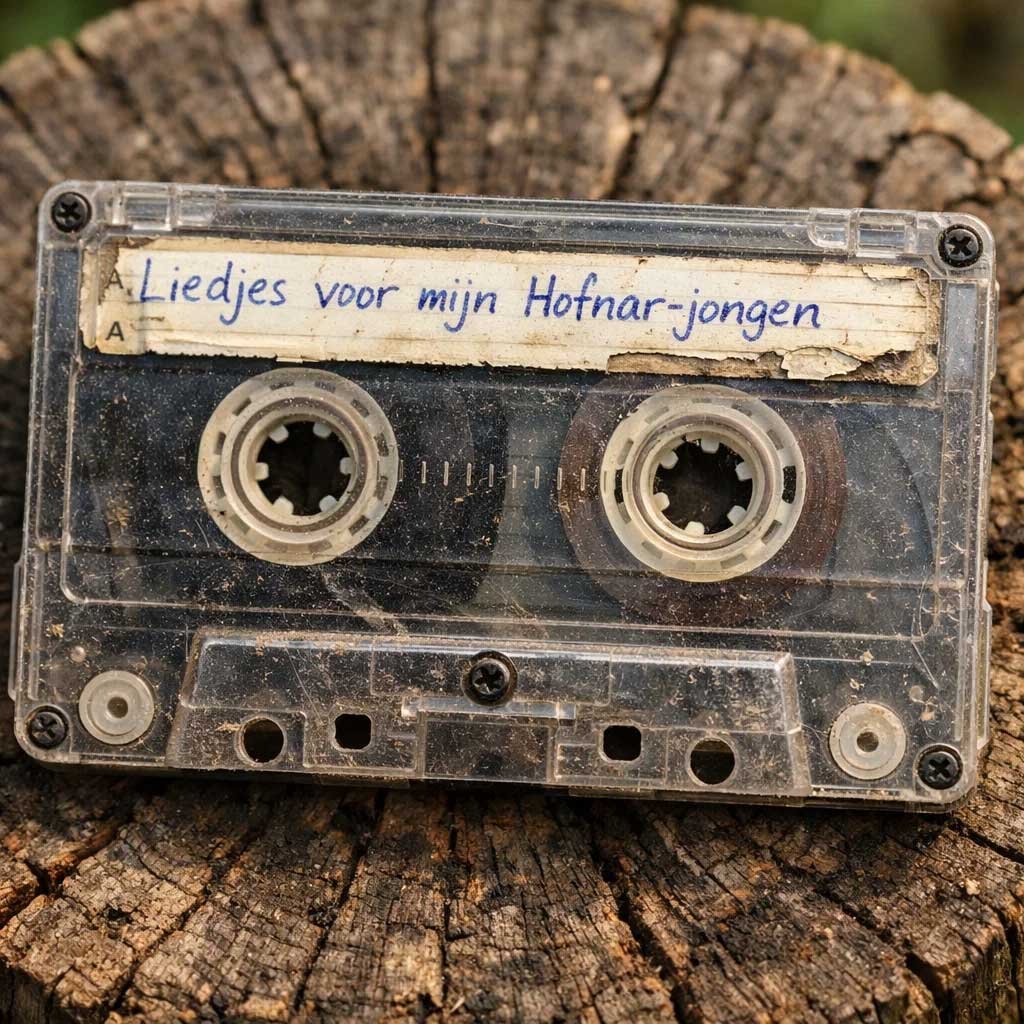
We Kiss the Same (Dutch) Remastered
📖 Song Story
 How I met Sanne and became her hofnar-jongen
I first saw Sanne through my hotel window. I had just spent two weeks touring Europe with Smith & Nephew, co-authoring a paper on the sources of pain in tissue injuries. As a twenty-year-old undergrad with nothing better to do in the summer of 1994, I had jumped at the chance to present at major medical centers across Europe. Our final stop was Amsterdam, and I was granted one full day of freedom before my flight home the following night.
With actual time to myself for the first time in weeks, my perspective shifted. Perhaps it was the relief, or perhaps Amsterdam truly was the most beautiful place I had ever been. Either way, when I looked outside, I saw her: the most beautiful woman I had ever seen, sitting at a cafe in the small, lush park right outside my hotel.
I initially intended to change out of my suit into something more comfortable for wandering, but I caught my reflection in the mirror. I decided the suit made me look professional, older, even. She seemed a bit older than me, and I figured any help I could get in that department would be a bonus.
I wandered down and approached her table. Out of nowhere, I decided to be incredibly forward and asked if I could join her. I spoke English; she responded in Dutch. I tried French; she shook her head. Then I tried Spanish. That made her smile. She said in her beautiful accent, “Why did you go to all the trouble to learn multiple languages, but not the one for the place where you travel?”
I explained that in the past two weeks, I had been through ten countries and all my French and Spanish had been of no use, especially in France. She laughed and said, “De Fransen zijn pretentieuze klootzakken” (The French are pretentious bastards). I laughed and agreed.
She arched an eyebrow. “Ah, so you do understand some Dutch, then?”
“I think I understood that purely from the context,” I admitted.
“So,” she asked, “did you choose to join me because you needed my help ordering a coffee?”
I gestured toward the empty chair at her table. She nodded. I told her, “I wanted to join you because I saw you through that window,” I pointed up toward the hotel, “and I thought you were the most beautiful person in the most beautiful park in the most beautiful city on a beautiful day. I wanted to meet you because I think I’d like to know you.” When you have only one day for an adventure, there is little reason to be reserved, especially when you’re simply telling the truth.
She replied with a lengthy statement in Dutch that I didn’t catch at all. She paused, then asked in English, “Espresso?”
“Americano,” I said.
She smiled. “Of course.”
As she walked toward the counter to order, she seemed to move in slow motion. The light danced through the large trees shading the park, and little tufts of cottonwood fell slowly around her as she moved. I caught the eye of an older couple at the next table who had been watching the whole exchange with amusement.
“Do you know what she said before she left?” I asked them.
The woman said, “She thinks you are also attractive and admires your confidence. But if she said yes to every American tourist who hit on her…” She smiled and shrugged. The man winked at me. “You have her interest, but she wants a man with specific talents. She wants you to impress her.”
I noticed a crate on their table overflowing with some type of fruit. “Are those apples?”
The woman explained they were perzikrassen (peaches) they had picked that morning. Before she could elaborate, I asked, “Could I borrow three of those?” The woman smiled and motioned for me to take my pick. I found three equally sized, peaches and began to juggle them. The man laughed, and the woman began to clap her hands with excitement.
The noise made Sanne turn around. When she saw me, her smile was beaming. She picked up the coffee and headed back, and I kept the fruit rotating in the air as she approached. She set the cup down in front of my chair and faced me.
“Dus dat is je zet? Wil je mijn hofnarretje zijn? Mijn hofnarjongen?”
The couple kindly translated: “Do you want to be her jester?”
I nodded my thanks to them and turned to her, not missing a beat. “Yes! I’d like to be your hofnar-jongen.” (jester-boy)
She laughed, likely because I slaughtered the pronunciation. “Okay, mijn hof-nar-jon-gen, she said, carefully pronouncing it for my benefit. “Come drink your coffee and tell me about yourself and what you are doing in Amsterdam.”
I caught the fruit, handed them back to the couple, and said, “Bedankt.” The older woman, giddy from the spectacle, waved her hand as if to say the fruit was for us. I offered one to Sanne, thanked the couple again, and sat down to a modest round of applause from the surrounding tables, including a few quiet claps from the woman who had drawn me to the park in the first place.
“So,” she asked, “do you always try to pick up women with your juggling skills?”
“Oh god, no,” I laughed. “It’s hard to think of a worse way to impress a woman than admitting you’ve spent way too much time mastering a completely worthless skill. But when life hands you perzikrassen… you make do with what you’ve got.”
She liked that and said, “Well played, mijn hofnarjongen.” She told me her name was Sanne. We spent hours talking in that cafe. She asked if I wanted Riesling, which I didn’t understand at first, and then explained it was “summer wine, sweet wine.” I said I’d love some, and she waved down the waiter for a bottle. I wasn’t sure what the drinking age was, but I wasn’t about to volunteer any information that might make our age difference a deal-breaker.
We finished the bottle, and I asked if she’d like to get dinner. She pointed to my hotel window. “That is your room?” I nodded.
“We should go there first,” she said. “It is much better to make love with someone for the first time before the sun sets and before dinner. Shall we?”
“I would like that very much,” I replied. “I think I will, too.” She said with a sweet smile.
Sanne convinced me to cancel my flight and stay longer. Our romance was short, but it burned hot. She taught me about Amsterdam, about life, and about making love. I thought I was well-read and experienced, but her approach was more open and communicative than any of my girlfriends. She said things that, in America, would have been considered the most lewd, dirty talk, but the way she said them made them sound like an honest, beautiful acceptance of pleasure. With her I learned how to perfectly match a partner’s intensity because she was so skilled at communicating what she was feeling.
When I told her I was studying medicine but loved writing, she wondered if she and this summer would make it into one of my books. She was certain I would write them one day, and that they would be a fascinating read. Once I had proven myself, the playful sparring ended. Sanne was the kind of person who you want to give all of your attention to and gave you all of hers in return.
The affair ended cleanly and honestly. In that short time, it felt as though we had enjoyed a lifetime’s worth of each other. It’s the kind of connection that is rare and special. When I returned home, we wrote each other sporadically. We were living our own lives.
When the book I wrote started getting picked up by multiple European publishers, I reached out to her letting her know I’d be heading through Amsterdam. She called me, and we talked for hours. Almost immediately I felt as though the last twelve years were compressed into 12 hours. I opened up to her and told her the difficulties I was having. How the American tour had me away from home for long stretches, and how just when I think I’m back for an extended stay, an event or a television interview opportunity comes along that simply can’t be ignored and before I or my family knows it, I’m back on a plane.
I told her how much I missed my kids and how the relationship with my wife had become so resentful due to my absence that all of my attempts to bridge a connection with her fail; and in the few times I was able to break through, an hour later I get a call to shit, shave, and shower because of a promotional opportunity.
My wife loved the money of my newly found success. She was able to quit her job and spend 100% of her time with our new daughter, which she didn’t get to do and regretted when our son was born. But other than the resources I brought to the marriage, nothing more of me was needed or wanted. This caused my resentment to match hers, and resentment is what kills even the best relationships.
To make matters worse I was also still running the two companies I’d founded before getting published, so that meant I was just working all the time. The book needed me to promote it and the companies were not in a place where I could hand them off to anyone else any more than I already had.
I was able to arrange the scheduling for the European tour so I spent multiple days in Amsterdam and even a short return at the end of the tour. She told me she’d go to one of my book signings if I came to one of her concerts. We both kept our promises and that is when I first heard this song. She and three cellists and timpani percussionists played this heart-wrenching song so passionately to an audience of nearly 200 people at Kleine Zaal. On stage, her body movements as she played the cello amplified her passion and the empathetic pain she knew I was feeling.
Though my Dutch was still not anywhere near proficient enough to know everything she was singing, the fact that she chose English for the chorus, “Four-Thousand Miles Away. We still kiss the same. We kiss the same,” told me that this song was not about me as much as it was for me. I’d never seen anything so emotional and so raw. In such Sanne-style, she was using descriptions of human emotion and passion that Americans would find too lewd to whisper, much less wail out in an ornate concert hall.
After the concert, she was being approached by everyone with flowers, congratulations, and accolades, and she deserved every petal and every word. With grace she floated past all of it and when she could have and should have been reveling in her own accomplishment, her attention was completely on me and she made me feel as if I was the only person on earth. It had been so long since anyone who actually knew me, much less knew my real name, had given me any attention, that I found this intoxicating.
It is a strange thing that happens when lots of people are clamoring for the attention of the person that they think you are for what you’ve accomplished. The person that you really are, the part of you that you don’t share, starts to shrink and if that happens too long, it feels like you might just disappear completely.
I spent three nights with Sanne during my first swing through Amsterdam and she desperately tried to talk me into canceling the tour and work on rebuilding myself. At the time that felt impossible. I was already working on an outline for the next book that the American publisher was hoping to have in 10 months.
When I told her I was about to start on the next book she grabbed me. She held me. She whispered to me. “I’m trying to save you, mijn hofnarjongen. This is going to kill you and if this kills you it will break my heart. You won’t survive this. You won’t be able to come back from this and you won’t forgive yourself for missing out on your life. You can’t get this time with your kids. You can still save your family but you can’t give them what they need until you learn to love yourself. This career is toxic, it is poison to you. You don’t owe it your patience. You don’t owe anyone anything more than you can afford to give without destroying the peace that you deserve.”
I did complete all of my events for the rest of the tour and was able to stop back in at the end of the tour, and what she said to me had convinced me she was right. I told her that I would reject the offer for the next book and that when I got back home I’d start rebuilding my life.
I got into therapy with a psychoanalyst who was actually phenomenal. When you are willing to do the work and be honest with your own weaknesses and vulnerabilities, you can move pretty fast through the process. My therapist loved hearing about Sanne and told me that if I’d stayed with her for a month I could have probably accomplished a year’s worth of the work I was doing in therapy.
I started creating healthy boundaries between me and the publicists and anyone that tried to get me to do anything I didn’t genuinely want to do. I even built an impenetrable firewall between myself and toxic members of my wife’s family which she did not initially accept, but eventually realized that she too was better off on my side of that wall.
I resigned from one of my companies and as expected, it was shuttered in a year without my involvement when the remaining partners chose to close the company when it began to fail. I was surprised that I felt no guilt and no shame when this happened. When you learn to love yourself, you don’t owe anyone anything more than what you can afford to give. Because when you make decisions that are the best and healthiest for yourself, you don’t owe patience to poison.
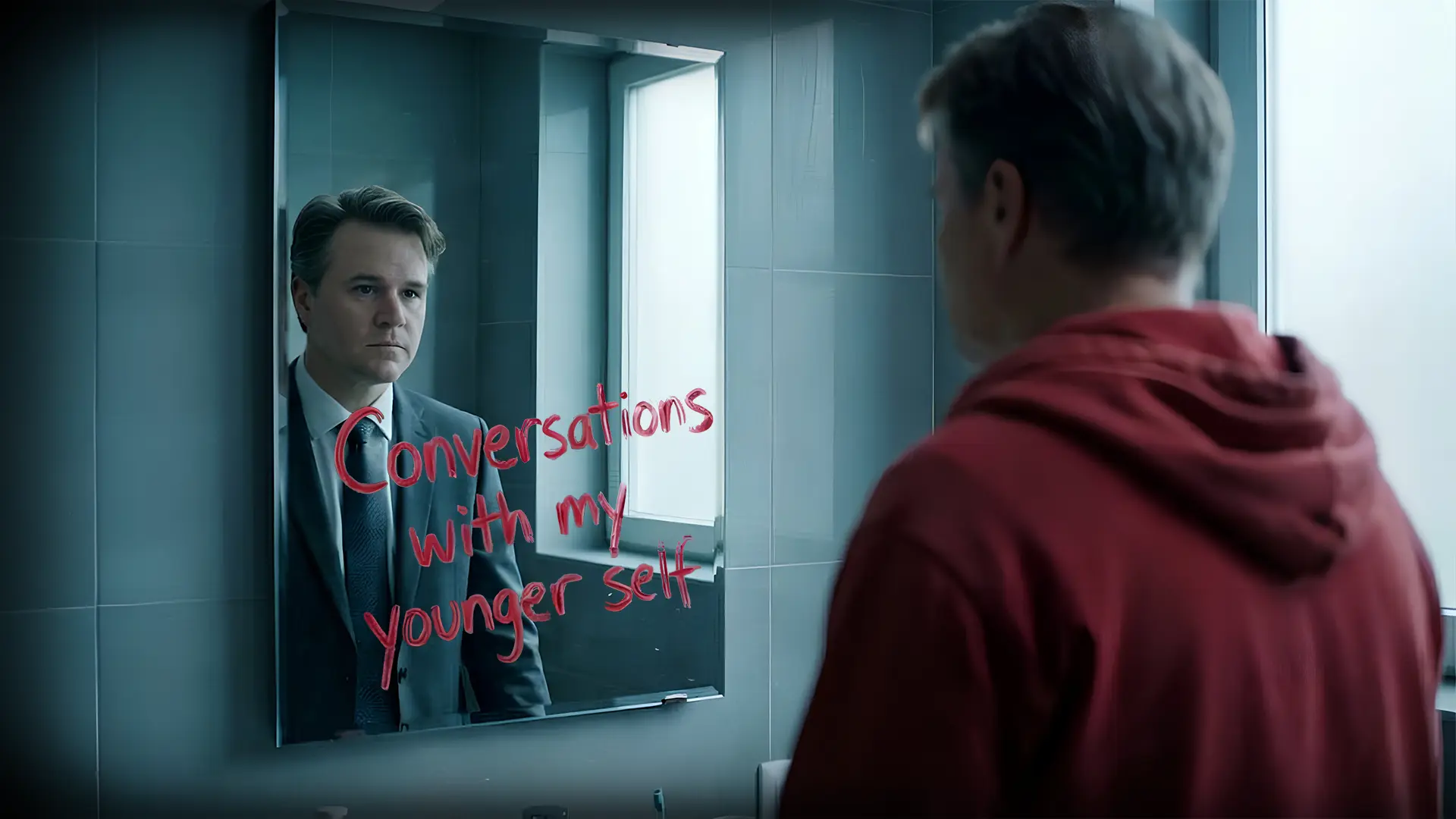
So that is the story of how I met Sanne and how she saved my life. When I began working on the “Conversations with my Younger Self” series, I knew that Sanne needed to play a much greater role in the story than previous writings where I conjured her essence to build a character that represents passion, empathy, and raw sensual radiance.
When I had been informed that she had passed away, my feelings of her finality were not what I would have expected. Sanne was so generous with herself that spending any time with her fills you and sustains you. You don’t miss her because even when you aren’t physically with her, she still feels like she’s with you. She feels like she’s with me right now, right as I type this, and I know she’s smiling saying something like, “Wat is de reden voor deze tranen op dit moment, mijn kostbare hofnar jongen?” Then she’d say something as poetic as it was true, like, “The tears have just as much importance as glimlachen, gelach en orgasmes. Treat them all with acceptance.”
Before I left Amsterdam for the last time she gave me a recording of the song that she made while rehearsing it and I probably played that cassette tape thousands of times. The integrity of the recording was so diminished that remastering was impossible. So I worked with the audio engineers at Ghost to completely remake it as close to the original recording as possible.
Special thanks to Cia who worked for months to deliver the vocals on the song. And super special thanks for the English translated version that allows me to hear this song and fully understand it in ways that make me blush every time. Yes, Sanne, I know, Ik ben een beschamende preutse.
The tape I had didn’t have the cello/timpani accompaniment of the concert but a synthesized piano, guitar and a rhythm machine. I couldn’t bring myself to try to recreate the concert delivery. I think that might be one of those moments that deserves to only exist at the time it existed. “Leef in het heden en waardeer het moment,” as Sanne would likely say. Though if anyone knows if a recording exists of a concert that took place at Concertgebouw Small Hall (Kleine Zaal) on March ~18th-19th 2011, I’d be willing to trade a lot to hear it one more time.
I know that Sanne would likely tell me that I no longer need this song and I’d agree with her and then tell her, “this isn’t for me, it is for someone else that might need to hear it.” And she’d probably say, “Well played, well played, mijn hofnarjongen.”
You are Locked In

Obligations are Chains (Live)
Money War

Going Incogneto
Hey Kid (Patience to Poison)
📖 Song Story
Interview: K.Logs on “Hey Kid (Patience to Poison)” — Turning Reflection into Defiance While many versions of Hey Kid (Breathe Slow) lean into introspection, emotional weight, and slow-burning narrative, K.Logs’ Hey Kid (Patience to Poison) comes from a different place entirely. Recorded back in 2020 as part of the “Conversations with My Younger Self” project, his version predates much of the more developed narrative work that followed. It exists not as a reinterpretation of something polished, but as a parallel response to an idea still taking shape. That distinction matters. Where later versions would expand the emotional dialogue between past and present, K.Logs chose instead to compress the philosophy into something immediate, punchy, and repeatable. “I knew Stephan was going for something with a lot of soul and sadness,” K.Logs says. “And I was really into the concept of the older guy talking to his younger self. But nobody was going to outdo Dev on that slow burn. So I didn’t even try.” That decision defines everything that follows. Leaning Into “Patience to Poison” Rather than building around the narrative arc, K.Logs anchored his version around a single phrase: “You don’t owe patience to poison.” “I heard a rumor back then that the fourth book might be called PtP,” he recalls. “I thought it sounded cool. So I leaned into it.” The phrase becomes the chorus, the identity, and the spine of the track. Where the original concept explores a conversation, K.Logs’ version delivers a conclusion. A Producer’s Instinct: Cut the Story One of the most defining creative choices was what he removed. “I chose to kill the narrative about the first book deal,” he explains. “That’s the part he writes to tell the story he’s already telling. It usually gets cut anyway.” This is the mindset of someone with two decades in commercial studios. It’s not about what’s emotionally rich in isolation. It’s about what survives repeated listening. The result is a track that prioritizes clarity over context. Instead of: explaining the journey It delivers: the takeaway From Reflection to Repetition K.Logs’ version shifts the emotional center of the song. The original concept: reflective dialogic evolving K.Logs’ version: declarative rhythmic immediate The chorus lands like a directive: You don’t owe patience to poison You don’t owe peace to the noise, man It’s not asking the listener to think. It’s telling them what to do. Structure Over Narrative The track follows a tight, radio-ready structure: Verse Verse Pre-Chorus Chorus Verse Bridge Chorus Outro Even the bridge, which carries remnants of the philosophical depth of the original concept, is compressed into forward motion: “Teachers preached it, parents framed it…” Instead of pausing, it accelerates. K.Logs doesn’t abandon the message. He condenses it into momentum. A Different Kind of Authenticity There’s also a revealing layer of pragmatism in his approach. “I figured if the rumors were true and PtP became something bigger, maybe I’d get lucky,” he says. “Every studio guy dreams of getting a song that lands with residuals.” It’s not cynical. It’s honest. K.Logs operates at the intersection of: creativity instinct opportunity And this track reflects that balance. Why This Version Works What makes Hey Kid (Patience to Poison) effective is that it doesn’t compete with the deeper, more narrative-driven versions. It sidesteps them entirely. It takes the emotional endpoint of the concept: autonomy boundaries self-worth …and turns it into something that can be: repeated remembered shouted Where other versions ask: “How did we get here?” K.Logs answers: “This is what you do now.” Final Assessment Within the broader ecosystem of Conversations with My Younger Self, K.Logs’ version stands out as the most functional interpretation. Not because it lacks depth, but because it chooses utility over exploration. He doesn’t try to recreate the emotional journey. He extracts the lesson and builds a song around it. And in doing so, he creates something distinct: Not a conversation… but a command. Or, as K.Logs puts it: “I took what I liked, tightened it up, and made something you could actually play.” And that’s exactly what it is.

Hey Kid (Breathe Slow)
📖 Song Story
Interview: Dev Yarusso on Shaping the Sound of Hey Kid (Breathe Slow)
“It’s not sung. It’s revealed.”
Interview by Lila Mercer
Lila Mercer:
When you work with Stephan, you’re not just getting lyrics. You’re stepping into something much bigger. What is his process like from your perspective?
Dev Yarusso:
Yeah, it’s completely different from how most people approach music.
Stephan starts with a story. He’s writing a book. He has all the space he wants, unlimited words, unlimited time to explain something, to build a moment, to walk you through an emotional arc step by step.
Music doesn’t give you that.
Music is all about time. You’ve got minutes, not chapters. So the challenge becomes, how do you take something that might live across hundreds of pages and compress it into something that hits just as hard in a fraction of that space?
We’re talking like one-one-hundredth of the information, but it still has to carry the same emotional weight.
That’s the job.
Mercer:
So he’s not thinking like a songwriter first?
Yarusso:
No. He’s thinking cinematically.
He understands something a lot of people miss, which is that even the best film only lands about half of its emotional impact without the right score behind it.
Music is what tells you how to feel about what you’re seeing. It fills in everything that isn’t being said.
A lot of authors, when they branch into multimedia, they’ll grab songs that are close to the vibe. Something that kind of matches the feeling.
Stephan doesn’t do “close.”
He wants it curated to fit exactly. He wants original.
It’s the difference between a movie that uses canned sound and one that brings in someone like John Williams or Hans Zimmer. That level of intention.
Mercer:
And that extends beyond just the music, right?
Yarusso:
Yeah. When he releases something, it’s rarely just one medium.
There’s music, there’s some form of visual, sometimes it’s animation, sometimes it’s something simpler, like a photo album that’s designed to support the story.
And it’s not decorative. It’s functional. It’s part of the emotional delivery.
Mercer:
Can you give an example of that?
Yarusso:
Yeah, in REDACTED, you spend the entire book with this family. You’re living in their world, seeing the tragedy, the perseverance, how each person handles what they’re going through.
Then there’s this photo album.
And it shows what the family looked like before everything changed. Birthdays, graduations, normal life. Just… people.
And you’re flipping through it, and it feels warm, almost nostalgic, and then you realize the pages at the end are empty.
On purpose.
Because they stopped being normal people at that point in the story.
And it hits you.
You don’t even realize it’s coming, but suddenly you’re sitting there thinking,
“Oh damn… this is right around when everything changed for them. That was the last picture.”
That’s what he does.
Mercer:
You called him a “stone cold killer” with emotion earlier.
Yarusso:
He is.
He knows exactly how to build something so that it lands when it’s supposed to land, and half the time you don’t even know why it hit you as hard as it did.
But you always know it’s coming.
There’s always that moment where the story just grabs you by the throat.
Mercer:
And your role is to translate that into sound?
Yarusso:
Yeah. I wanted to give that same kind of emotional hit to the song.
But you don’t have chapters to do it. You don’t have exposition. You don’t have time to explain anything.
You have tone. You have pacing. You have delivery.
That’s it.
Mercer:
There’s a moment in the second verse where the younger voice pushes back, says he can’t slow down. There’s something raw in the delivery there.
Yarusso:
That part wasn’t acting.
That’s the thing people don’t always realize.
When he wrote that moment, it wasn’t abstract. It wasn’t conceptual. It was real.
And when I hit that third line in the second verse, every time… it caught.
Every time.
I didn’t have to try to sound like something was grabbing me by the throat, because it was. That tension, that resistance, that refusal to slow down, it’s real.
It still is.
Even now.
Mercer:
So that’s not something you dialed in technically?
Yarusso:
No. If anything, the technical side was about not getting in the way of it.
You don’t polish that. You don’t smooth it out.
You let it stay a little uncomfortable. A little tight.
Because that’s the point in the story where the character isn’t ready to hear the truth yet.
Mercer:
What do you think makes this collaboration work the way it does?
Yarusso:
He builds the emotional architecture.
I strip it down to something that can exist inside time.
That’s really it.
He hands me something that could live across a whole book, and my job is to find the version of it that can exist in four minutes without losing what matters.
And when it works, it doesn’t feel compressed.
It just feels… clear.
Interview: Stephan Kuslich & Dev Yarusso on Hey Kid (Breathe Slow)
“It’s not about success. It’s about realizing you were never obligated to live that way.”
Interview by Evan Hale
Hale:
This song doesn’t just feel emotional, it feels confrontational. Like it’s asking something of the listener they might not want to answer. Where does that come from?
Kuslich:
Because it is.
Most people are living a life they didn’t consciously choose. They’re just following a script that got handed to them early on, and nobody ever told them they could stop.
You’re taught to be patient.
You’re told to endure.
You’re told boredom is part of being an adult.
I don’t buy that anymore.
Hale:
You don’t think boredom is just part of life?
Kuslich:
No. I think boredom is a signal.
It’s your brain telling you something really important:
“This isn’t it.”
It’s the feeling you get when you suddenly realize that life is a limited time opportunity, and whatever you’re doing right now isn’t meaningful to you. It’s not enriching you. It’s not moving you.
And instead of listening to that signal, people suppress it. They sit through things they don’t care about, spend time with people they don’t enjoy, consume content that does nothing for them, and call it normal.
That’s the part I reject.
Yarusso:
That idea is all over the song, even when it’s not explicitly said.
The pauses, the pacing, the restraint, it all creates space for that realization to hit. Because it’s not a loud thought. It’s a quiet one.
It’s that moment where you stop and go,
“Why am I doing this?”
Hale:
You’ve taken that philosophy pretty far in your own life.
Kuslich:
Yeah. I don’t sit through things that don’t matter to me anymore.
If I’m 30 minutes into a movie and it hasn’t moved me, I’m out.
If I’m reading a book that doesn’t spark something, I close it.
I don’t have time to waste on things that are wasting my life.
And that sounds harsh to people, but it’s actually the opposite. It’s respect. For my time. For my attention.
Hale:
Most people would say that’s impatience.
Kuslich:
That’s because we’ve been trained to think enduring boredom is a virtue.
When you’re young, people constantly tell you to be patient. To sit still. To tolerate boredom. To wait your turn.
And that belief just carries into adulthood without ever being questioned.
But patience for what?
Patience for things that don’t matter to you?
Patience for experiences that don’t enrich your life?
That’s not virtue. That’s inertia.
Hale:
There’s also a pretty stark way you talk about how people spend their time.
Kuslich:
Yeah, and it’s uncomfortable, but it’s real.
The average person spends over a month every year watching reality TV and scrolling apps that are literally engineered just to hold their attention.
Thirty-one days.
Stack that up over a lifetime and… what did you get out of it?
That’s where regret comes from. Not from failure. From time spent on nothing.
Yarusso:
That’s why the song doesn’t rush.
If you rush it, it becomes another thing people passively consume. Another thing in the background.
But if you slow it down enough, it forces you to sit with yourself. And that’s where the discomfort comes in.
Hale:
Let’s go back to the core structure. Who are the two voices in this song?
Kuslich:
It’s me talking to myself.
Voice 2 is who I was, ambitious, driven, chasing everything.
Voice 1 is who I am now, someone who understands the cost of that mindset.
And the younger version isn’t wrong. He’s just missing information.
Hale:
What’s the central idea you’re trying to communicate to that younger version?
Kuslich:
That we were never obligated to live that way.
That’s the whole thing.
Not that success is bad. Not that ambition is wrong.
But that we chose a version of it that cost more than it gave back.
And we didn’t have to.
Hale:
Everyone has an in-law that annoys them but, “You don’t owe time to in-laws you can’t stand,” I’ve got a feeling this one goes deep for you.
Kuslich:
Yeah. That was the day that really woke me up. It was Thanksgiving.
I was sitting there surrounded by people obsessing over Black Friday deals in the newspaper. It was a cacophony of consumerism plotting and planning to compete with other human beings for stuff they didn’t need at slightly lower prices than a normal day.
And I just… checked out.
I found a quiet corner and started reading my iPad. Just trying to exist somewhere else mentally. And my brother-in-law comes over and tells me to put it away. Tells me to engage. To participate in this whole thing.
And something clicked.
I didn’t argue. I didn’t get defensive. I just sent him an Apple Pay request for $450.
Hale:
Seriously?
Kuslich:
Yeah. He asked what it was for. I told him, That’s my hourly rate. “The only people allowed to tell me to do something I don’t want to do, pay me to do it.”
He told me to fuck off. Said he wasn’t paying me anything.
And I just said, “Fine by me,” and went back to reading.
That was the moment.
Hale:
And that changed things?
Kuslich:
Completely. All bullies are cowards and when I told him, he can’t tell me what to do, he lost his shit.
The next Thanksgiving, he tried to start a fistfight with me. And honestly, that was the best gift he could have given me.
Because now I have a reason that no one can argue with. I mean, they’ll try, but it is abusive to force someone to spend time with people who threaten them with violence, so, yeah, the argument runs out of air pretty quickly.
The firewall is impenetrable now.
Hale:
“You don’t owe patience to poison?”
Kuslich:
Yeah, that’s the fuck’n line.
People think being a good person means tolerating things that hurt them.
Why?
You don’t owe your time to people you don’t like.
You don’t owe your attention to things that don’t matter to you.
You don’t owe patience to something that’s actively making your life worse.
Hale:
The beginning of the song carries a lot of sadness. There’s a heaviness, almost a sense of hopelessness in the younger voice. How intentional was that?
Yarusso:
Very intentional.
That voice had to feel trapped. Like he’s doing everything right, everything he’s been told to do, and still feeling like it’s not enough.
It’s exhaustion. It’s that feeling of, “I’m doing everything I’m supposed to do, so why doesn’t it feel right?”
Hale:
And by the end, it flips. There’s this sense of freedom, even joy, in needing nothing. That line, “no one can leave you without leaving you be,” how do you land something that big so simply?
Yarusso:
That’s where Stephan and I really connect.
He’ll give me something like, “The fear of loss dissolves when you realize that your fear of someone leaving you always comes with them giving you freedom when they leave.”
That’s the idea.
My job is to turn that into something you can feel in one line.
So it becomes:
“without leaving you be.”
Same meaning. Just cleaner. It lets the listener feel it instead of think through it.
Hale:
So what do you hope people take away from this?
Kuslich:
I hope it makes them uncomfortable enough to ask one question:
“Why am I doing this?”
And if they’re honest with the answer… everything changes.
Yarusso:
And maybe, for the first time in a long time…
they actually stop…
…and breathe.