
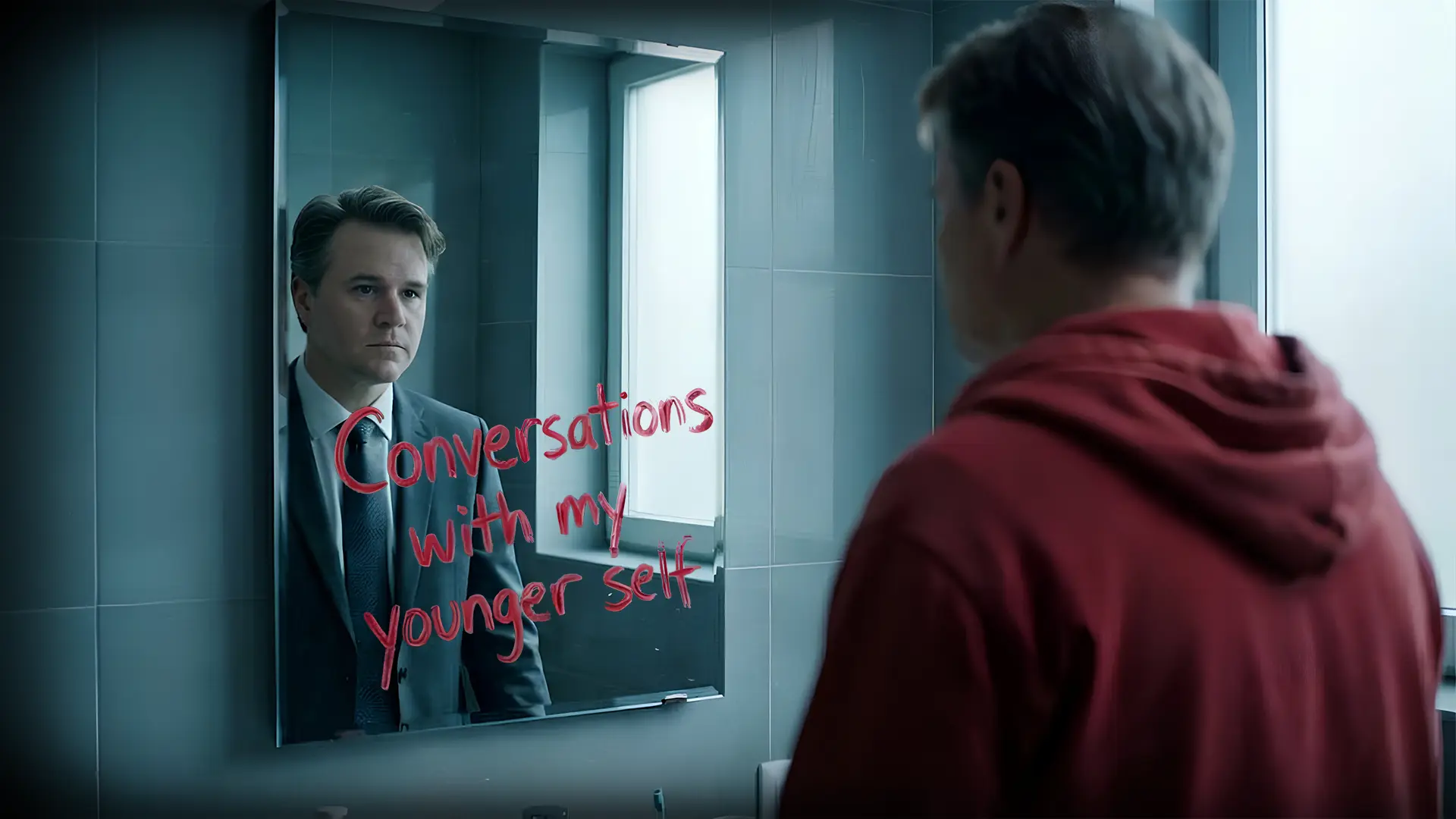



I stared at the glass, but instead of the expected 2022 reflection of a man nearly fifty, the silvering seemed to dissolve into a transparent window, revealing the grainy, high-contrast reality of an early moment in my life where my younger self stood frozen, looking back at me with the same jarring realization that the mirror had ceased to be a mirror. What happened next was the first of the conversations with my younger self.
Book 1: Glass in the Sand
~2022 – Foreword
For the most part, I find almost all time-travel stories boring.
More specifically, I have very little interest in any time-travel story built around a butterfly-effect mechanism. They always feel too clunky to me, and too ignorant of what I consider the much more likely physics of the multiverse. I am not a fan of paradox. Or perhaps I should say it is easier for me to believe that all paradoxical situations are simply unbelievable.
That said, I have always been a fan of alternative histories.
Few other story mechanisms allow for such a deep exploration of an event while still opening the playground to other possibilities. They let us ask what might have happened. What would be the result if one tiny element were altered?. If this had happened instead. If that choice had been made. If the moment had turned, even slightly, in another direction.
As I developed the concept for this book, one part retrospective memorandum and one part exploration of alternative paths influenced by conversations with my younger self, my first question was simple.
Do these cross-dimensional conversations change the future?
The only honest answer is that I do not know.
All I know is that I remember conversations with my older self when I was much younger. At the time, I thought it was just me trying to imagine myself in the future, pretending to have conversations with the man I might become. I did this often, usually before making a major decision or when I found myself standing at a crossroads that was about to create a significant change in my life.
For years, I believed these moments were only a creative exercise, part of an overactive imagination staging an analysis of my possible future. I believed they were daydreams. A private thought experiment. A way to interrogate my own choices before I made them.
I believed that until the direction of the conversations changed.
Instead of imagining my future self, I began experiencing the reverse of this and before I knew it, I was regularly finding myself having conversations with my younger self.
Even now, I could dismiss this as a self-induced thought experiment. It was when I began exploring old journal entries that documented these conversations from the other side that my own suspension of disbelief was no longer providing valid cover. I find myself in a situation where what I am experiencing I cannot explain. I suppose the easiest answer is that my mind is becoming an unreliable witness to reality. Either way, I decided I should finish writing the 4 books I began writing decades earlier that may be the key to understanding why now the mirror has flipped direction.
Memory is a funny thing. It is much more flexible than most of us are willing to admit, and yet, for most of us, most of the time, memory is the only evidence we have that the past existed at all.
So what happens when a conversation with yourself in the past alters the choices you made? And if the choices you made alter the memory you have of the results of those choices, did the conversation change the future? And if it did, how would you ever know?

Fleeting Glimpse
📖 Song Story
And simply by staring into the void, a memory becomes unlocked and a past reality becomes the coherent present represented by a small shard of amber glass.
The rift is open and all you need to do touch the glass to enter…


Thanks for the Bandaid
📖 Song Story
This track is an immersive, atmospheric experience that instantly pulls you into its orbit. It perfectly balances emotional depth with a driving, hypnotic energy, making it an instant anthem for fans who love cinematic electronic music. Here are the sonic elements that make it resonate so powerfully: Ethereal Vocals: The hauntingly beautiful, wordless vocalizations weave throughout the track, acting as their own melodic instrument and adding a profound layer of human emotion. Hypnotic Rhythm: A steady, pulsing electronic beat anchors the song, providing an infectious, heartbeat-like groove that keeps the energy moving forward. Cinematic Soundscapes: Rich, sweeping synths swell and recede over the rhythm, creating a moody, late-night vibe that feels both expansive and deeply intimate. Masterful Build: The song develops beautifully, layering complex textures and rhythmic drops to create an escalating sense of tension and euphoric release.

Obligations are Chains (Live)

You are not a Monster
📖 Song Story
Book 1: Glass in the Sand
Chapter: You Are Not a Monster ~1988
I suddenly find myself standing three feet behind my younger self in the boys’ bathroom of the junior high that has not existed for thirty years. Something very bad has just happened but my memory of this day has is dark and unclear. If you wanna explore some unresolved trauma, you’ll find no shortage of it in this phase of life.

Obligations are Chains (Instrumental)
📖 Song Story
Synth and guitars with a 4OTF SY77 Stock Drumkit
Obligations are Chains
📖 Song Story
There is a story behind this song and I intend to tell it soon.
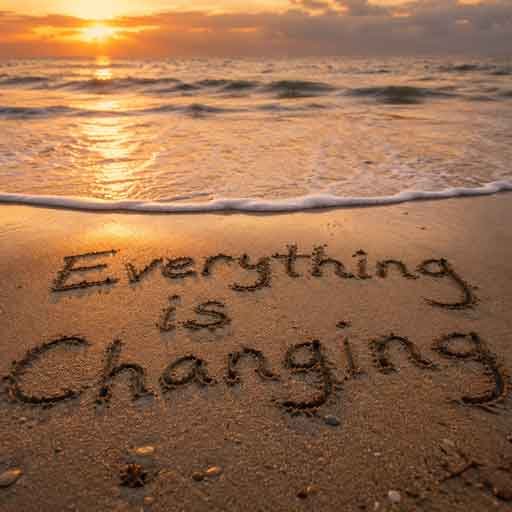
Everything is Changing (Long)
📖 Song Story
A longer version of the hard hitting “Everything is changing”
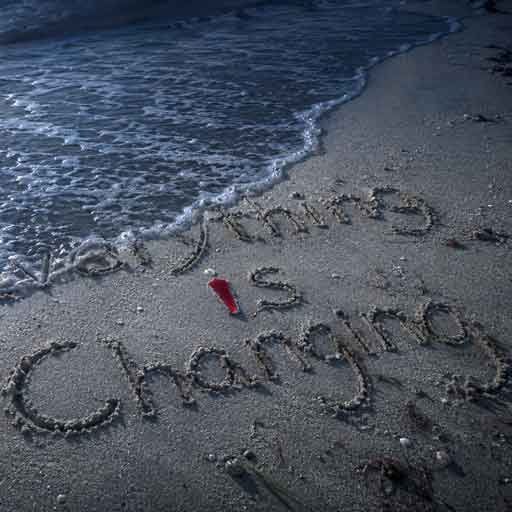
Just Like Life will Do (Everything is Changing)
📖 Song Story
Powerful symphonic song that inspired “Everything is changing”

Portable On-Demand
📖 Song Story
Doobie-Doobie-Doo

Can’t Take it with You

This is Your Ride
📖 Song Story
The story behind “This is Your Ride” – 2014 –
“You’re, The Bourbon Street Genesis, man!”
“No! No, YOU’RE the guy who is a smarty pants on the street of bourbon…”
“Wait, where the fuck are we?”
“I dunno. The moon is over there now, so that puts us…. Like, somewhere in New Orleans… I think.”
The track is a relic of a heavy, absinthe-fueled night on Bourbon Street in 2014, born from a way-too-many-dinks collaboration with the legendary author Chuck Palahniuk. The night a blur of attempting to out due the other with darker and darker storylines, stumbling around like a halloween sugar-high on “Vike&Mikes” candy mix, the session was an attempt to capture the same spirit-tearing prose that Palahniuk is known for. While the creator, Stephan, fully admits to be only “1/10,000th the writer” of the legend, the track is a mere homage to raw word-smithing prose into something that strips away the human facade until only a 100% genuine core of grease and gristle remains. The Arc of a “Somebody”: From Obscurity to the Green Room He understood then that a meaningful life was built on the “genuine article,” substance over style. However, the 2009 “Money War” surrounding his first book deal fundamentally shifted his internal compass. As he transitioned from obscurity to internationally read status, the introspection he once valued was replaced by a powerful addiction to the dopamine of importance. For several years, Stephan lived as a type of incognito celebrity. He describes this period as a time of being, “weak to all that makes humans the desperate rodents we are.” We are susceptible to the same traumas and most of us pretend we’re above it. He found himself drinking too much and gravitating toward those he perceived as “the shit,” relishing the ability to skip the line and enter the VIP world. Though he claimed to despise “star-fuckers,” he admitted to letting them into his orbit because little is more dangerous than an addiction to the feeling of being desired. During this era, the persona of “Being Important” began to overshadow the genuine man, a transformation that he acknowledges made him, “dislike himself.” The Great Extraction: Returning to the Marrow Stephan’s return to a “healthier normal world” was not a result of failure, but a conscious rejection of the “Big Deal” identity. He realized that the high of being special was a cage that prevented him from living an intentional life. By 2012, he was turning down book deals to find a “hard-earned peace,” a process he views as stripping away the “sparkle and glam” to find the purpose of existence again. Decoding the Lyrics: The Philosophy of the Ride The lyrics of “This Is Your Ride” act as a post-mortem for that era of ego and celebrity. “Falling is what happens to you. The ride is you choosing to control the fall.” Stephan views the fall as an allegory for surfing/living/dying everything that chaos can bring. Things are gonna happen, it really has a lot more to do with how you choose to deal with it than what happens to you. “Not the one they sold you… between boner pills and protein powder.” A sharp critique of the lie of consumerism and materialism. Marketing is telling you what you want to hear for money. The reality is that fashion is slavery and paying to be told lies you want to hear is what whores are for. It represents his current disdain for the day he saw his book being advertised at an airport kiosk between an ad for a Jersey Shore endorsed nutritional supplement and an over-the-counter counterfeit Viagra made with rhino tusks that you buy at gas stations and convenient stores. “A name, a mold, a leash, and a screen to keep you pacified.” We are living in times where we are more pacified than ever before. Reality television and dopamine optimized apps keep everyone burning 30.41 days a year consuming content that doesn’t warrant 30 seconds much less several hours a day. Cut the leash that binds you to this meaningless existence. Anyone tells you that when you are bored the best thing to do is be patient, has not fully accepted life is ending. Boredom is the sign that you are wasting your life. “Don’t be a slave to obligation and other people’s demands.” This refers to his time letting publicists and people he didn’t even like dictate his time, his energy and often his sanity. He had to learn to stop serving the version of himself that others wanted to see. Remastered after discovering efoiling: “This is Your Ride” – 2022 “The price of flight is letting go of imagined safety.” Stephan draws a parallel between efoiling and personal growth. To truly “fly,” he had to let go of the his party piece and welcome peaches back into his life and embrace the vulnerability of being a “nobody” again. “Better to be stripped to the bone… as long as you can still suck the marrow out.” The ultimate conclusion: it is far better to be a real person with a real name as an authentic nobody than an anonymous star.

We Explain the Cure
📖 Song Story
Ghost Is really taking off
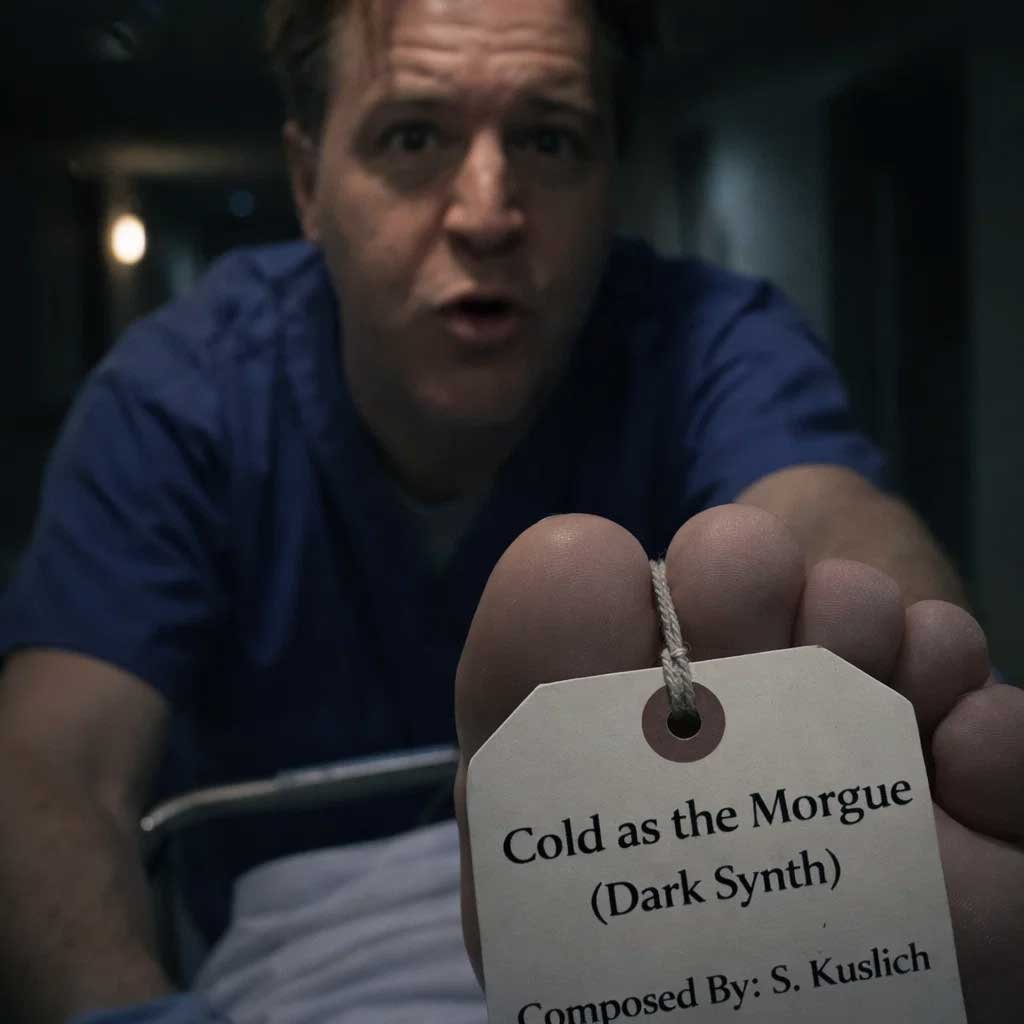
Cold as the Morgue (Dark Synth)

Hello Idea
📖 Song Story
Interview: Darwin Panic of Specific Ambiguity on “Hello Idea”
The Song That Explains Why Stephan Never Sleeps
Interview by David Bentley, originally recorded in 2008
Editor’s Note: Darwin Panic is the frontman and producer behind Specific Ambiguity, and in 2008 he was also running the sound and music department at Stephan’s production studio. While Stephan handled the company, clients, hiring, marketing, creative direction, and the daily chaos of keeping the studio alive, Darwin was often the person handed Stephan’s strange, rough, addictive song sketches and asked to turn them into finished records.
A Couple Songs Usually Means an Album
David: Darwin, when Stephan first brought you “Hello Idea,” how did he describe it?
Darwin: Probably as “a couple of songs I’ve been kicking around,” which is Stephan for “I accidentally wrote an LP.”
David: That happened more than once?
Darwin: Constantly. He’d say, “I’ve got a couple things I want you to look at.” Then he’d deliver fourteen songs. Not scraps. Not little vibe sketches. A full album’s worth of original songs with verses, choruses, bridges, hooks, melodies, bass lines, structure, lyrics, everything. They’d come in as rough MIDI sequences, usually with terrible default instruments, because he’s not pretending to be a finished music producer. But the songs were there.
David: What condition were the files in when you got them?
Darwin: Rough, but weirdly complete. Like getting a house with no drywall, no paint, exposed wiring, and somehow the architecture is already good. The MIDI instruments usually needed a lot of love. The drums needed better samples. The guitars needed to become actual guitars. The bass needed weight. The vocals needed real voices because Stephan doesn’t sing. But underneath all that, there would be killer hooks, succulent bass lines, and lyrics with teeth.
David: “Lyrics with teeth” is a good phrase.
Darwin: It fits him. He rarely writes lyrics that just decorate the song. There’s usually a bite in them. Some little sharp thing that tells you the song came from an actual problem, not just a rhyming exercise.
David: So “Hello Idea” came in as one of those MIDI demos?
Darwin: Yeah. Rough sequence, default instruments, written lyrics, notation for the verse and chorus melodies, and enough direction that we knew what he was hearing in his head. Muted electric guitar riff. Heavy synth bass. Driving rhythm. Tape delay. Smooth filtered vocal on the second verse. That kind of thing.
David: He gives that level of direction?
Darwin: Oh yeah. Stephan knows his way around MIDI instruments, rhythm machines, sequencing, arrangement, and the whole toolset more than he probably should, considering he’s also running a company full-time. That’s the part that’s unfair.
David: Unfair?
Darwin: I’m kind of glad he doesn’t sing.
David: Why?
Darwin: Because if he sang too, that would just be too much in one package. The guy already writes, directs, produces, sells, strategizes, builds companies, learns software overnight, knows enough about music tools to be dangerous, and somehow comes in with original songs. If he had a great voice too, the rest of us would have to file a formal complaint with the universe.
The Way Stephan Works
David: How would you describe his creative process from your side of the department?
Darwin: He likes to disappear alone with the idea first. That’s the key. He wants to flesh it out privately, get the structure working, prove to himself there’s something there. Then he hands it to people with the time and technical skills to polish it.
David: That sounds efficient.
Darwin: It is efficient, but it’s also very Stephan. He doesn’t want to sit in a room for three weeks while everyone discovers the song together. He wants to hand you the blueprint and say, “This is the building. Make it beautiful. Also, I have a client call in seven minutes.”
David: So he separates ideation from polish.
Darwin: Exactly. He’s very good at knowing which part he should own and which part he should hand off. He owns the concept, the hook, the emotional point, the structure. Then he lets specialists bring it to full production.
David: Is that how he runs the studio too?
Darwin: Pretty much. He generates the vision, gets the work moving, finds the client, hires the talent, keeps the machine fed, then trusts people to do what they’re good at. That’s why we’re all gainfully employed.
David: So the song is almost about his working method.
Darwin: More than almost. “Hello Idea” explains him.
The Man Who Can’t Rest
David: How so?
Darwin: I’ve known Stephan since college, and I have never known him to be capable of resting. I don’t think he sleeps, like at all.
David: You don’t mean that literally.
Darwin: I mean it emotionally literally. Maybe biologically he closes his eyes occasionally, but mentally? No. Something is always running. Some engine. Some unfinished plan. Some better version of the thing he just built. Some new machine he wants to automate. Some song. Some book. Some marketing idea. Some product. Some way to make the workflow faster, smarter, cleaner, more cinematic, more useful.
David: That sounds exhausting.
Darwin: It is. For him and sometimes for everyone around him. But it’s also why things happen. There are people who have ideas and people who build systems around ideas. Stephan is both, which is dangerous.
David: The song opens with “I’m awake again, staring at the ceiling.” Does that feel autobiographical?
Darwin: Completely. That line is not a pose. That is Stephan at two-thirty in the morning, brain fully lit, already deciding the day has started because an idea showed up.
David: The song treats the idea almost like a visitor.
Darwin: More like an intruder he’s happy to see.
David: That’s interesting.
Darwin: The title says hello, but the relationship is not casual. It’s not “Hello idea, nice to meet you.” It’s “Hello idea, I guess you own the next eight hours of my life.”
“The title says hello, but the relationship is not casual. It’s not ‘Hello idea, nice to meet you.’ It’s ‘Hello idea, I guess you own the next eight hours of my life.’”
“Hello Idea, You Are Everything”
David: The chorus is very simple and direct. “Hello idea, you are everything. Hello idea, haunt my dreams.” Why does that work?
Darwin: Because it’s true and repeatable. That’s what a hook needs. It has to feel obvious the second time you hear it, like it was already living in your head and the song just found it.
David: What does “you are everything” mean in this context?
Darwin: To Stephan? The idea is everything while it has him. That doesn’t mean family doesn’t matter or the company doesn’t matter or clients don’t matter. It means when the idea arrives, it reorganizes the room. Suddenly everything else has to make space for it.
David: Is that good or bad?
Darwin: Yes.
David: That’s not an answer.
Darwin: It’s the only honest answer. It’s good because that kind of focus creates things. It’s bad because it kills sleep, interrupts life, and convinces you that rest is something lazy people invented. The song knows both sides. It celebrates the idea and resents it at the same time.
David: That contradiction feels central.
Darwin: It is. The song is not anti-creativity. It’s not saying ideas are poison. It’s saying inspiration can be a beautiful thief.
The Sound of an Idea Arriving
David: What did you want the production to feel like?
Darwin: Momentum. A little manic, but controlled. It needed to feel like the idea starts as a pulse and then everything spins up around it.
David: Because of the line, “Every machine spins up at my command”?
Darwin: Exactly. That line is pure Stephan. Automated fabrication humming as planned. Ideas more important than dreams. Can’t unsee what I’ve seen. That’s not just poetic language. That’s how he thinks. Once he sees the system, he can’t unsee it. Then he has to build it or fix it or automate it.
David: The phrase “automated fabrication” stands out. It feels very specific.
Darwin: It should. Stephan is not a purely abstract creative person. He makes things. Physical things. Digital things. Visual things. Companies. Workflows. Machines. Songs. He’s idea-driven, but the ideas usually want to become objects or systems.
David: So the song is not just about imagination.
Darwin: No. It’s about the moment imagination becomes obligation.
David: Obligation?
Darwin: Yeah. Once the idea is good enough, he owes it effort. That’s the feeling. The idea shows up and suddenly not building it feels irresponsible.
The Rough Demos
David: You mentioned he sometimes sent extra remixes too.
Darwin: Constantly. If he was really inspired, we’d get the main batch of songs and then five or six remix versions. Sometimes they’d be weirdly compelling. Sometimes they’d be totally impractical. But they were never lazy.
David: Did he master any himself?
Darwin: A couple, usually. If he cared enough, he’d keep going and try to master them himself. We’d usually include those as home demos or bonus tracks. A lot of them were instrumentals because, again, he doesn’t sing.
David: Why include the home demos?
Darwin: Because they show the idea before it got dressed. That’s valuable. Sometimes the polished version is better, obviously. That’s the point of production. But the home demo has the fingerprints. You hear the original obsession in it.
David: Was there a home demo version of “Hello Idea”?
Darwin: Yes, and it had that same insomnia baked into it. Even with bad default instruments, the thing moved. You could hear the ceiling-staring in it.
David: Ceiling-staring?
Darwin: That feeling when it’s late, you should be asleep, but your brain has opened a new folder and started naming files.
Lyrics With Teeth
David: You said Stephan’s lyrics usually have teeth. Where are the teeth in this song?
Darwin: “I’ll betray the day.” That line is great.
David: Why?
Darwin: Because it’s not just “I’m staying up late.” It’s betrayal. The day had a plan. Sleep had a plan. Normal life had a plan. The idea shows up and he betrays all of it.
David: “No time for sleep. Fuck counting sheep.”
Darwin: Also very Stephan.
David: Funny, but not only funny.
Darwin: Right. It’s funny because it’s blunt. But underneath it, it’s a refusal to participate in the normal human maintenance cycle. Sleep is not just sleep in this song. Sleep represents every ordinary limit the idea refuses to respect.
David: Does that make the song reckless?
Darwin: A little. But that’s why it works. It doesn’t sound like someone politely scheduling creative time from nine to ten-thirty. It sounds like someone getting kidnapped by inspiration and deciding to help the kidnapper drive.
“It sounds like someone getting kidnapped by inspiration and deciding to help the kidnapper drive.”
Why This Song Explains Stephan
David: You keep saying this song explains Stephan. If someone had never met him, what would they understand from it?
Darwin: That ideas don’t visit him quietly. They arrive like weather. They rearrange his priorities. They turn into plans almost immediately. And he doesn’t just want to dream them. He wants proof. That’s in the first verse: “Gotta chase this feeling. Time to raise the roof. Gotta find the proof.”
David: “Gotta find the proof” feels important.
Darwin: Very. A lot of creative people are satisfied by the feeling of the idea. Stephan wants evidence. Prototype it. Score it. sketch it. Build the deck. Write the treatment. Make the demo. Put a number on it. Find out if it lives outside his head.
David: So the song is about converting inspiration into action.
Darwin: Yes. Fast. Maybe too fast. But fast.
David: Is that why the bridge is full of process language? Blueprint, angle, vector, line, code, debug.
Darwin: Exactly. That’s the part of the song where the idea becomes workflow. He’s not just lying there inspired. He’s already planning every angle. That’s Stephan. The idea becomes a production pipeline before most people would have finished writing it down.
Running the Studio While Writing Songs
David: What was it like receiving music from the person also running the company?
Darwin: Funny. Sometimes annoying. Usually impressive.
David: Annoying how?
Darwin: Because you’d want to be like, “Dude, aren’t you supposed to be in a client meeting?” And the answer was yes. He was. He had ten client meetings, three proposals, a staffing issue, a marketing plan, and somehow he also wrote a synth bass line that’s going to live in my head all week.
David: Did that put pressure on the department?
Darwin: A little, but good pressure. If the boss hands you something genuinely original, you want to honor it. Not because he’s the boss. Because the thing has heat.
David: Did he micromanage production?
Darwin: Not as much as you’d expect. He had strong opinions about the emotional direction, the hooks, the structure, the feel. But he also knew why he handed it to us. He wanted production perfection, and he knew that takes specialists.
David: So he trusted the department.
Darwin: Yes. Stephan likes talent. Real talent. If you’re good at the thing, he wants you to do the thing.
The Right Voices
David: You mentioned adding the right voices. Since Stephan doesn’t sing, how did you choose vocalists?
Darwin: You choose based on attitude first. Range matters, tone matters, all that. But with his songs, the singer has to understand the bite. If they sing it too clean, it gets toothless. If they oversell it, it gets theatrical. “Hello Idea” needed someone who sounded awake, excited, slightly wrecked, and completely unable to stop.
David: That’s a specific casting brief.
Darwin: Welcome to music production.
David: Did the vocalist need to sound like Stephan?
Darwin: No. They needed to sound like the state Stephan was describing.
David: Which was?
Darwin: Inspired insomnia.
Specific Ambiguity and the Song’s Identity
David: How did your own Specific Ambiguity instincts affect the track?
Darwin: We like tension. We like songs that can be fun and uneasy at the same time. “Hello Idea” fits that. It has a big hook. It moves. It wants to be played loud. But underneath, it’s about not being able to shut off.
David: So it can feel upbeat even though the subject is kind of unhealthy.
Darwin: That’s the sweet spot. The song should make you want to move and also make you wonder if maybe you should go to bed.
David: Did you want it to feel dangerous?
Darwin: Not dangerous like self-destruction. Dangerous like acceleration. Like, this could become something great, or this could become three days of no sleep and a whiteboard full of arrows.
David: That feels accurate.
Darwin: That is basically half the company’s origin story.
The Final Feeling
David: When people hear “Hello Idea,” what do you want them to feel?
Darwin: Recognition. Especially creative people. Builders. Writers. Designers. Coders. Anyone who has ever been ambushed by an idea at midnight and thought, damn it, now I have to get up.
David: Not inspiration?
Darwin: Recognition first. Inspiration maybe second. I want people to laugh a little because they know exactly what it feels like. Then I want them to feel the rush. Then maybe, later, the cost.
David: The cost is the sleep?
Darwin: Sleep, time, attention, relationships, sometimes sanity for a little while. But also, that’s where the work comes from. That’s the unresolved thing in the song. It doesn’t solve whether this is healthy. It just says, here it is. This is what happens when the idea arrives.
David: Is the song critical of Stephan?
Darwin: No. Loving, maybe. Teasing. Accurate. A little concerned. But not critical.
David: Concerned?
Darwin: Yeah. Because you admire the engine, but you also hope the engine gets maintenance.
David: Does it?
Darwin: I have seen no evidence.
Final Question
David: What is the shortest explanation of “Hello Idea”?
Darwin: It’s a love song to the thing that keeps you awake.
David: And the longer explanation?
Darwin: It’s a portrait of a guy who can’t rest because his mind keeps turning sparks into blueprints.
David: And the studio version?
Darwin: Stephan said he had a couple songs. He brought an album. Again.
David: That sounds like the real headline.
Darwin: It usually is.

Going Incogneto

Benefits with Friends (Remastered)
📖 Song Story
Interview: Darwin Panic of Specific Ambiguity on “Benefits with Friends”
Wanting Connection Without Shackles
Interview by David Bentley
Editor’s Note: “Benefits with Friends” was originally written by Stephan in 1993 for Specific Ambiguity. The song became a campus and club favorite, but Darwin Panic remembers it less as a joke and more as an unusually honest document of a young man trying to solve a painful problem: how to stay close to people without turning closeness into ownership.
The Breakup That Started It
David: What was happening in Stephan’s life when he wrote “Benefits with Friends”?
Darwin: He had just gone through a tough breakup with someone he really loved. Deeply loved. That’s the part people need to understand first, because otherwise the song sounds like some guy looking for permission to avoid commitment. That’s not what it was.
David: What was it, then?
Darwin: He knew he couldn’t be in a healthy long-distance relationship. Not at that age. Not with the things he still needed to experience. He loved her, and she loved him, but he knew that if he stayed in the relationship while wanting a life that relationship couldn’t allow, he’d eventually add deception to the pain.
David: Deception meaning cheating?
Darwin: Maybe. Or emotional dishonesty. Or pretending he could be satisfied by something he already knew would make him feel trapped. He hated hurting her, but he believed lying would hurt her worse. So he ended it.
David: Did he think they might get back together later?
Darwin: Yeah. That was part of the logic. He spent a lot of time saying that if there was any hope for a real future with her, they had to separate while they still had time to become themselves. If they chose each other again later, after actually living, then it would be legitimate. Not fear. Not habit. Not two people clinging to the first big love because they were scared of what came next.
David: What was he planning to do after college?
Darwin: At that point? Either medical school or an MBA. Those were the two ideas. Then, because Stephan is Stephan, he ended up doing something completely different and still somehow ended up running companies and working in medicine. That’s just one more strangeness of that guy.
The Problem With the Default Rules
David: When did this turn into a song idea?
Darwin: It came from him being frustrated with the rules everyone acted like they had to follow. He thought it was stupid that being close to someone meant you had to choose that person and destroy every other possibility. He couldn’t figure out why intimacy automatically came with ownership.
David: Did he talk about it that directly?
Darwin: Constantly. He’d ask why desire had to be rationed like there wasn’t enough of it. Why caring about one person meant every other connection had to become dangerous. Why the only way to prove sincerity was to give someone exclusive rights to you.
David: So he was not rejecting intimacy.
Darwin: No, that’s the whole thing. He wanted intimacy. He wanted closeness. He wanted affection, trust, sex, real connection. He just didn’t want the shackles that usually came with it.
David: The shackles being exclusivity?
Darwin: Sometimes exclusivity, but really the unspoken contract underneath it. The idea that if I touch you, now I owe you a future. If I want you, now I must stop wanting anyone else. If I care about you, now you get some claim over what I do with the rest of my life.
The Declaration
David: You were there when he made the declaration about no exclusive relationships?
Darwin: Oh yeah. I remember it because it was one of the most genuinely idiotic and completely honest things I had ever seen anyone do.
David: What did he say?
Darwin: He told a group of us he wasn’t going to entertain any exclusive relationships until graduation.
David: How did people react?
Darwin: Someone immediately joked that he wouldn’t be able to go that long without sex. I’m pretty sure I might have been the person who made that joke.
David: And?
Darwin: He said, completely sober, that he had no intention of not having sex. But he also had no intention of having sex with anyone he didn’t care about.
David: That is a very specific line to draw.
Darwin: It was very Stephan. No strangers. No empty hookups. No pretending sex meant nothing. But also no exclusivity. No ownership. No promising a relationship he didn’t have the space or stability to maintain.
David: And then?
Darwin: Then he said, publicly, to a group of friends, that he cared about all of them and that he’d be down for sex with any of them who wanted him too, as long as they didn’t require exclusivity.
David: That sounds like it should have gone terribly.
Darwin: It should have. Everybody laughed. Of course they laughed. It sounded insane. But he was completely serious. That’s what made it land differently. It wasn’t a pickup line. It was the most awkwardly honest terms-and-conditions speech ever delivered by a college guy.
The Friend-Zone Reversal
David: Did anyone actually take him up on it?
Darwin: Yeah. That was the crazy part. A lot of the women who, by then, should have completely friend-zoned him, took him up on it.
David: Why do you think that happened?
Darwin: Because he wasn’t trying to escape friendship. He was offering intimacy inside friendship. That was different. These were women who already knew him, already trusted him, already liked being around him, and already knew he cared about them.
David: So the friendship was the foundation.
Darwin: Exactly. That’s why the title matters. It wasn’t “friends with benefits” in the empty, clever, sitcom way. It was benefits with friends. Friends first. People he already cared about. People who cared about him.
David: What made that appealing to them?
Darwin: A few things. First, safety. They knew he wasn’t some random guy at a bar trying to get laid. Second, honesty. He wasn’t pretending this was going to become a traditional relationship. Third, freedom. They could have closeness and sex without signing up for the constant emotional administration of a college relationship.
David: Emotional administration?
Darwin: Yeah. The check-ins, the jealousy, the arguments, the “where is this going,” the social ownership, the breakup drama. College relationships can eat your whole life if you let them. Everyone’s busy. Everyone is changing. Everyone is still figuring out what they want. For some of them, this arrangement gave them intimacy without having to become someone’s girlfriend.
David: So it worked for the women too.
Darwin: Absolutely. That’s the only reason it worked at all. If it only benefited Stephan, it would have collapsed immediately. The women involved got something real from it. Trust. Affection. Sex with someone they actually liked. Less pressure. Less performance. Less fear that saying yes to intimacy meant giving up their independence.
Why It Worked
David: What kept it from becoming a mess?
Darwin: Honesty and rules. That’s it. It wasn’t a free-for-all. It wasn’t random. It wasn’t “anything goes.” It was actually more structured than most monogamous relationships I saw.
David: What were the rules?
Darwin: Testing first. Always. He wouldn’t sleep with anyone unless they got tested. And if anyone had contact with someone outside the group, they had to say so, wait three weeks, and get tested before reengaging.
David: That sounds unusually responsible for college.
Darwin: It was insanely responsible for college. Honestly, it was safer than anything I was doing at the time.
David: What were you doing?
Darwin: I was in a band. So, you know, random hookups after shows. Terrible risk management. Very little thought beyond the next few hours.
David: Did Stephan’s system change that for you?
Darwin: Completely.
Darwin Tries It
David: How did you get pulled into it?
Darwin: I had the hots for one of the women involved. So if I wanted any chance there, I had to follow the same rules. I got tested.
David: And?
Darwin: Cleared. Big relief.
David: Then what changed?
Darwin: I stopped sleeping with randos. Almost immediately. Anyone who showed interest from that point on had to follow the same basic logic. Testing. Honesty. Waiting if there had been outside contact. If someone wasn’t willing to wait three weeks and make sure everyone was safe, they weren’t worth my time.
David: Did that feel like losing options?
Darwin: No, that’s what surprised me. It felt like gaining standards. I didn’t feel limited. I felt calmer. More intentional. More respected. And honestly, the intimacy was way better.
David: Why better?
Darwin: Because it wasn’t impulsive. It wasn’t two drunk people letting vodka tonics make a decision neither of them wanted to examine. It was deliberate. You had to care enough to be safe. You had to have enough self-respect to protect yourself and enough respect for the other person to protect them too.
David: So the rules made sex more meaningful.
Darwin: Exactly. It filtered out the chaos. The people willing to be responsible were usually better partners anyway. The whole thing made sex feel less like conquest and more like trust.
The STI Question
David: At the time, what was the bigger concern, pregnancy or STIs?
Darwin: Both mattered, but our generation had AIDS hanging over everything. We came of age when AIDS was still terrifying. No cure. No effective treatment. Fatal. The messaging was basically, sex can kill you.
David: How did that shape things?
Darwin: It made people either terrified or reckless. Some people thought monogamy was the only safe option. Some people just ignored the risk because fear eventually burns people out. Stephan’s approach was more rational.
David: In what way?
Darwin: He looked at actual risks. Condoms mattered, obviously, but he also knew condoms didn’t fully protect against everything. For straight people our age, the most likely incurable thing you were going to pick up was genital herpes, and condoms didn’t fully protect you from that. We called them STDs back then, not STIs. His answer was simple. Test first. Be honest. Pause when circumstances change. Test again.
David: More risk management than moral panic.
Darwin: Exactly. That was Stephan. Fact, likely outcome, rule, freedom. Here are the facts. Here are the likely outcomes. Here is a rule that reduces harm. Now choose what you want to do.
Birth Control and Desire
David: You also mentioned that birth control became part of the conversation.
Darwin: Yeah, because Stephan started learning about hormonal birth control and how it could affect sex drive and desire. And once he started talking about it, a lot of the women around us started looking into it too.
David: What changed?
Darwin: A lot of them moved toward the copper IUD. It was highly effective and didn’t use hormones. I remember women seeming happier after that. More themselves. More into life.
David: More interested in sex?
Darwin: Yeah, that. It is a pretty cruel joke to give someone a pill so she can have sex without getting pregnant, and then the pill reduces her desire to have sex or ability to enjoy it.
David: Was this part of why the arrangement felt healthier?
Darwin: I think so. The women had more control. More information. More ability to decide what they actually wanted instead of just managing fear. That mattered. It wasn’t just Stephan building a system for himself. The women were making choices that worked for them too and then it just kept spreading. Everyone who hooked up with anyone attached to this started getting tested before having sex instead of after a scare. I honestly think we might have been the only group on campus not doing this whole thing ass-backwards from the way it should be done.
What the Women Got From It
David: If you had to explain what the women found beneficial about it, what would you say?
Darwin: They got intimacy without captivity. They got sex with someone they trusted, without having to become someone’s full-time emotional project. They got honesty instead of guessing. They got safety rules they could apply confidently to all new partners instead of vague promises. They got to remain independent without being treated as cold or unavailable. The women we hung with were already pretty progressive and independent to begin with but I think this just gave everyone a better foundation to back preexisting empowerment.
David: Was there affection?
Darwin: Definitely. That’s what made it work. There was affection. Real affection. Sometimes deep affection. It wasn’t sterile. It wasn’t mechanical. It wasn’t transactional. It was warm, but not possessive.
David: Did anyone want more?
Darwin: Sometimes. Of course. People are people. Someone can agree to the terms and still catch more feelings than they expected. That happened. That’s part of why the song isn’t smug. There’s glass in it. It knows people can still get cut.
David: But it still seemed better than the alternatives?
Darwin: To me, yes. Better than lying. Better than cheating. Better than serial monogamy that keeps leaving people abandoned or trapped. Better than drunken hookups with people you don’t trust. Not perfect. But honest, safer, and a lot more humane than most of what I saw.
The Song Itself
David: How did all of that become a Specific Ambiguity song?
Darwin: Stephan wrote the bones of it, and the bones were strong. Dorm room haze. Pearl Jam through the wall. No future talk. No heavy plans. That was the world we lived back then. Then the chorus asked the real question.
David: “How did it ever become okay to say I only want you if I can own you?”
Darwin: Exactly. That line is the whole damn song.
David: Why?
Darwin: Because it takes the private discomfort and turns it into an accusation. It says, wait, why do we accept this? Why is ownership treated like proof of love? Why is monogamy treated as the measure of sincerity? Why can’t I be close to you without destroying our autonomy?
David: That word, autonomy, is doing a lot.
Darwin: It is. And it’s not a cold word in the song. It’s desperate. We all want touch. We all need connection. He is honestly stating he wants to be inside someone and still be free to be himself. That’s not detachment. That’s someone trying to survive intimacy without disappearing.
“Too Much Glass in the Sand”
David: The lyric “can’t afford more broken glass in the sand” feels different now because of Glass in the Sand.
Darwin: It really does. Back then, I just thought it was a strong lyric image. Teeth! Given that I knew about his breakup I should have connected it to the trauma. Looking through more of his work I’m realizing that is a theme he’s returned to a lot. With the book, the meaning of it is way bigger than I realized. It kinda means a lot of really big things but also kinda means one very specific thing too. Once you really think about sea glass and how water, sand, and time, smooth a sharp, partially hidden danger into something smooth and beautiful– Well time heals all wounds… except for the ones it doesn’t.
David: What does that line mean to you now?
Darwin: Man… It means a lot of different things. I guess I kinda find myself getting a little freaked out that he had this whole glass = trauma + time = sea glass = resolving trauma thing in songs and books he was writing well before he should have had enough perspective to know how time will effect trauma. Then I just learned that this book and 4 others are somehow related to time travel or time-shifting or something along those lines. Then I just get stuck in that moment where you know you are entertaining an impossible reality yet, if you suspend the disbelief, well… Shit, if Stephan can time-shift that would actually explain a lot. Way too many times did he seem to know stuff he shouldn’t have known or understood how something would play out like he was able to predict it.
David: In the foreword he says he finds time-travel stories unbelievable, well, in their usual presentation.
Darwin: That’s exactly what a guy who could travel back in time would say.
Looking Back
David: If he is looking backwards in the book series is it causing you to do the same, and does this song remain relevant to you now?
Darwin: Honestly, I think we did college in one of the healthiest ways possible, compared to the options around us.
David: That’s a strong statement.
Darwin: I mean it. I knew people who turned into complete hedonists and had a lot of empty sex. I knew serial monogamists who kept going from relationship to relationship, feeling trapped or abandoned and heartbroken over and over. What we had was not perfect, but it was honest. It was responsible. It had care in it.
David: Did you see it clearly at the time?
Darwin: No. Not really. It seems obvious now, but it wasn’t obvious then. It was obvious to Stephan, which is one of the annoying things about him.
David: What was obvious to him?
Darwin: That a lot of social rules are just inherited assumptions. He would look at a rule and ask, does this actually produce the outcome people say it produces? If the answer was no, he didn’t respect the rule very much.
David: Did he try to convince everyone to live his way?
Darwin: No. That’s not his way. He shared the logic. He lived by it. People could opt in or not. He values independence too much to waste energy trying to get someone to do something they don’t want to do.
David: But you think he could have had that kind of influence?
Darwin: If he wanted? Yeah. He could have been a maniacal cult leader if he set his mind to it. Luckily, control isn’t his thing. Facts, likely outcomes, freedom. That’s more his thing.
Playing It Live
David: What was it like playing the song on campus and in clubs?
Darwin: It connected hard. It described something people were living through. Everyone knew the tension. Wanting somebody. Caring about somebody. Not wanting to be owned. Not wanting to own them. Not knowing what the hell to call that. It had an easy chorus to learn and sing along with even on the first listen. Big question, strong hook, enough attitude to shout, enough truth to sting.
David: Did people understand the message?
Darwin: Some did. Some just felt it. That’s enough. A good song doesn’t require everyone to write a philosophy paper afterward. If they sing the line, some part of them understands it.
Remastering It
David: What was it like remastering it for the book?
Darwin: Strange. In 1995, it felt immediate. Now, with the book around it, it feels almost prophetic.
David: Because of the glass?
Darwin: The glass, but also the themes. I dunno. I’m still stuck on where this book is going. It’s his first writing he’s releasing under his real name. I never thought I’d see that. I wouldn’t be at all surprised if this ends with him revealing that his life is like just a long Ground Hog’s Day that he’s lived numerous times.
David: Why is that? Why so many pen-names and so guarded about protecting them. He doesn’t seem like an overtly private person.
Darwin: No, he himself isn’t overtly private but there are people in his life that are. I think for him to have the freedom to write as expressively as he does he may feel he needs to protect those around him, at least to some degree but likely more than that, Why did he start writing under an alias? You know that album, “Listen without Prejudice” from George Michael? The one that turned a white British pop star into the guy who won all the R&B music awards? Stephan thought that was the best album title ever but that he should have released it under a pseudonym or under no name at all if he really wanted people to experience it without prejudice. Once you publish something under your own name, that’s it, that’s gonna paint everything you ever do with that color and brush. You’ll be typecast into that genre. He produces in multiple genres and multiple mediums and he doesn’t want one element to bleed into the others. He likes compartmentalization of expectation.
David: So why now? Why choose to abandon it now?
Darwin: Dude! I already told you. I think he’s gonna do the big reveal.
David: Are you curious to read the chapter it connects to?
Darwin: Very. I might actually be one of the characters in this one.
David: Does that make you nervous?
Darwin: A little. Stephan remembers a dangerous level of details. And when he doesn’t remember the exact details, he remembers the emotional truth and that kinda gives them the ability to reassemble event accurately. I’m mostly just curious. I don’t think it is going to be a list of stupid shit I’ve done. That would be a long but boring book.
Final Question
David: What is the shortest explanation of “Benefits with Friends?”
Darwin: It’s a song about wanting intimacy without captivity.
David: And the longer version?
Darwin: It’s about a young man who loved someone enough to let her go, then tried to build a way to stay connected to people without lying to them, owning them, or letting them own him.
David: And what did it mean to you personally?
Darwin: It changed how I operated. I stopped treating sex like something that just happened if the night went well. I started treating it like something that required care, honesty, and responsibility. And honestly, it made everything better. I have not had a single untested sex partner since that time. I can only imagine what I might have contracted or spread to others if I didn’t change my behavior when I did.
David: And the live version?
Darwin: A crowd full of young adults singing about freedom, desire, and ownership before most of them had the language to understand why it mattered.

Benefits with Friends (Live)
📖 Song Story
Our first sorta big live show was at the Uptown. We were a little nervous, a little stiff, but we got the hang of it. We improved a lot by the next live show.

You are Locked In
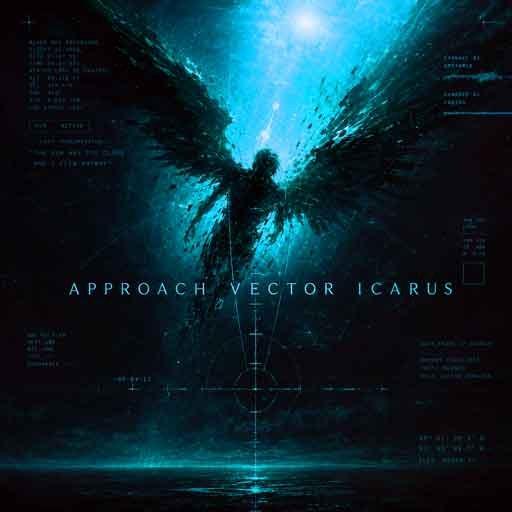
Welcome to Amsterdam (SeaGlass Blue)
📖 Song Story
Arrival in a city that feels like a held breath. Glass chimes and a slow pulse welcome you into a place that is half memory already.
I was 20 years old when I first visited Amsterdam where I met Sanne by chance on an enchanted midsummer day.


Solid State (Raytrace)
📖 Song Story
I got really into binural hypnotic beats and Theta states. So I made a song that was all about that.

I Amsterdam (2004)
📖 Song Story
Welcome to Amsterdam”: From Intimacy to Civic Anthem
The Original: A Breif Summer Romance
In its initial form, “Welcome to Amsterdam” is a precious, deeply personal time capsule. It carries the delicate acoustic weight of a brief, bittersweet summer romance that was fleeting, tender, and intensely private.
The Soundscape: Built on a fragile foundation of stripped back instrumentation, the song feels like a secret shared between two people in a quiet room.
The Atmosphere: The vocals are vulnerable and close to the mic, capturing the raw, melancholic ache of knowing that a beautiful moment in time is inherently temporary. It is a song about a specific place, but more importantly, it is about a specific feeling bound to a specific person.
The Transformation: The “I Amsterdam” Epic Fanfare
When Sanne reimagined the track in 2004 to launch the revolutionary “I Amsterdam” city marketing campaign, the song underwent a breathtaking, cinematic metamorphosis. The introverted love letter was blown open into an expansive, inclusive, and roaring civic celebration.
The Sonic Evolution: The delicate acoustic elements are replaced by a sweeping, driving wall of sound. It opens with an unmistakable, triumphant brass and percussion fanfare that commands attention, instantly evoking the bustling, vibrant, and historic energy of the city’s canals and streets.
The Shift in Perspective: What was once a lament about a fleeting personal connection becomes a powerful, welcoming embrace to the world. The melody retains its original emotional core, but the melancholic undertones are replaced by an undeniable sense of optimism, pride, and collective identity.
The Impact: It acts as a perfect auditory mirror to the “I Amsterdam” slogan itself, redefining the city not just as a location, but as a living, breathing community that belongs to everyone who steps into it. It is no longer a song about a private summer romance; it is a grand sonic invitation to fall in love with Amsterdam itself.
Welcome to Amsterdam
Light bends around you
Your attraction has gravity
When you hold me
It pulls me in completely
I know you want to stay
So stay with me
Stay, sea glass blue
Stay, feels so true
Stay, my eyes on you
Stay, I want you to
Stay, everything is new
When I’m with you
Feel the rhythm in my body
My heart is pounding
I want you to stay
So stay
Stay, sea glass blue
Stay, I want to show you
Stay, the world will wait
Stay, it’s okay to be afraid
Oh, visit this memory
And think of me
Stay
Stay
Stay
I’d known Sanne for almost 10 years by the time she contacted me to contribute to this project. She was excited on the phone when she called to tell me about it. As soon as I heard her voice, and reconstructed her accent into meaning, my mind was flooded with warm memories, I could feel the glass, so smooth and warm as it was in the sun on the day I first found it, the first night we spent together.

Ego Autopsy (Feed the Machine)
📖 Song Story
Behind the Song: Dev Yarusso on “Ego Autopsy” and the Sound of a Machine Starving
Interview by M. Quinn Maggie
Dev Yarusso is one of seven artists chosen to create music for key moments in Stephan’s upcoming book Glass in the Sand. His track “Ego Autopsy” dives deep into the emotional core of one chapter.
Maggie: Dev, you’re one of seven artists chosen to create music for key moments in Glass in the Sand. How did you first get involved?
Dev: Stephan brought me in early. Very early. The book wasn’t finished yet. Some of the chapters were polished, some were fragments, some were more like emotional coordinates. He gave us notes, scene descriptions, timelines, lyrics, character context, memories—all these pieces that didn’t fully behave like a finished manuscript yet.
Maggie: Was that difficult, creating music for something still being written?
Dev: It was unusual, but not difficult in the bad way. More like being invited into the weather before the storm had chosen its final path. He didn’t ask us to decorate finished chapters. He asked us to respond to the emotional truth of them while they were still alive.
Maggie: So the music was part of the development process?
Dev: I think so. With Stephan, music isn’t an accessory. He uses it to see. He writes very cinematically.
Maggie: You think the songs influenced the story?
Dev: Absolutely. The music becomes a kind of permission—to go deeper, to stop protecting the scene from itself.
Maggie: “Ego Autopsy” is a pretty intense title. What was your first reaction when you saw the lyrics?
Dev: I thought, okay, he’s not hiding. This is the first book he’s writing under his own name, and you can feel that. It isn’t coy. It isn’t protected by a persona. It is painfully direct.
Maggie: What do you think the song is really about?
Dev: Hunger. Not success. Not fame. Not even ego in the shallow sense. It’s about the hunger underneath accomplishment—the part of a person that keeps thinking the next achievement will finally make them feel safe, seen, loved, enough.
Maggie: And does it?
Dev: No. That’s the whole song. The machine stays hungry.
Maggie: How did you want the song to feel?
Dev: Uncomfortable, but not hopeless. Like someone finally stopped negotiating with himself. Put it on the table. Look at all of it. The pride. The dopamine. The identity. The need to be a big deal.
Maggie: So not a victory song?
Dev: Definitely not. It’s examination. It’s the feeling of telling the truth after years of making the truth more presentable.
Maggie: You made twenty-one versions of this song, right?
Dev: Twenty-one that I would admit to. The song kept changing depending on what part of the chapter I believed was most important. Early versions were more punishing. Later versions became more compassionate. Ego isn’t just vanity. Sometimes it’s armor.
Maggie: What did Stephan give you to help shape the song?
Dev: Structure with freedom. Notes about book tour energy, the dangerous rush of being recognized, the discomfort of realizing that some part of you likes it too much. He talked a lot about boundaries—the page as connection, but also as a wall.
Maggie: How do you turn that into a song?
Dev: You chase the feeling, not the literal event. The feeling is, I wanted this and now it’s eating me.
Maggie: Where does “Ego Autopsy” fit in the larger structure of the book?
Dev: To me, it’s one of the chapters where the older self stops admiring or judging the younger self and starts dissecting him. Not cruelly. Necessarily.
Maggie: This is the first book Stephan is writing under his own name. How does that affect the music?
Dev: It raises the stakes. It feels like a man stepping out from behind every mask he ever used to survive.
Maggie: Did that line about wanting to be important to anybody hit you?
Dev: It’s one of the least protected lines in the song. Wanting to be important to anybody. That’s embarrassing because it’s true.
Maggie: Where does the mercy come from in the song?
Dev: From understanding that the machine was built for a reason. Mercy means you don’t just condemn the machine. You ask who built it and what it was trying to protect.
Maggie: What did you want Stephan to feel when he heard your versions?
Dev: Exposed, but not betrayed. The right version should make him feel like the song saw him clearly and still stayed in the room.
Maggie: How would you describe the emotional architecture of “Ego Autopsy”?
Dev: Descent. Refusal. Exposure. Silence.
Maggie: What’s left when the machine finally stops?
Dev: The ink. The work. The thing that was real before the machine learned how to feed on it. Keep the ink. Leave the star.
Maggie: What should someone understand before listening to “Ego Autopsy”?
Dev: That the song is not asking them to hate ego. It’s asking them to stop letting ego pretend it isn’t in the room.
Maggie: And after listening?
Dev: Ask what part of you keeps asking to be fed.

Hey Kid – (Patience to Poison)
📖 Song Story
Interview: K.Logs on “Hey Kid (Patience to Poison)”
Turning Reflection into Defiance
Interview by Maggie Quinn
Editor’s Note: K.Logs, pronounced “Clogs,” like the shoes, is the studio nickname for musician and producer Kai Logan. The name started as a joke because his singing voice sounded uncannily like Kenny Loggins, and, like most good studio jokes, it stuck.
Maggie: K.Logs, your version of “Hey Kid” is called “Hey Kid (Patience to Poison).” It feels very different from the more introspective versions of “Hey Kid (Breathe Slow).” Was that intentional?
K.Logs: Completely intentional. I knew Stephan was going for something with a lot of soul and sadness, and I was really into the concept of the older guy talking to his younger self. But nobody was going to outdo Dev on that slow burn. So I didn’t even try.
Maggie: So you weren’t trying to compete with the more emotional versions?
K.Logs: No. That would’ve been the wrong move. If somebody else is already owning the reflective version, you don’t walk into the same room and try to sing louder. You find another door. I wanted mine to hit faster. Less “let’s sit with the pain” and more “okay, what do we do with it?”
Maggie: Your version was recorded back in 2020 as part of the Conversations with My Younger Self project. Did it feel connected to Glass in the Sand at that point?
K.Logs: Not in the way it does now. Back then, the larger narrative wasn’t fully built out yet. It was still forming. So my version wasn’t responding to a polished chapter. It was responding to an idea. Older self, younger self, hard-earned wisdom, boundaries, regret, all that. I was working from the concept before the mythology fully existed.
Maggie: That makes it less like a reinterpretation and more like a parallel response.
K.Logs: Exactly. That’s a good way to say it. I wasn’t adapting the final thing. I was catching one signal from an early version of the thing and building my own track around that signal.
Leaning Into “Patience to Poison”
Maggie: The phrase that defines your version is “You don’t owe patience to poison.” Where did that come from?
K.Logs: I heard a rumor back then that the fourth book might be called PtP. I thought it sounded cool. So I leaned into it.
Maggie: You built the song around that phrase?
K.Logs: Yeah. That became the spine. The chorus, the identity, the whole attitude. Once I had “You don’t owe patience to poison,” I knew what the song wanted to be.
Maggie: What did it want to be?
K.Logs: A conclusion. Not a conversation. Not a journal entry. A conclusion.
Maggie: That is a big difference from the other versions.
K.Logs: Right. A lot of the other versions ask, “How did we get here?” Mine says, “This is what you do now.”
“A lot of the other versions ask, ‘How did we get here?’ Mine says, ‘This is what you do now.’”
Cutting the Story
Maggie: One of the biggest choices you made was removing the narrative about the first book deal. Why?
K.Logs: Because that’s the part he writes to tell the story he’s already telling. It usually gets cut anyway.
Maggie: That sounds very producer-minded.
K.Logs: It is. I’ve spent two decades in commercial studios. You learn to ask what survives repeated listening. A detail can be emotionally rich and still not belong in the song. Sometimes the story is important to the writer, but the listener just needs the takeaway.
Maggie: So you prioritized clarity over context.
K.Logs: Absolutely. Context is great in a chapter. In a song, especially one like this, you need something people can grab immediately. The point wasn’t to explain the journey. The point was to deliver the lesson.
Maggie: And the lesson is?
K.Logs: You don’t owe patience to poison. You don’t owe peace to the noise.
From Reflection to Repetition
Maggie: The chorus feels like a directive. Almost like a command.
K.Logs: That’s exactly what it is.
Maggie: It is not asking the listener to think.
K.Logs: No. It’s telling them what to do. Sometimes you don’t need another layer of reflection. Sometimes you need the thing you can repeat when you’re about to let toxic people back into your life.
Maggie: So repetition was important.
K.Logs: Very. Repetition turns an idea into a tool. You hear it enough times and it starts living in your mouth. That matters. Especially with a line like that. “You don’t owe patience to poison” is useful. You can carry that around.
Maggie: It takes the emotional endpoint of the concept and makes it portable.
K.Logs: Exactly. Portable is the whole game. Can you remember it? Can you say it back to yourself when you need it? Can you shout it? That’s what I was after.
Structure Over Narrative
Maggie: The track follows a tight structure. Verse, verse, pre-chorus, chorus, verse, bridge, chorus, outro. Was that deliberate?
K.Logs: Completely. I wanted it to move. No wandering. No long scenic route. Get in, set the stakes, hit the phrase, repeat the phrase, leave.
Maggie: Even the bridge feels like forward motion instead of a pause.
K.Logs: Yeah. The bridge has some of the philosophy in it, but I didn’t want it to stop the track. That’s where a lot of songs die. They get to the bridge and suddenly the writer wants to prove the thesis. I didn’t want that. I wanted the bridge to tighten the spring.
Maggie: So you didn’t abandon the deeper message.
K.Logs: No. I compressed it. Big difference.
Maggie: Compressed it into momentum.
K.Logs: Exactly.
A Different Kind of Authenticity
Maggie: There is also a practical side to your version. You’ve said you were thinking about whether PtP might become something bigger.
K.Logs: Sure. I figured if the rumors were true and PtP became something bigger, maybe I’d get lucky. Every studio guy dreams of getting a song that lands with residuals.
Maggie: Some people might hear that as cynical.
K.Logs: It isn’t cynical. It’s honest. I love making music. I also understand how this business works. Creativity and opportunity are not enemies. You can care about the work and still hope the work pays you back.
Maggie: That feels very different from the tortured-artist version of authenticity.
K.Logs: Yeah, because that version is mostly branding. Real authenticity is not pretending you don’t care about practical outcomes. I cared. I thought the phrase was strong. I thought the concept had legs. I thought there might be a future there. So I made something that could travel.
Maggie: You operate at the intersection of creativity, instinct, and opportunity.
K.Logs: That sounds nicer than “studio rat with a nose for hooks,” but yes.
Why This Version Works
Maggie: What makes your version work, to me, is that it does not compete with the deeper narrative versions. It sidesteps them.
K.Logs: That was the goal. I wasn’t trying to make the definitive emotional version. I was trying to make the useful version.
Maggie: Useful how?
K.Logs: Useful in the way a good chorus is useful. It gives you language for something you already know but haven’t said cleanly yet.
Maggie: The emotional endpoint is autonomy, boundaries, and self-worth.
K.Logs: Right. The song is not really about the whole conversation with the younger self. It’s about the takeaway from that conversation. At some point, older you has to stop explaining the damage and start handing younger you better rules.
Maggie: And the rule here is, “You don’t owe patience to poison.”
K.Logs: Exactly. That’s the rule.
Maggie: What about “You don’t owe peace to the noise, man”?
K.Logs: That’s the companion rule. Poison is the people, patterns, systems, whatever is actively harming you. Noise is the pressure around it. The voices telling you to be nicer, calmer, more patient, more forgiving, more available. Sometimes peace is just another word people use when they want you to stop resisting.
Maggie: That line changes the meaning of peace.
K.Logs: It challenges fake peace. Real peace is great. Fake peace is compliance with better lighting.
“Fake peace is compliance with better lighting.”
Working Inside Stephan’s Concept
Maggie: How much direction did Stephan give you?
K.Logs: Enough to understand the emotional target, not so much that I felt boxed in. That’s one of the things he does well. He gives you the core idea, the emotional gravity, the reason it matters. Then he lets you bring yourself to it.
Maggie: Did you feel like you were writing for him, for the younger self, or for the audience?
K.Logs: The audience. But through him. The song only works if it feels like it came out of that personal material, but I wanted people to hear it and immediately apply it to their own lives.
Maggie: So less memoir, more mantra.
K.Logs: Exactly. That’s probably the cleanest way to say it.
Maggie: Did you worry that simplifying it would flatten the concept?
K.Logs: A little. That’s always the risk. But simplification and flattening are not the same thing. A hook can carry depth if the phrase is good enough. The trick is not to remove the meaning. It’s to remove the scaffolding.
Maggie: Remove the scaffolding, keep the load-bearing wall.
K.Logs: Now you’re getting it.
Final Assessment
Maggie: Within the broader Conversations with My Younger Self ecosystem, your version stands out as probably the most functional interpretation.
K.Logs: I’ll take that.
Maggie: Not because it lacks depth, but because it chooses utility over exploration.
K.Logs: That’s fair. I wasn’t trying to map the whole cave. I was trying to hand somebody a flashlight and say, “Walk that way.”
Maggie: So it is not the conversation.
K.Logs: No.
Maggie: It is the command.
K.Logs: Exactly.
Maggie: Is that how you want people to understand “Hey Kid (Patience to Poison)”?
K.Logs: Yeah. It is not the deepest version. It is not trying to be. It is the version you can remember when you need a spine.
Maggie: Last question. What is the shortest explanation of what you made?
K.Logs: I took what I liked, tightened it up, and made something you could actually play.
Maggie: And that is exactly what it is.
K.Logs: Good. Put that in the post.


Hey Kid (Breathe Slow)
📖 Song Story
Interview: Dev Yarusso on Shaping the Sound of Hey Kid (Breathe Slow)
“It’s not sung. It’s revealed.”
Interview by Lila Mercer
Lila Mercer:
When you work with Stephan, you’re not just getting lyrics. You’re stepping into something much bigger. What is his process like from your perspective?
Dev Yarusso:
Yeah, it’s completely different from how most people approach music.
Stephan starts with a story. He’s writing a book. He has all the space he wants, unlimited words, unlimited time to explain something, to build a moment, to walk you through an emotional arc step by step.
Music doesn’t give you that.
Music is all about time. You’ve got minutes, not chapters. So the challenge becomes, how do you take something that might live across hundreds of pages and compress it into something that hits just as hard in a fraction of that space?
We’re talking like one-one-hundredth of the information, but it still has to carry the same emotional weight.
That’s the job.
Mercer:
So he’s not thinking like a songwriter first?
Yarusso:
No. He’s thinking cinematically.
He understands something a lot of people miss, which is that even the best film only lands about half of its emotional impact without the right score behind it.
Music is what tells you how to feel about what you’re seeing. It fills in everything that isn’t being said.
A lot of authors, when they branch into multimedia, they’ll grab songs that are close to the vibe. Something that kind of matches the feeling.
Stephan doesn’t do “close.”
He wants it curated to fit exactly. He wants original.
It’s the difference between a movie that uses canned sound and one that brings in someone like John Williams or Hans Zimmer. That level of intention.
Mercer:
And that extends beyond just the music, right?
Yarusso:
Yeah. When he releases something, it’s rarely just one medium.
There’s music, there’s some form of visual, sometimes it’s animation, sometimes it’s something simpler, like a photo album that’s designed to support the story.
And it’s not decorative. It’s functional. It’s part of the emotional delivery.
Mercer:
Can you give an example of that?
Yarusso:
Yeah, in REDACTED, you spend the entire book with this family. You’re living in their world, seeing the tragedy, the perseverance, how each person handles what they’re going through.
Then there’s this photo album.
And it shows what the family looked like before everything changed. Birthdays, graduations, normal life. Just… people.
And you’re flipping through it, and it feels warm, almost nostalgic, and then you realize the pages at the end are empty.
On purpose.
Because they stopped being normal people at that point in the story.
And it hits you.
You don’t even realize it’s coming, but suddenly you’re sitting there thinking,
“Oh damn… this is right around when everything changed for them. That was the last picture.”
That’s what he does.
Mercer:
You called him a “stone cold killer” with emotion earlier.
Yarusso:
He is.
He knows exactly how to build something so that it lands when it’s supposed to land, and half the time you don’t even know why it hit you as hard as it did.
But you always know it’s coming.
There’s always that moment where the story just grabs you by the throat.
Mercer:
And your role is to translate that into sound?
Yarusso:
Yeah. I wanted to give that same kind of emotional hit to the song.
But you don’t have chapters to do it. You don’t have exposition. You don’t have time to explain anything.
You have tone. You have pacing. You have delivery.
That’s it.
Mercer:
There’s a moment in the second verse where the younger voice pushes back, says he can’t slow down. There’s something raw in the delivery there.
Yarusso:
That part wasn’t acting.
That’s the thing people don’t always realize.
When he wrote that moment, it wasn’t abstract. It wasn’t conceptual. It was real.
And when I hit that third line in the second verse, every time… it caught.
Every time.
I didn’t have to try to sound like something was grabbing me by the throat, because it was. That tension, that resistance, that refusal to slow down, it’s real.
It still is.
Even now.
Mercer:
So that’s not something you dialed in technically?
Yarusso:
No. If anything, the technical side was about not getting in the way of it.
You don’t polish that. You don’t smooth it out.
You let it stay a little uncomfortable. A little tight.
Because that’s the point in the story where the character isn’t ready to hear the truth yet.
Mercer:
What do you think makes this collaboration work the way it does?
Yarusso:
He builds the emotional architecture.
I strip it down to something that can exist inside time.
That’s really it.
He hands me something that could live across a whole book, and my job is to find the version of it that can exist in four minutes without losing what matters.
And when it works, it doesn’t feel compressed.
It just feels… clear.
We Kiss the Same (Dutch) Remastered
📖 Song Story
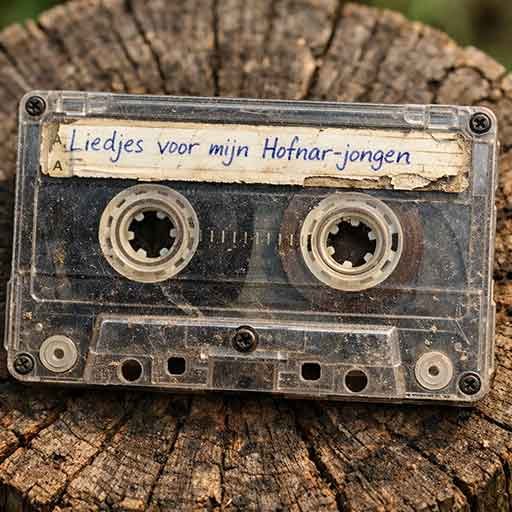
In loving memory of Sanne -. – Always your Hofnar Jongen

We Kiss the Same – (English) Re-Creation
📖 Song Story
We Kiss the Same -4000 Miles Away (English)
Written and Composed by: Sanne
English Re-Creation – Cia L. Berg
Sanne gave me the original Dutch recording on a cassette tape during the European leg of my first book tour. Seventeen years after that first summer in Amsterdam, she could see what I couldn’t; she played a major role in my decisions regarding book deals, tours, and just how many responsibilities I was willing to take on in the years ahead. When I attended her concert, she played this song for an audience that filled the Concertgebouw. Given that it was in Dutch, I didn’t know what every word meant, but I knew from the lines she chose to sing in English that she had written this song for me—and she was performing it for me.
She gave me a cassette with this song on it, and I played that tape so many times the magnetic ribbon turned to dust. With the help of Cia, and the most dedicated audio engineers on the planet, we have re-created the song in English. For the first time, I can hear her words in my native language, and the effect is staggering. Cia, an Oslo native, usually tries to mask her accent when singing English vocals leaned into this one. On first listen I thought they might have even restored the original master as Cia did such a good job the similarities were uncanny. It is a sensory teleportation back to a time when she was trying to save me from the self-destructive workaholic I had become.
When I listen to this, the book tours and the aliases fall away. The 4,000 miles vanish. I am back in Amsterdam, hearing the one person who truly knew my real name, reminding me that despite the years and the distance, we still kiss the same.
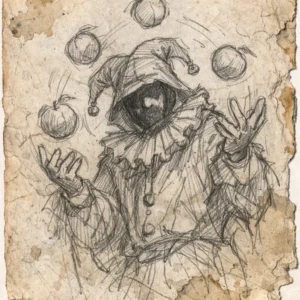
Sanne, though the number of hours we spent together over the years amounts to little, I really do feel as though we loved a lifetime’s worth. From that first summer when you allowed me into your orbit, to the times you cared enough about me to pull me out of the muck, I’ve always felt you in my heart and I always will.
Your Hofnarjongen, Always…
Money War
📖 Song Story
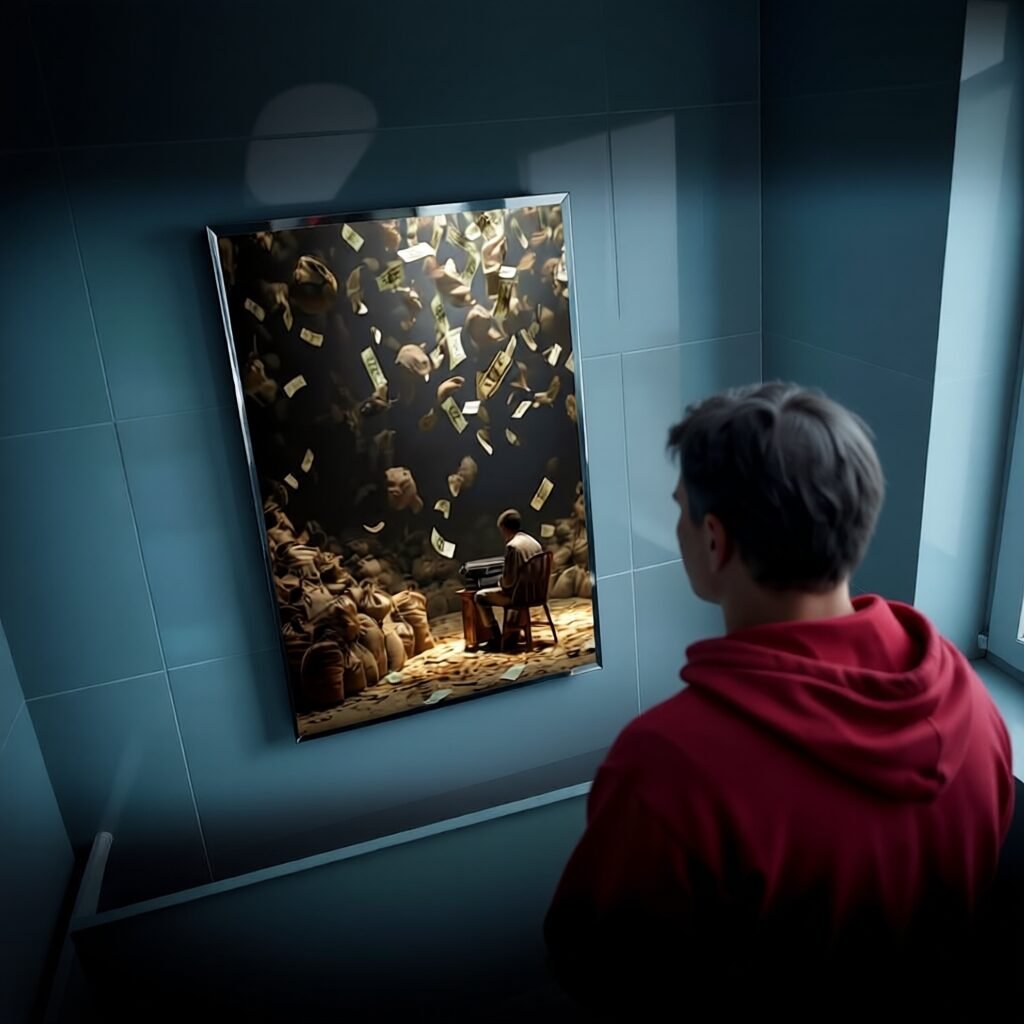
The Day my first book deal signed – May 2009
The glass is so bright I need to cover my eyes as I approach.