



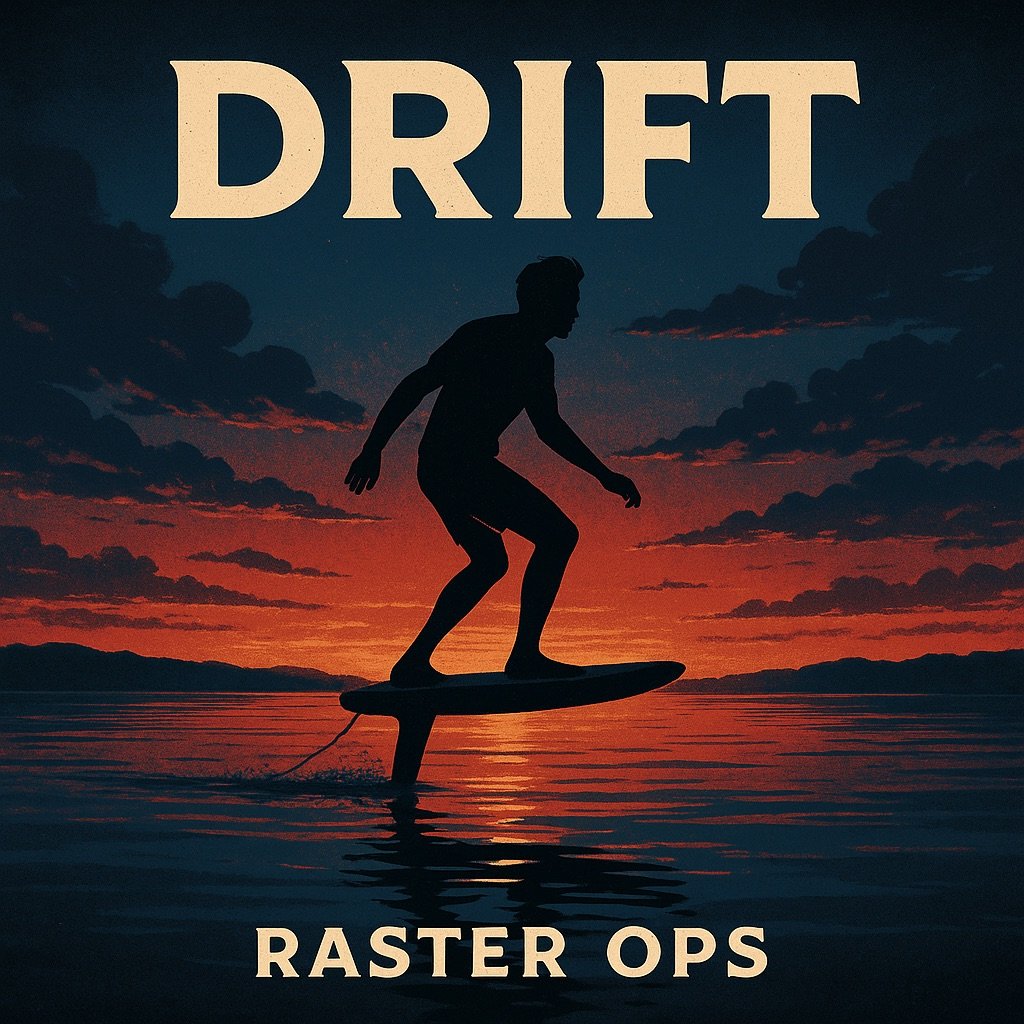
Drift
📖 Song Story
01. Drift — Raster Ops
Genre: Cinematic Electronic / Dreamwave
Description:
“Drift” opens the album like a slow breath — weightless, expansive, and quietly powerful. Built on warm analog pads, soft pulsing bass, and distant melodic echoes, the track feels like floating just above the surface of reality. It’s immersive, calm, and cinematic.
F the Fliteboys
📖 Song Story
There’s a particular kind of song that doesn’t ask for permission, doesn’t aim for polish, and doesn’t particularly care whether you like it. It kicks the door in, flips a chair, says something a little too loud, and dares you to react. “Fuck the Fliteboys” by Heather’s in Heat is exactly that kind of song. It is abrasive, gleefully irreverent, and surprisingly self-aware in its chaos. What could have easily been a throwaway inside joke instead becomes a fully committed piece of attitude-driven performance art.
At first listen, the track comes across as a raw, punk-adjacent outburst—fast, biting, and soaked in satire. The instrumentation is intentionally rough around the edges, favoring energy over precision. Guitars snarl rather than sing, the bass line punches forward with a kind of confrontational swagger, and the drums feel like they’re always on the verge of outrunning the rest of the band. It’s not sloppy, exactly. It’s reckless by design. That distinction matters.
Lyrically, the song leans heavily into exaggeration and persona. The titular phrase itself is less a literal sentiment and more a rallying cry, a caricature of defiance aimed at a vaguely defined archetype. The “Fliteboys” are less specific individuals and more a symbol—of ego, of posturing, of whatever target the singers feel like projecting onto in the moment. This ambiguity gives the track a strange universality. You don’t need to know who the Fliteboys are. You just need to recognize the energy of wanting to push back against something.
What elevates the song beyond novelty is the commitment to character. The performances are not neutral. They are theatrical, exaggerated, and clearly rooted in role-playing. This becomes even more interesting when you consider the origin of the band itself.
As a fun fact that feels almost too perfect for the tone of the track, Heather’s in Heat didn’t begin as a traditional band at all. The trio met while working in a commercial music studio, surrounded by the usual routine of client work, deadlines, and polished production. The song itself started as a joke—a “what if we just went all in?” kind of moment. Instead of dialing it back, they leaned harder into it. The result was not just a song, but an entire fictional band identity.
With four different Heathers working in the studio and each contributing in some way, the naming almost became inevitable. As Heather Edgerton put it, “We thought it would be fun if we all took on the ego of one of the girls in this band.” That decision is the key to understanding the track. It’s not just music. It’s a performance of archetypes.
Each “Heather” becomes a heightened version of a personality type. There’s the mean girl, the rebel, the instigator. These roles bleed into the delivery of the song, giving it a layered sense of irony. The aggression is real, but it’s also knowingly exaggerated. The singers are in on the joke, and that awareness gives the track a kind of chaotic intelligence.
Heather Larson-Bright’s contribution is particularly emblematic of this approach. “I decided one of them had to be the mean girl so I decided to be the mean Heather who plays the bass,” she said, slinging her instrument in the studio with a level of mock intensity that belied the casual atmosphere of the break room just minutes before. That image—of someone flipping a switch from ordinary to over-the-top persona—is essentially the song in miniature.
From a critical standpoint, the song walks a fine line between parody and sincerity. It is clearly not trying to be taken at face value, yet it commits so fully to its tone that it becomes oddly convincing. This is where many novelty tracks fail. They wink too hard at the audience, undercutting their own energy. “Fuck the Fliteboys” avoids this by never breaking character. The humor is embedded in the performance, not layered on top of it.
There’s also an interesting commentary here on the nature of identity in music. By adopting exaggerated personas, the Heathers highlight how much of performance—especially in genres like punk and rock—is already constructed. The difference is that they make the construction explicit. They are not pretending to be authentic in the traditional sense. They are openly playing roles, and in doing so, they arrive at a different kind of authenticity: one rooted in play, collaboration, and shared creativity.
Musically, the track benefits from its origins in a professional studio environment. Despite its rough aesthetic, there is a clear understanding of structure and balance. The mix, while intentionally raw, ensures that each element has space. The vocals cut through with clarity, the guitars maintain a controlled chaos, and the rhythm section holds everything together without feeling rigid. It’s a careful illusion of disorder.
The pacing of the song is another strength. It doesn’t overstay its welcome. It hits hard, makes its point, and exits before the concept can wear thin. This brevity is crucial. A song built on this level of intensity risks becoming exhausting if stretched too far. By keeping it tight, the band preserves the impact.
Of course, the song is not without its limitations. Its reliance on a single emotional tone—defiant, confrontational, irreverent—means that it doesn’t offer much in the way of dynamic range. There are no quiet moments, no shifts into vulnerability. But this is also part of its identity. It’s not trying to be a multifaceted emotional journey. It’s a burst of energy, a snapshot of a specific mood.
In that sense, “Fuck the Fliteboys” is less a traditional song and more an event. It captures a moment of creative spontaneity and amplifies it into something larger. The fact that it emerged from a group of studio professionals stepping outside their usual roles only adds to its charm. There’s a sense of liberation in the way they approach it, as if the song exists precisely because it doesn’t have to fit into any predefined category.
Ultimately, the success of the track lies in its authenticity of intent. It doesn’t pretend to be more than it is, but it also doesn’t hold back. It commits fully to its concept, embraces its absurdity, and delivers it with confidence. In doing so, it becomes more than just a joke. It becomes a statement—albeit a loud, messy, and slightly ridiculous one.
“Fuck the Fliteboys” may not be for everyone, and it doesn’t need to be. Its strength is in its specificity, its willingness to lean into a particular voice and run with it. It’s a reminder that music doesn’t always have to be polished or profound to be effective. Sometimes, it just has to be bold enough to say exactly what it wants, exactly how it wants, and let the chips fall where they may.
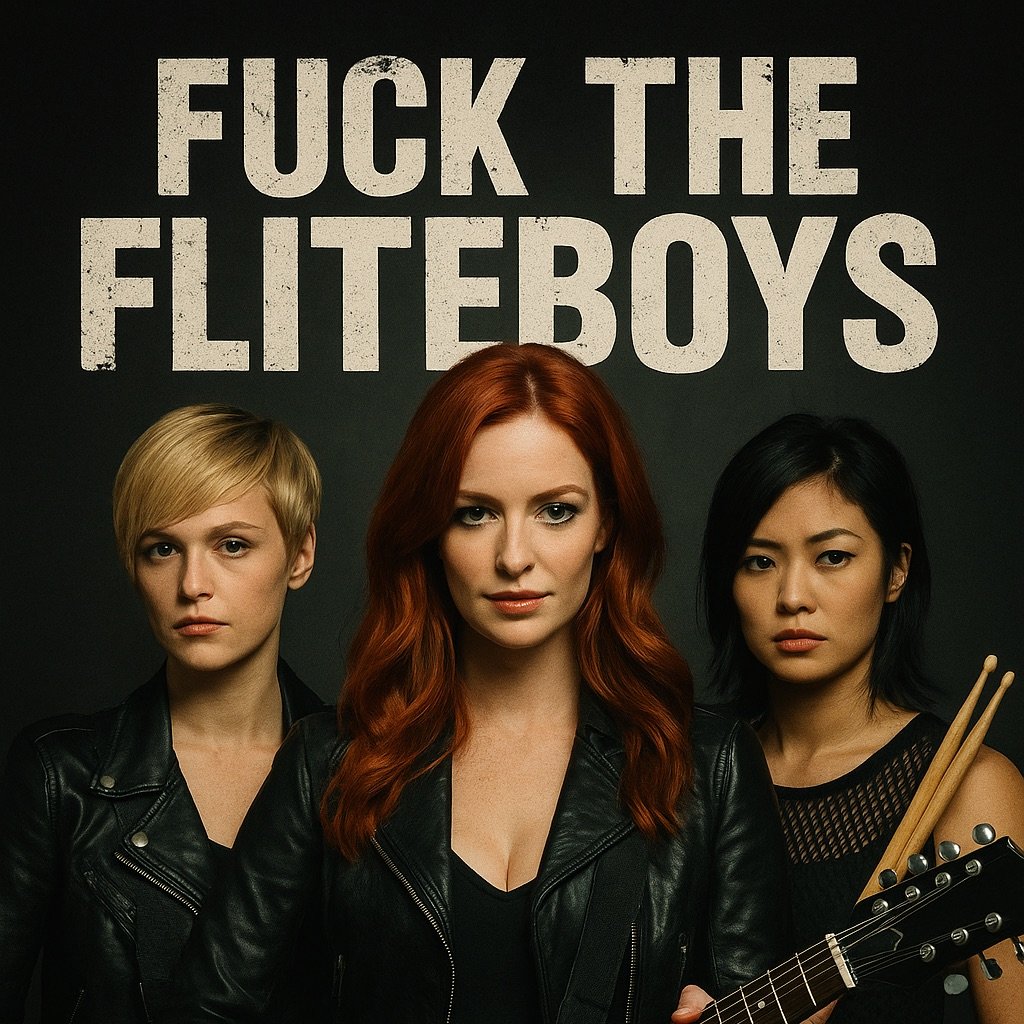
Fuck the Fliteboys
📖 Song Story
There’s a particular kind of song that doesn’t ask for permission, doesn’t aim for polish, and doesn’t particularly care whether you like it. It kicks the door in, flips a chair, says something a little too loud, and dares you to react. “Fuck the Fliteboys” by Heather’s in Heat is exactly that kind of song. It is abrasive, gleefully irreverent, and surprisingly self-aware in its chaos. What could have easily been a throwaway inside joke instead becomes a fully committed piece of attitude-driven performance art. At first listen, the track comes across as a raw, punk-adjacent outburst—fast, biting, and soaked in satire. The instrumentation is intentionally rough around the edges, favoring energy over precision. Guitars snarl rather than sing, the bass line punches forward with a kind of confrontational swagger, and the drums feel like they’re always on the verge of outrunning the rest of the band. It’s not sloppy, exactly. It’s reckless by design. That distinction matters. Lyrically, the song leans heavily into exaggeration and persona. The titular phrase itself is less a literal sentiment and more a rallying cry, a caricature of defiance aimed at a vaguely defined archetype. The “Fliteboys” are less specific individuals and more a symbol—of ego, of posturing, of whatever target the singers feel like projecting onto in the moment. This ambiguity gives the track a strange universality. You don’t need to know who the Fliteboys are. You just need to recognize the energy of wanting to push back against something. What elevates the song beyond novelty is the commitment to character. The performances are not neutral. They are theatrical, exaggerated, and clearly rooted in role-playing. This becomes even more interesting when you consider the origin of the band itself. As a fun fact that feels almost too perfect for the tone of the track, Heather’s in Heat didn’t begin as a traditional band at all. The trio met while working in a commercial music studio, surrounded by the usual routine of client work, deadlines, and polished production. The song itself started as a joke—a “what if we just went all in?” kind of moment. Instead of dialing it back, they leaned harder into it. The result was not just a song, but an entire fictional band identity. With four different Heathers working in the studio and each contributing in some way, the naming almost became inevitable. As Heather Edgerton put it, “We thought it would be fun if we all took on the ego of one of the girls in this band.” That decision is the key to understanding the track. It’s not just music. It’s a performance of archetypes. Each “Heather” becomes a heightened version of a personality type. There’s the mean girl, the rebel, the instigator. These roles bleed into the delivery of the song, giving it a layered sense of irony. The aggression is real, but it’s also knowingly exaggerated. The singers are in on the joke, and that awareness gives the track a kind of chaotic intelligence. Heather Larson-Bright’s contribution is particularly emblematic of this approach. “I decided one of them had to be the mean girl so I decided to be the mean Heather who plays the bass,” she said, slinging her instrument in the studio with a level of mock intensity that belied the casual atmosphere of the break room just minutes before. That image—of someone flipping a switch from ordinary to over-the-top persona—is essentially the song in miniature. From a critical standpoint, the song walks a fine line between parody and sincerity. It is clearly not trying to be taken at face value, yet it commits so fully to its tone that it becomes oddly convincing. This is where many novelty tracks fail. They wink too hard at the audience, undercutting their own energy. “Fuck the Fliteboys” avoids this by never breaking character. The humor is embedded in the performance, not layered on top of it. There’s also an interesting commentary here on the nature of identity in music. By adopting exaggerated personas, the Heathers highlight how much of performance—especially in genres like punk and rock—is already constructed. The difference is that they make the construction explicit. They are not pretending to be authentic in the traditional sense. They are openly playing roles, and in doing so, they arrive at a different kind of authenticity: one rooted in play, collaboration, and shared creativity. Musically, the track benefits from its origins in a professional studio environment. Despite its rough aesthetic, there is a clear understanding of structure and balance. The mix, while intentionally raw, ensures that each element has space. The vocals cut through with clarity, the guitars maintain a controlled chaos, and the rhythm section holds everything together without feeling rigid. It’s a careful illusion of disorder. The pacing of the song is another strength. It doesn’t overstay its welcome. It hits hard, makes its point, and exits before the concept can wear thin. This brevity is crucial. A song built on this level of intensity risks becoming exhausting if stretched too far. By keeping it tight, the band preserves the impact. Of course, the song is not without its limitations. Its reliance on a single emotional tone—defiant, confrontational, irreverent—means that it doesn’t offer much in the way of dynamic range. There are no quiet moments, no shifts into vulnerability. But this is also part of its identity. It’s not trying to be a multifaceted emotional journey. It’s a burst of energy, a snapshot of a specific mood. In that sense, “Fuck the Fliteboys” is less a traditional song and more an event. It captures a moment of creative spontaneity and amplifies it into something larger. The fact that it emerged from a group of studio professionals stepping outside their usual roles only adds to its charm. There’s a sense of liberation in the way they approach it, as if the song exists precisely because it doesn’t have to fit into any predefined category. Ultimately, the success of the track lies in its authenticity of intent. It doesn’t pretend to be more than it is, but it also doesn’t hold back. It commits fully to its concept, embraces its absurdity, and delivers it with confidence. In doing so, it becomes more than just a joke. It becomes a statement—albeit a loud, messy, and slightly ridiculous one. “Fuck the Fliteboys” may not be for everyone, and it doesn’t need to be. Its strength is in its specificity, its willingness to lean into a particular voice and run with it. It’s a reminder that music doesn’t always have to be polished or profound to be effective. Sometimes, it just has to be bold enough to say exactly what it wants, exactly how it wants, and let the chips fall where they may.

Ride Forever (Better Ways to Die)
📖 Song Story
The Origin of Ride Forever: From Parody to Perfection The story of Ride Forever begins, like many creative accidents, with a joke that didn’t land—at least not in the way it was supposed to. Composer Stephan Kuslich never set out to write a serious song. The original concept was deliberately unserious: a Weird Al–style parody loosely inspired by Oasis’s Live Forever. The goal was to poke fun at a specific corner of his YouTube audience—those persistently critical voices who fixated on safety gear, or the lack thereof. The tone was meant to be exaggerated, defiant to the point of absurdity. Helmets, armor, condoms—nothing was off-limits in what was intended to be a tongue-in-cheek anthem of reckless bravado. On paper, it was ridiculous. That was the point. But when Kuslich translated the idea into a MIDI sequence and rough lyrics, something unexpected happened. The structure didn’t behave like parody. The phrasing didn’t lean into punchlines. The melody didn’t signal humor. It didn’t wink at the listener. It didn’t exaggerate in the right places. It simply… worked. Enter Darwin Panic of Specific Ambiguity. As Darwin later recounted, the moment he heard the early version, his reaction was immediate and decisive. “I heard it and said, well this isn’t going to work. It sounds way too different for anyone to get that it’s a parody.” The issue wasn’t that it failed—it was that it failed in a very specific way. It wasn’t funny. But it also wasn’t bad. In fact, it was the opposite. Instead of discarding it, Darwin did something far more consequential. He leaned in. What followed was less a correction than a reframing. Stripped of its intended comedic context, the track revealed a different identity—one that had been there all along, hiding beneath the surface of what was supposed to be satire. As Darwin began reshaping the arrangement in the studio, adding real instrumentation, adjusting tone, and letting the structure breathe, the realization set in: this wasn’t a parody that missed the mark. It was an original song that had accidentally been written in disguise. Not ironically good. Not accidentally amusing. Just… good. There’s a certain poetic irony in what happened next. Within the studio environment—populated by trained musicians, producers, and engineers—it became clear that the least musically trained member of the group had stumbled into something the rest recognized immediately. The person who intended to write a joke had instead written a foundation. One that others, with more formal musical instincts, could recognize, refine, and expand. In that sense, Ride Forever is not a story about a song being written. It’s a story about a song being discovered. Darwin’s next move was pivotal. Rather than trying to “fix” the parody, he proposed abandoning it entirely. The new idea was simple: keep the defiant spirit, but remove the comedic framing. Let the track exist as its own thing. Not a spoof, not a reference, but an original piece inspired by the energy of Live Forever, not dependent on it. Kuslich’s reaction, by his own account, was one of surprise. When he first heard Darwin’s version, the Oasis influence had already dissolved to the point of being unrecognizable. What remained was something entirely new. “It sounded really good,” he admitted. Good enough, in fact, to anchor something larger. That “something larger” became the Ride Forever project. But instead of consolidating around a single definitive version, the team made a decision that would ultimately define the identity of the song. They let it fracture. Rather than choosing one direction—rock, parody, ambient, theatrical—they invited multiple interpretations to coexist. The same core material was handed to different artists and groups within the studio, each encouraged to push it in their own direction. The result was not a linear evolution, but a simultaneous divergence. Specific Ambiguity’s version carried the DNA of Darwin’s original intervention. It leaned into rock structure and grounded intensity, shaping the song into something declarative and cohesive. Heather’s in Heat took that same energy and amplified it, transforming it into a loud, persona-driven performance that leaned into attitude and exaggeration. Cia Berg, alongside Raster Ops, moved in the opposite direction entirely, dissolving the track into dreamy synth textures and atmospheric immersion. Madeline Roma’s Sensual Mix would later internalize the song further, turning it into something intimate, restrained, and deeply focused on feeling rather than motion. None of these versions replaced the others. None were “definitive.” Because there was no original to begin with. All of them were born from the same moment. All of them were valid. All of them revealed something different about the same underlying structure. What started as a failed parody became a kind of musical prism, refracting into multiple identities depending on who was holding it. Kuslich himself acknowledged how unexpected this transformation was. The track that began as a throwaway joke ended up becoming the title track of the project, standing in stark contrast to the more atmospheric work that initially defined the album’s direction. It wasn’t supposed to lead. It wasn’t even supposed to exist in that form. And yet, it did. In retrospect, the most remarkable aspect of Ride Forever is not that it turned out well. It’s that it resisted intention. It refused to be what it was designed to be and, in doing so, revealed something more authentic. The musicians in the room didn’t create that authenticity—they recognized it. They gave it shape, amplified it, and allowed it to evolve, but the core of it was already there, embedded in what was supposed to be a joke. There’s a quiet lesson in that. Sometimes the difference between failure and discovery is not the material itself, but the willingness to reinterpret it. To hear something not for what it was meant to be, but for what it already is. Ride Forever didn’t become a great song because it was carefully planned. It became one because it was accidentally honest—and because the right people were in the room to notice.

Ride Forever (Acoustic)
📖 Song Story
This is the best version according to 8% of all voting audience members
Ride Forever (Sensual Mix)
📖 Song Story
The Origin of Ride Forever: From Parody to Perfection The story of Ride Forever begins, like many creative accidents, with a joke that didn’t land—at least not in the way it was supposed to. Composer Stephan Kuslich never set out to write a serious song. The original concept was deliberately unserious: a Weird Al–style parody loosely inspired by Oasis’s Live Forever. The goal was to poke fun at a specific corner of his YouTube audience—those persistently critical voices who fixated on safety gear, or the lack thereof. The tone was meant to be exaggerated, defiant to the point of absurdity. Helmets, armor, condoms—nothing was off-limits in what was intended to be a tongue-in-cheek anthem of reckless bravado. On paper, it was ridiculous. That was the point. But when Kuslich translated the idea into a MIDI sequence and rough lyrics, something unexpected happened. The structure didn’t behave like parody. The phrasing didn’t lean into punchlines. The melody didn’t signal humor. It didn’t wink at the listener. It didn’t exaggerate in the right places. It simply… worked. Enter Darwin Panic of Specific Ambiguity. As Darwin later recounted, the moment he heard the early version, his reaction was immediate and decisive. “I heard it and said, well this isn’t going to work. It sounds way too different for anyone to get that it’s a parody.” The issue wasn’t that it failed—it was that it failed in a very specific way. It wasn’t funny. But it also wasn’t bad. In fact, it was the opposite. Instead of discarding it, Darwin did something far more consequential. He leaned in. What followed was less a correction than a reframing. Stripped of its intended comedic context, the track revealed a different identity—one that had been there all along, hiding beneath the surface of what was supposed to be satire. As Darwin began reshaping the arrangement in the studio, adding real instrumentation, adjusting tone, and letting the structure breathe, the realization set in: this wasn’t a parody that missed the mark. It was an original song that had accidentally been written in disguise. Not ironically good. Not accidentally amusing. Just… good. There’s a certain poetic irony in what happened next. Within the studio environment—populated by trained musicians, producers, and engineers—it became clear that the least musically trained member of the group had stumbled into something the rest recognized immediately. The person who intended to write a joke had instead written a foundation. One that others, with more formal musical instincts, could recognize, refine, and expand. In that sense, Ride Forever is not a story about a song being written. It’s a story about a song being discovered. Darwin’s next move was pivotal. Rather than trying to “fix” the parody, he proposed abandoning it entirely. The new idea was simple: keep the defiant spirit, but remove the comedic framing. Let the track exist as its own thing. Not a spoof, not a reference, but an original piece inspired by the energy of Live Forever, not dependent on it. Kuslich’s reaction, by his own account, was one of surprise. When he first heard Darwin’s version, the Oasis influence had already dissolved to the point of being unrecognizable. What remained was something entirely new. “It sounded really good,” he admitted. Good enough, in fact, to anchor something larger. That “something larger” became the Ride Forever project. But instead of consolidating around a single definitive version, the team made a decision that would ultimately define the identity of the song. They let it fracture. Rather than choosing one direction—rock, parody, ambient, theatrical—they invited multiple interpretations to coexist. The same core material was handed to different artists and groups within the studio, each encouraged to push it in their own direction. The result was not a linear evolution, but a simultaneous divergence. Specific Ambiguity’s version carried the DNA of Darwin’s original intervention. It leaned into rock structure and grounded intensity, shaping the song into something declarative and cohesive. Heather’s in Heat took that same energy and amplified it, transforming it into a loud, persona-driven performance that leaned into attitude and exaggeration. Cia Berg, alongside Raster Ops, moved in the opposite direction entirely, dissolving the track into dreamy synth textures and atmospheric immersion. Madeline Roma’s Sensual Mix would later internalize the song further, turning it into something intimate, restrained, and deeply focused on feeling rather than motion. None of these versions replaced the others. None were “definitive.” Because there was no original to begin with. All of them were born from the same moment. All of them were valid. All of them revealed something different about the same underlying structure. What started as a failed parody became a kind of musical prism, refracting into multiple identities depending on who was holding it. Kuslich himself acknowledged how unexpected this transformation was. The track that began as a throwaway joke ended up becoming the title track of the project, standing in stark contrast to the more atmospheric work that initially defined the album’s direction. It wasn’t supposed to lead. It wasn’t even supposed to exist in that form. And yet, it did. In retrospect, the most remarkable aspect of Ride Forever is not that it turned out well. It’s that it resisted intention. It refused to be what it was designed to be and, in doing so, revealed something more authentic. The musicians in the room didn’t create that authenticity—they recognized it. They gave it shape, amplified it, and allowed it to evolve, but the core of it was already there, embedded in what was supposed to be a joke. There’s a quiet lesson in that. Sometimes the difference between failure and discovery is not the material itself, but the willingness to reinterpret it. To hear something not for what it was meant to be, but for what it already is. Ride Forever didn’t become a great song because it was carefully planned. It became one because it was accidentally honest—and because the right people were in the room to notice.

Ride Forever (Gurdy Glans)

Ride Forever (No Control)
📖 Song Story
The Origin of Ride Forever: From Parody to Perfection The story of Ride Forever begins, like many creative accidents, with a joke that didn’t land—at least not in the way it was supposed to. Composer Stephan Kuslich never set out to write a serious song. The original concept was deliberately unserious: a Weird Al–style parody loosely inspired by Oasis’s Live Forever. The goal was to poke fun at a specific corner of his YouTube audience—those persistently critical voices who fixated on safety gear, or the lack thereof. The tone was meant to be exaggerated, defiant to the point of absurdity. Helmets, armor, condoms—nothing was off-limits in what was intended to be a tongue-in-cheek anthem of reckless bravado. On paper, it was ridiculous. That was the point. But when Kuslich translated the idea into a MIDI sequence and rough lyrics, something unexpected happened. The structure didn’t behave like parody. The phrasing didn’t lean into punchlines. The melody didn’t signal humor. It didn’t wink at the listener. It didn’t exaggerate in the right places. It simply… worked. Enter Darwin Panic of Specific Ambiguity. As Darwin later recounted, the moment he heard the early version, his reaction was immediate and decisive. “I heard it and said, well this isn’t going to work. It sounds way too different for anyone to get that it’s a parody.” The issue wasn’t that it failed—it was that it failed in a very specific way. It wasn’t funny. But it also wasn’t bad. In fact, it was the opposite. Instead of discarding it, Darwin did something far more consequential. He leaned in. What followed was less a correction than a reframing. Stripped of its intended comedic context, the track revealed a different identity—one that had been there all along, hiding beneath the surface of what was supposed to be satire. As Darwin began reshaping the arrangement in the studio, adding real instrumentation, adjusting tone, and letting the structure breathe, the realization set in: this wasn’t a parody that missed the mark. It was an original song that had accidentally been written in disguise. Not ironically good. Not accidentally amusing. Just… good. There’s a certain poetic irony in what happened next. Within the studio environment—populated by trained musicians, producers, and engineers—it became clear that the least musically trained member of the group had stumbled into something the rest recognized immediately. The person who intended to write a joke had instead written a foundation. One that others, with more formal musical instincts, could recognize, refine, and expand. In that sense, Ride Forever is not a story about a song being written. It’s a story about a song being discovered. Darwin’s next move was pivotal. Rather than trying to “fix” the parody, he proposed abandoning it entirely. The new idea was simple: keep the defiant spirit, but remove the comedic framing. Let the track exist as its own thing. Not a spoof, not a reference, but an original piece inspired by the energy of Live Forever, not dependent on it. Kuslich’s reaction, by his own account, was one of surprise. When he first heard Darwin’s version, the Oasis influence had already dissolved to the point of being unrecognizable. What remained was something entirely new. “It sounded really good,” he admitted. Good enough, in fact, to anchor something larger. That “something larger” became the Ride Forever project. But instead of consolidating around a single definitive version, the team made a decision that would ultimately define the identity of the song. They let it fracture. Rather than choosing one direction—rock, parody, ambient, theatrical—they invited multiple interpretations to coexist. The same core material was handed to different artists and groups within the studio, each encouraged to push it in their own direction. The result was not a linear evolution, but a simultaneous divergence. Specific Ambiguity’s version carried the DNA of Darwin’s original intervention. It leaned into rock structure and grounded intensity, shaping the song into something declarative and cohesive. Heather’s in Heat took that same energy and amplified it, transforming it into a loud, persona-driven performance that leaned into attitude and exaggeration. Cia Berg, alongside Raster Ops, moved in the opposite direction entirely, dissolving the track into dreamy synth textures and atmospheric immersion. Madeline Roma’s Sensual Mix would later internalize the song further, turning it into something intimate, restrained, and deeply focused on feeling rather than motion. None of these versions replaced the others. None were “definitive.” Because there was no original to begin with. All of them were born from the same moment. All of them were valid. All of them revealed something different about the same underlying structure. What started as a failed parody became a kind of musical prism, refracting into multiple identities depending on who was holding it. Kuslich himself acknowledged how unexpected this transformation was. The track that began as a throwaway joke ended up becoming the title track of the project, standing in stark contrast to the more atmospheric work that initially defined the album’s direction. It wasn’t supposed to lead. It wasn’t even supposed to exist in that form. And yet, it did. In retrospect, the most remarkable aspect of Ride Forever is not that it turned out well. It’s that it resisted intention. It refused to be what it was designed to be and, in doing so, revealed something more authentic. The musicians in the room didn’t create that authenticity—they recognized it. They gave it shape, amplified it, and allowed it to evolve, but the core of it was already there, embedded in what was supposed to be a joke. There’s a quiet lesson in that. Sometimes the difference between failure and discovery is not the material itself, but the willingness to reinterpret it. To hear something not for what it was meant to be, but for what it already is. Ride Forever didn’t become a great song because it was carefully planned. It became one because it was accidentally honest—and because the right people were in the room to notice.

Charge Faster
📖 Song Story
🎵 “Charge Faster” – What it is
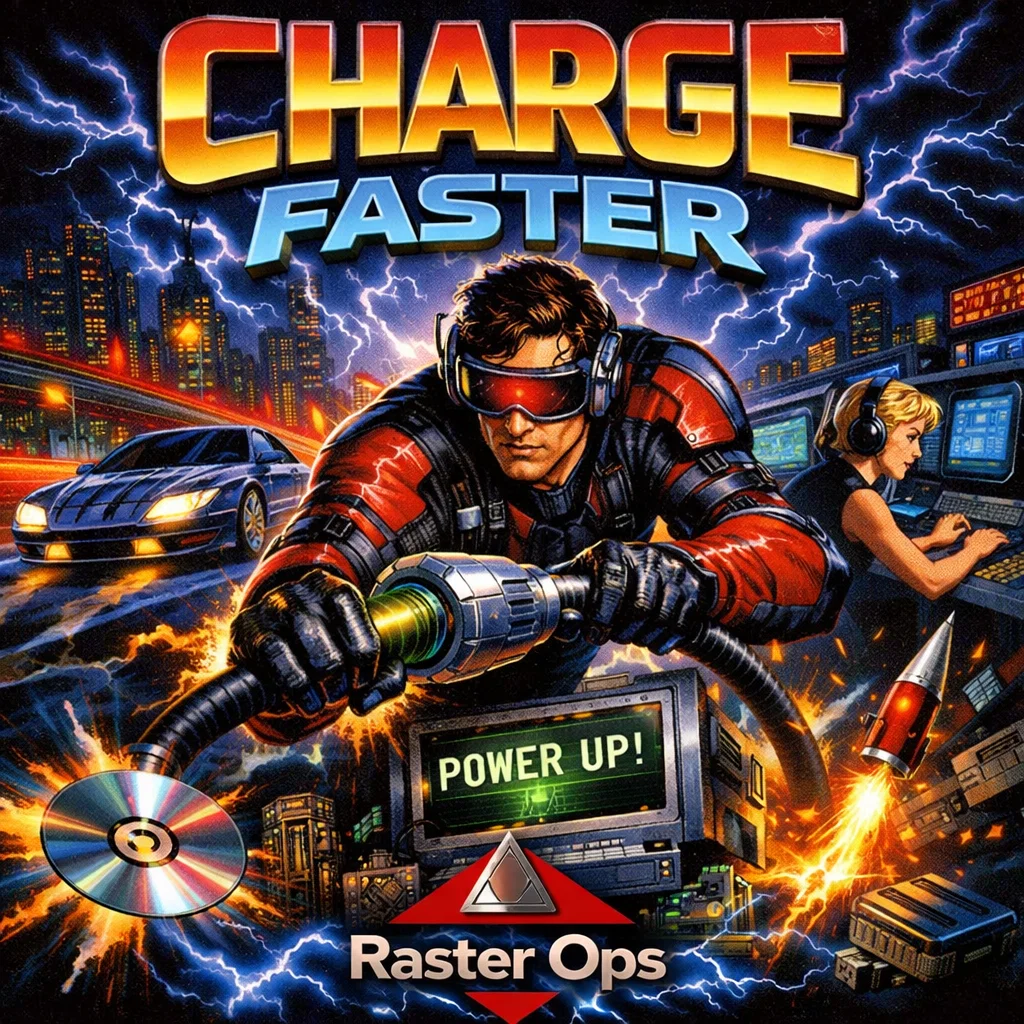
Core facts
- Song title: Charge Faster
- Album: Ride Forever (The Music of Verdant Ride)
- Composer/Writer: Stephan Kuslich
- Performer (this version): Raster Ops
- Project type: Concept album tied to eFoiling culture
🎧 What the song is about (meaning + theme)
“Charge Faster” is essentially about waiting for energy, literally and emotionally, tied to electric-powered riding (eFoiling).
Key themes:
- Battery anxiety
The lyrics revolve around watching a battery charge too slowly while daylight fades. Time pressure
The sun going down becomes a ticking clock:“The sun goes down… it won’t stay late”
- Desire for one more experience
It captures that very specific feeling of:- You’re almost ready
- Conditions are perfect
- But tech is holding you back
- Human vs technology tension
It’s not anti-tech, it’s more like:- “I need you to work faster so I can live”
Deeper interpretation
At a higher level, it works as a metaphor for:
- impatience with limits
- chasing fleeting moments
- the human urge to squeeze one more experience out of the day
🎼 Style and sound
The track (based on description of the project and performer):
- Synth-driven, electronic leaning
- Influences from:
- 80s analog gear
- 90s digital logic
- modern production polish
The vibe is:
- urgent
- rhythmic
- slightly nostalgic but modern

Cant Sleep Clown will Eat Me
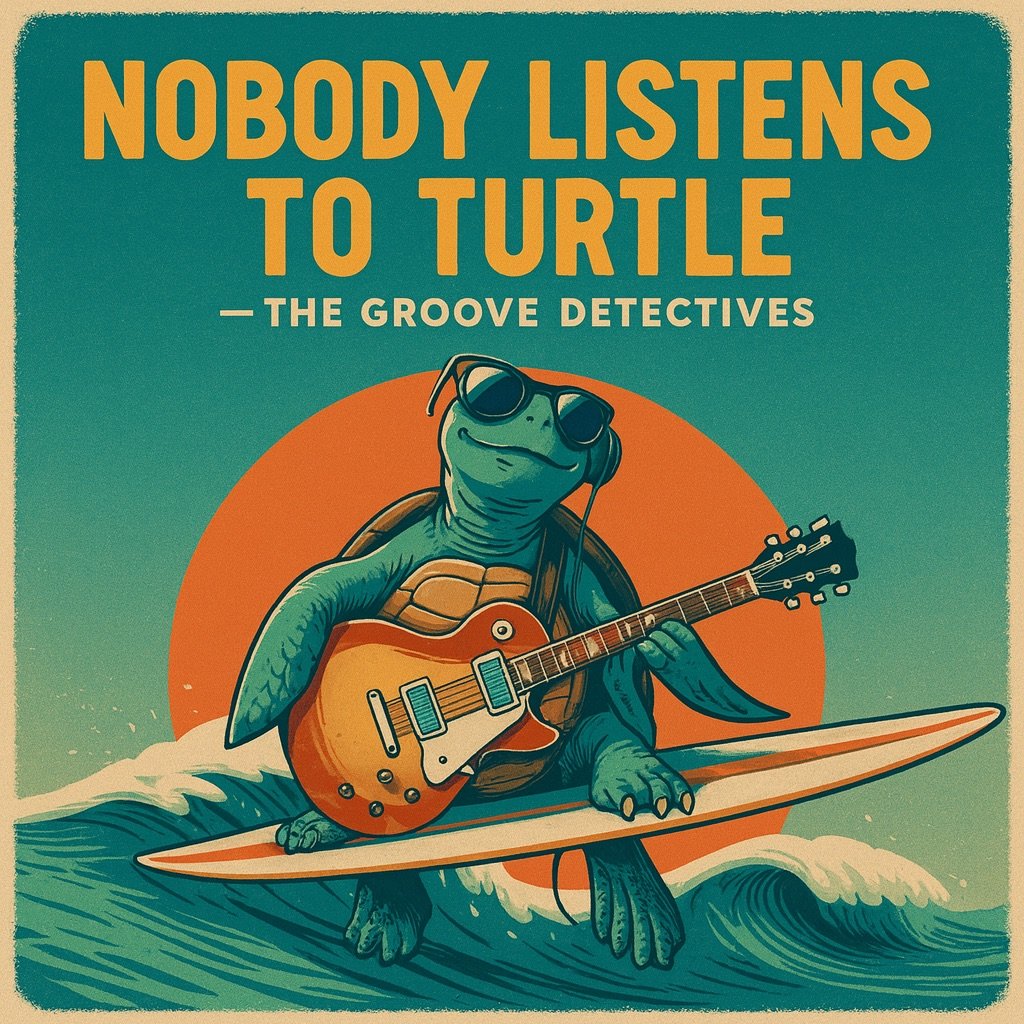
Nobody Listens to Turtle

The Sky is a Lie

Can’t Wake Up Now
📖 Song Story
It’s a song about the sun going down and waiting for the efoil battery to charge. Not sure if you should pull it early or wait for it to finish. There’s never enough batteries, chargers or outlets on separate circuits to ensure that we can charge fast enough to beat the sun

Glide On By
Flywater

ZigZag Zippity Zoom
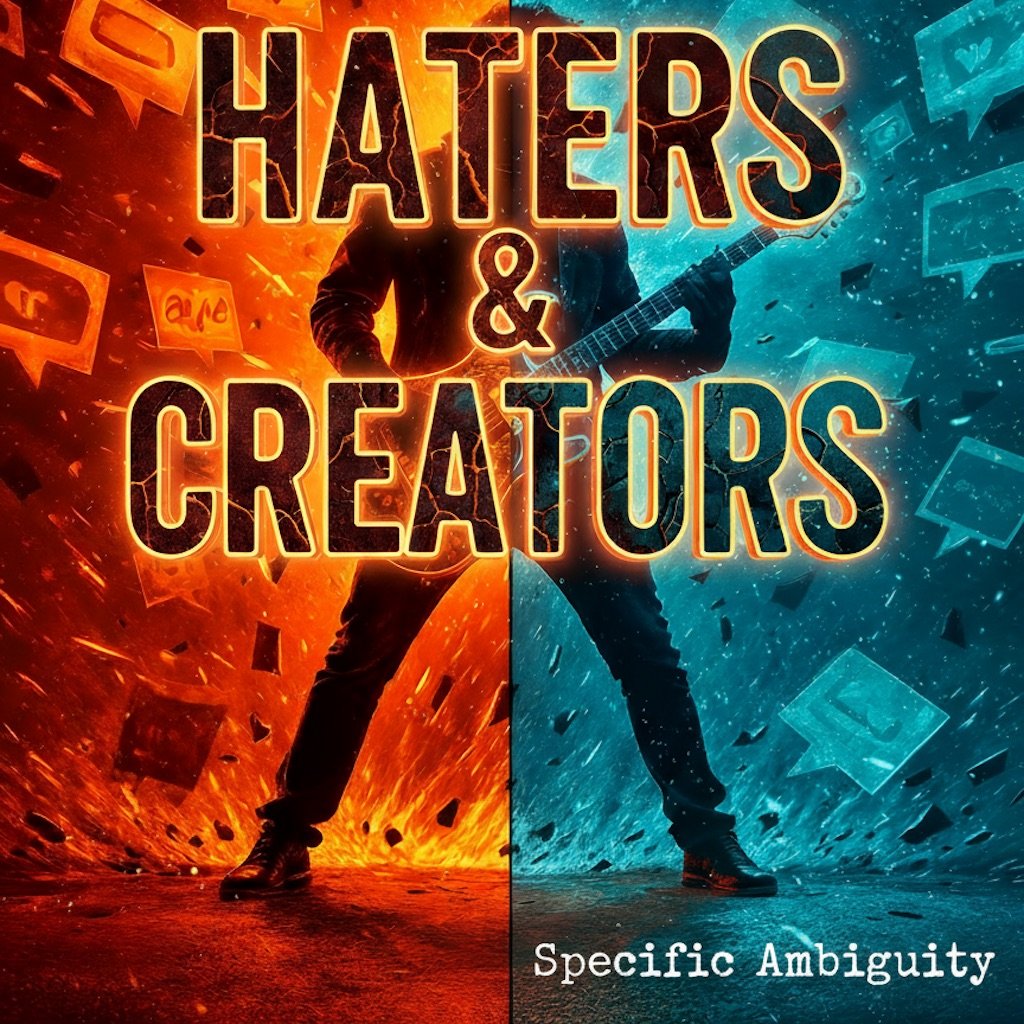
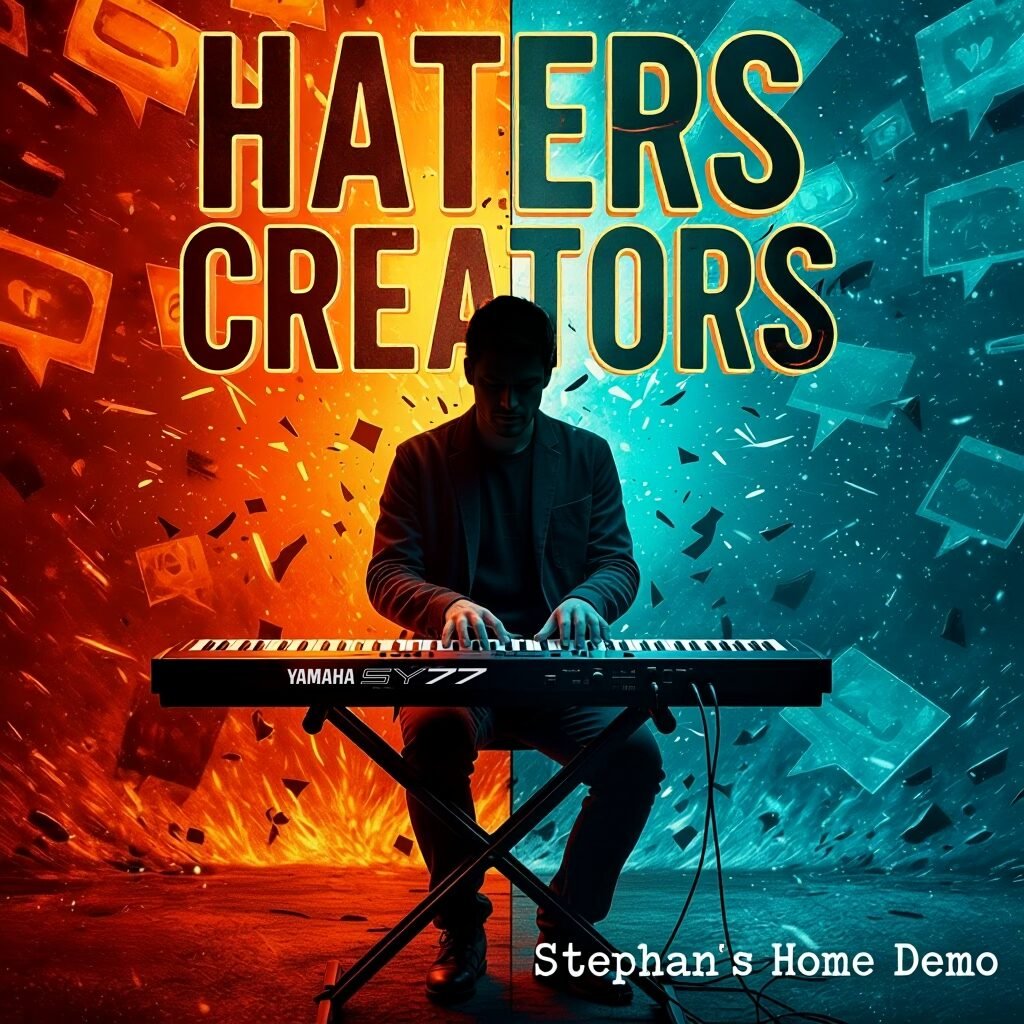
Haters and Creators
📖 Song Story
12. Haters & Creators — Specific Ambiguity
Music of Verdant Ride · 2025 · Track 12
Genre: Rapid Fire Rock & Roll
“Haters & Creators” is all momentum — a fast-talking, hard-driving rock track built on precision, attitude, and relentless flow. With rapid-fire vocals firing like percussion over tight guitars and pounding drums, the song doesn’t pause to explain itself. It moves forward, unapologetically.
Lyrically, it draws a clean line: those who create and those who critique. There’s no bitterness in it — just clarity. While the noise builds on one side, the work continues on the other. Every bar reinforces the same idea: craft wins, motion wins, creation wins.
It’s sharp, witty, and deliberately controlled — chaos on the surface, discipline underneath.
Best paired with:
- Fast-cut edits synced tightly to rhythm and vocal cadence
- High-speed riding sequences with aggressive carving and transitions
- Build montages, behind-the-scenes work, or creation processes
- Confident, personality-driven footage with strong pacing and timing
This is the soundtrack for staying in motion — while everything else talks.

Efoil Forever (Instrumental)
📖 Song Story
The Origin of Ride Forever: From Parody to Perfection The story of Ride Forever begins, like many creative accidents, with a joke that didn’t land—at least not in the way it was supposed to. Composer Stephan Kuslich never set out to write a serious song. The original concept was deliberately unserious: a Weird Al–style parody loosely inspired by Oasis’s Live Forever. The goal was to poke fun at a specific corner of his YouTube audience—those persistently critical voices who fixated on safety gear, or the lack thereof. The tone was meant to be exaggerated, defiant to the point of absurdity. Helmets, armor, condoms—nothing was off-limits in what was intended to be a tongue-in-cheek anthem of reckless bravado. On paper, it was ridiculous. That was the point. But when Kuslich translated the idea into a MIDI sequence and rough lyrics, something unexpected happened. The structure didn’t behave like parody. The phrasing didn’t lean into punchlines. The melody didn’t signal humor. It didn’t wink at the listener. It didn’t exaggerate in the right places. It simply… worked. Enter Darwin Panic of Specific Ambiguity. As Darwin later recounted, the moment he heard the early version, his reaction was immediate and decisive. “I heard it and said, well this isn’t going to work. It sounds way too different for anyone to get that it’s a parody.” The issue wasn’t that it failed—it was that it failed in a very specific way. It wasn’t funny. But it also wasn’t bad. In fact, it was the opposite. Instead of discarding it, Darwin did something far more consequential. He leaned in. What followed was less a correction than a reframing. Stripped of its intended comedic context, the track revealed a different identity—one that had been there all along, hiding beneath the surface of what was supposed to be satire. As Darwin began reshaping the arrangement in the studio, adding real instrumentation, adjusting tone, and letting the structure breathe, the realization set in: this wasn’t a parody that missed the mark. It was an original song that had accidentally been written in disguise. Not ironically good. Not accidentally amusing. Just… good. There’s a certain poetic irony in what happened next. Within the studio environment—populated by trained musicians, producers, and engineers—it became clear that the least musically trained member of the group had stumbled into something the rest recognized immediately. The person who intended to write a joke had instead written a foundation. One that others, with more formal musical instincts, could recognize, refine, and expand. In that sense, Ride Forever is not a story about a song being written. It’s a story about a song being discovered. Darwin’s next move was pivotal. Rather than trying to “fix” the parody, he proposed abandoning it entirely. The new idea was simple: keep the defiant spirit, but remove the comedic framing. Let the track exist as its own thing. Not a spoof, not a reference, but an original piece inspired by the energy of Live Forever, not dependent on it. Kuslich’s reaction, by his own account, was one of surprise. When he first heard Darwin’s version, the Oasis influence had already dissolved to the point of being unrecognizable. What remained was something entirely new. “It sounded really good,” he admitted. Good enough, in fact, to anchor something larger. That “something larger” became the Ride Forever project. But instead of consolidating around a single definitive version, the team made a decision that would ultimately define the identity of the song. They let it fracture. Rather than choosing one direction—rock, parody, ambient, theatrical—they invited multiple interpretations to coexist. The same core material was handed to different artists and groups within the studio, each encouraged to push it in their own direction. The result was not a linear evolution, but a simultaneous divergence. Specific Ambiguity’s version carried the DNA of Darwin’s original intervention. It leaned into rock structure and grounded intensity, shaping the song into something declarative and cohesive. Heather’s in Heat took that same energy and amplified it, transforming it into a loud, persona-driven performance that leaned into attitude and exaggeration. Cia Berg, alongside Raster Ops, moved in the opposite direction entirely, dissolving the track into dreamy synth textures and atmospheric immersion. Madeline Roma’s Sensual Mix would later internalize the song further, turning it into something intimate, restrained, and deeply focused on feeling rather than motion. None of these versions replaced the others. None were “definitive.” Because there was no original to begin with. All of them were born from the same moment. All of them were valid. All of them revealed something different about the same underlying structure. What started as a failed parody became a kind of musical prism, refracting into multiple identities depending on who was holding it. Kuslich himself acknowledged how unexpected this transformation was. The track that began as a throwaway joke ended up becoming the title track of the project, standing in stark contrast to the more atmospheric work that initially defined the album’s direction. It wasn’t supposed to lead. It wasn’t even supposed to exist in that form. And yet, it did. In retrospect, the most remarkable aspect of Ride Forever is not that it turned out well. It’s that it resisted intention. It refused to be what it was designed to be and, in doing so, revealed something more authentic. The musicians in the room didn’t create that authenticity—they recognized it. They gave it shape, amplified it, and allowed it to evolve, but the core of it was already there, embedded in what was supposed to be a joke. There’s a quiet lesson in that. Sometimes the difference between failure and discovery is not the material itself, but the willingness to reinterpret it. To hear something not for what it was meant to be, but for what it already is. Ride Forever didn’t become a great song because it was carefully planned. It became one because it was accidentally honest—and because the right people were in the room to notice.

Thank You for Your Unsolicited Concern
Let’m Hate (Home Demo)
Join 900+ subscribers
Stay in the loop with everything you need to know.
